
Fort Lauderdale runs on a specific integrated operational profile that no other major American luxury market matches. The residence sits on a canal. The vessel sits at the dock behind the residence. Household staff and vessel crew coordinate. Vendor relationships overlap. Operational patterns interconnect.
That integrated profile is what makes Fort Lauderdale unique. It’s also what creates the specific security exposure most standard programs don’t address.
Here’s what I’ve seen.
Our coverage on maritime superyacht security in Fort Lauderdale addresses the specific integrated architecture. Related coverage on superyacht security solutions covers the specific vessel-side architecture the current threat environment requires.
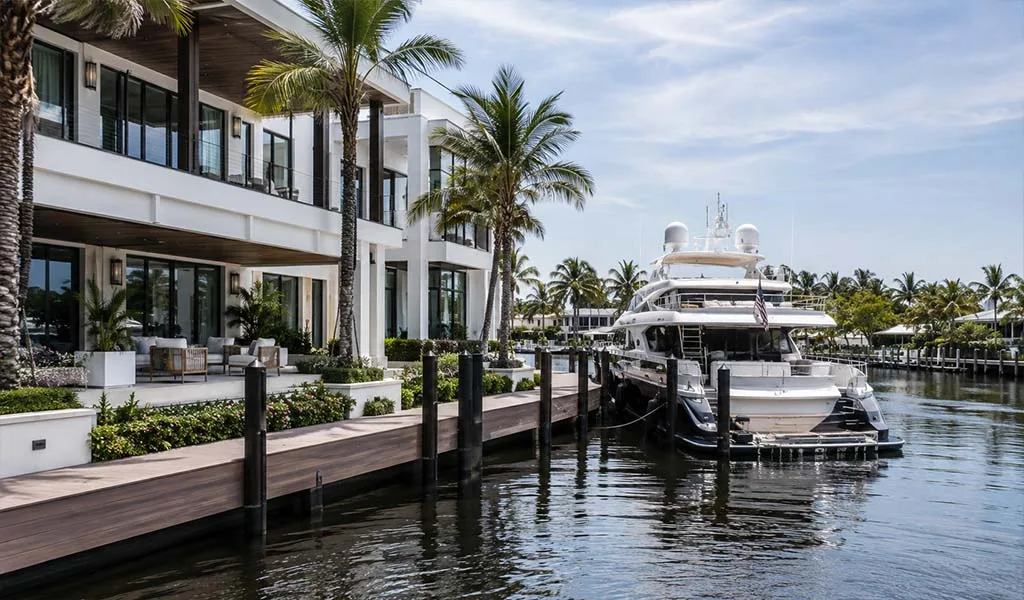
The three approach directions
Reconnaissance against a Fort Lauderdale UHNW principal can happen from three directions.
Land-side against the residence via public roads. Standard residential security handles this reasonably well.
Water-side against the vessel via canal or Intracoastal transit. Yacht security handles this when the vessel is at sea. When the vessel is at the dock, coverage depends on how integrated the residence and vessel security actually are.
Dockside against the transition between the two. This is where I’ve seen the most exposure. The residence security ends at the dock. The vessel security starts at the boarding platform. Between them is a transition space that fragmented providers routinely leave open.
For principals with $50 million or $100 million vessels connected to $30 million or $80 million residences, the operational integration between the two is where sophisticated engagement operations concentrate.
AIS visibility is a specific problem
Every commercial vessel and most yachts above certain size thresholds broadcast Automatic Identification System (AIS) signals that are publicly trackable. Anyone with a browser can watch vessel movements in real time.
For a Fort Lauderdale yacht owner, the vessel’s movements are effectively public information. Departure from Bahia Mar. Transit through Port Everglades. Position in the Bahamas or Caribbean. Return timing. All of it visible.
The specific security implication is that residence occupancy patterns can be inferred from vessel positions. When the yacht departs, the owner presumably is not at the residence. When the yacht returns, the owner presumably is back.
That correlation is exactly the reconnaissance signal that organized crews look for. Historical assumptions about vessel movement privacy no longer hold.
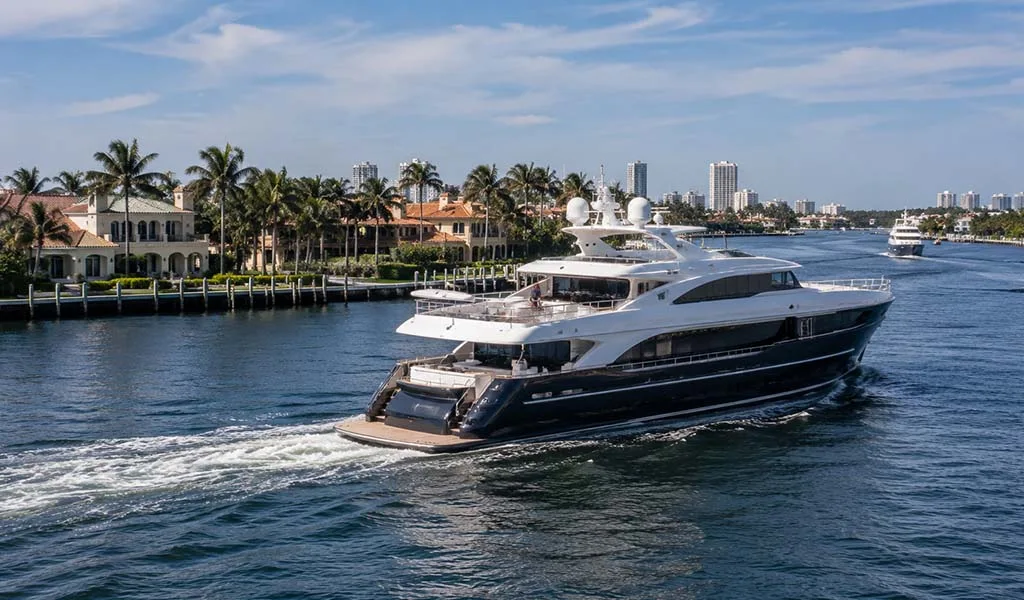
The captain and crew vetting gap
Captain and crew vetting standards vary substantially across the Fort Lauderdale marine industry. For owner-operated vessels below certain sizes, vetting is often informal — reputation, references, industry familiarity. For professionally captained vessels, standards are higher but not always sufficient for the trophy-yacht profile.
For owners with significant onboard value — art, watches, guest belongings, tenders, personal effects — and for owners whose crew turns over between charter and private use, the vetting gap is a genuine security exposure.
Our related coverage on how to secure a luxury yacht addresses the specific vetting architecture the current environment requires.
Ask specifically about the four-tier vetting framework for captain and crew. Ask about periodic re-screening. Ask about off-boarding protocols for departing crew. Ask about how the provider handles the marine industry’s traditional standards versus what post-2024 security actually requires.
Boat show week concentrates target density
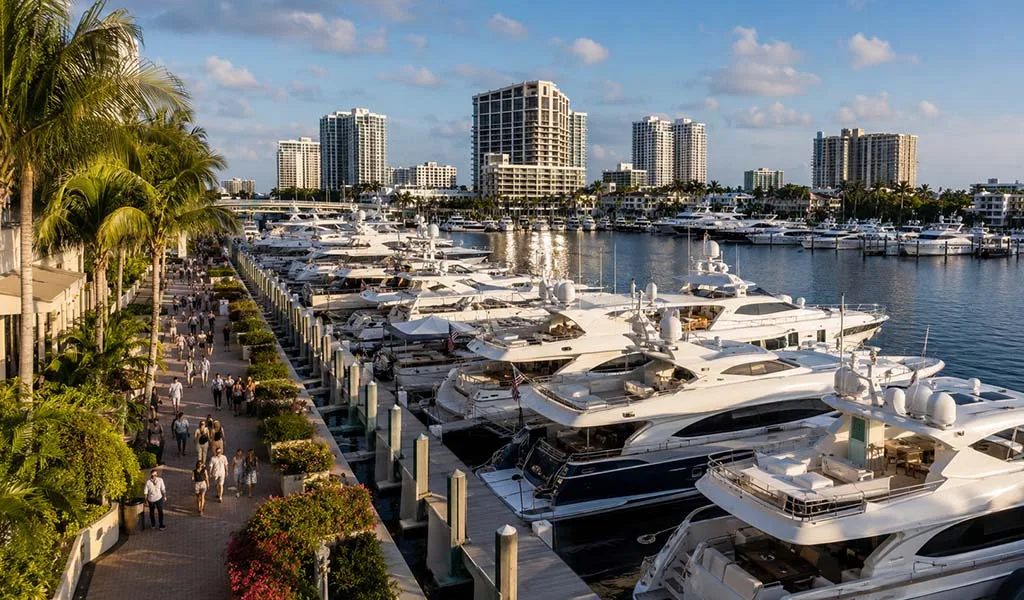
The Fort Lauderdale International Boat Show October 28 through November 1 will bring 90,000+ visitors to the city and hundreds of vessels valued cumulatively in the billions. For principals attending, hosting, or exhibiting during the show, the operational picture includes documented presence at a documented location with adjacent vessels of substantial value.
Reconnaissance during boat show week produces intelligence that persists past the show itself. Post-show operations against principals identified during the show is a documented pattern.
If you’re planning to attend, host during, or exhibit at boat show week, the specific security architecture for that window is worth addressing before the show, not during it.
Hurricane season and yard storage
Peak hurricane season overlaps directly with the operational period leading into the boat show. Vessels planning show participation need hurricane operational planning that accounts for show timing. Show preparation needs hurricane contingency built in.
Vessels above certain sizes have documented hurricane operational protocols. Yard capacity is finite. Coordination timing matters. Insurance requirements specify pre-storm movement above defined sizes.
Regional yard capacity fills quickly during confirmed storm approach windows. Owners who begin haul-out coordination during active watches frequently find their preferred yards fully committed.
For $50 million-plus vessels, hurricane operations require pre-arranged coordination measured in weeks, not days.
The residence side matters equally
Canal-front residences face specific hurricane exposure that combines standard wind and water considerations with marine-specific dynamics. Storm surge in canals may exceed open water surge. Wind-driven debris from adjacent water traffic adds exposure. Post-storm marine debris including displaced vessels and dock components produces access dynamics during recovery.
The Sun Sentinel’s ongoing coverage of the Fort Lauderdale marine ecosystem provides local context.
Canal-front hurricane preparation requires architecture that addresses both the residence and the marine-side infrastructure as integrated elements. Fragmented approaches produce gaps.
What I'd recommend
If you’re a Fort Lauderdale yacht owner or canal-front estate resident, three practical priorities.
Integrate your vessel and residence security architecture. If your marine security is handled by your captain and crew while your residential security is handled by a separate provider with no coordination, the gap is where risk sits.
Address the AIS visibility reality. The correlation between vessel movement and residence occupancy is the specific intelligence organized crews are architected to exploit.
Vet your captain, crew, and marine vendor relationships against the current threat environment. If your last formal vetting review predates 2024, the standards have moved substantially.
Where to Go From Here
Start with the Estate Operations & Insider Risk Checklist — the 15-point framework covering integrated vessel-and-residence vetting.
If you’re ready for a direct conversation, request an audit here. We assess the integrated profile specifically.
For the executive protection architecture across the corridor, read our executive protection coverage for Fort Lauderdale.
I’m John Hamilton, HKDS founder. We provide estate security, executive protection, marine security integration, and captain and crew vetting for Fort Lauderdale yacht owners and canal-front residents. Contact us.