
Before You Keep Reading: If You Already Know You Need This
If your vessel is operating in 2026 with a security posture designed for an earlier era, and you’d rather see the picture clearly than discover it during an incident, you can request a confidential Superyacht Security Audit directly. We operate across Fort Lauderdale, Miami, the Caribbean, the Mediterranean, and global ports.
Built by a 12-year U.S. Air Force special operations veteran. Trusted by yacht owners, captains, and management companies globally.
Confidential intake. No obligation.
Why Yacht Security Looks Different in 2026
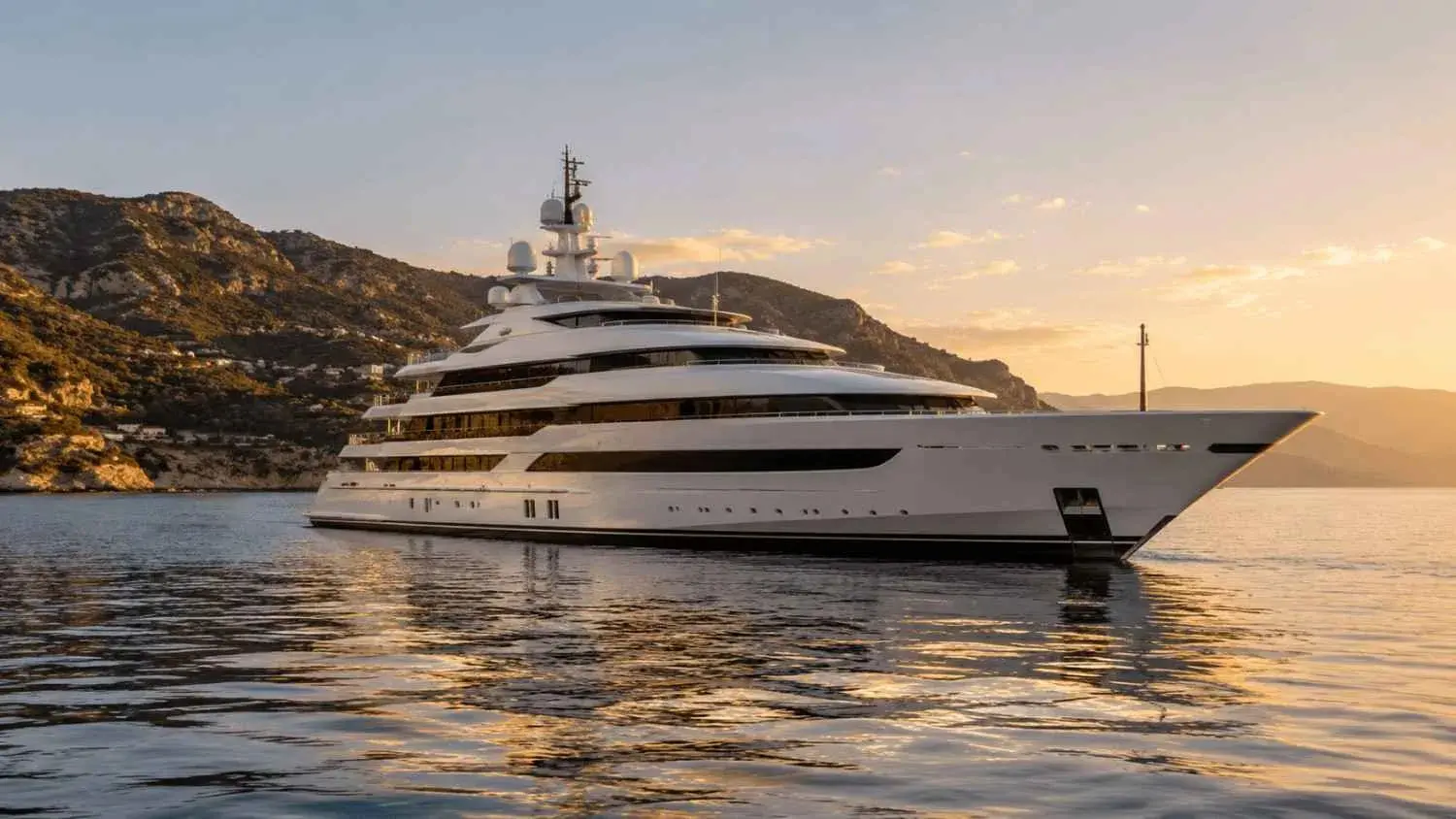
A modern superyacht is a private estate, a corporate office, a communications hub, a moving target, and a public spectacle, all at once. The security model that came with most builds was designed for a different threat environment. Onboard surveillance was an afterthought. Cybersecurity didn’t exist as a category. Crew vetting was a handshake. Port-to-port intelligence was the captain’s gut feel.
The yachts cruising the Mediterranean, the Caribbean, and the East Coast in 2026 are operating against adversaries who have evolved. Most yacht security postures haven’t. Owners who haven’t reviewed their vessel security posture in the past three years are almost certainly operating with assumptions that are out of date.
Why Most Superyacht Security Fails
Yacht security used to be simpler. Lock the doors. Brief the crew. Keep AIS off in sensitive waters. Park somewhere reputable. That model worked because the people who would target a private vessel were limited, opportunistic, and not particularly sophisticated.
That model stopped being accurate around 2018, and it has degraded every year since. Here’s where most yacht security postures actually fail in 2026.
Crew Vetting at Hiring Day Tells You Almost Nothing
Yacht crews are transient, international, and often hired through agencies that conduct minimal background screening. The standard background check tells you whether the candidate had a criminal record on the day they were hired. It tells you nothing about financial pressures that develop six months later, social connections that emerge over time, or the social media posture they bring with them every day. Insider cooperation is the primary enabler of serious crimes against private vessels.
Yacht Cyber Exposure Was Never Designed For
Modern superyachts contain more networked technology than most small businesses. Navigation systems, communications systems, entertainment systems, vessel management systems, smart cabin controls, IoT devices throughout the vessel, guest Wi-Fi, crew Wi-Fi, satellite uplinks. Almost none of it was designed with hostile network actors in mind. Most of it shipped with default credentials that were never changed. The yacht's cyber surface in 2026 is significantly larger than the owner's home cyber surface, and significantly less protected. Superyacht cybersecurity services are one of the fastest-growing exposure areas in maritime for exactly this reason.
Social Media Telegraphs Movement in Real Time
Crew members post. Guests post. Charter agencies post. Maritime tracking platforms publish AIS data publicly. The combined effect is that the position, schedule, and operational pattern of nearly any superyacht can be reconstructed in hours by anyone with a laptop. Most yacht security programs have no policy framework for managing this exposure across crew and guests.
Port-to-Port Threat Variation Isn't Being Modeled
A yacht in Fort Lauderdale faces a different threat profile than the same yacht in Monaco, in Antigua, in the Maldives, or in the eastern Mediterranean. The threat environment changes by season, by political climate, by recent incidents, and by who else is in port. Most yacht security operates without an intelligence layer that adapts to this variation. Same protocols everywhere, calibrated correctly almost nowhere.
If your vessel hasn’t been audited against this picture, you’re operating with assumptions that are increasingly out of date.
We assess vessel, crew, cyber, port, shore, and guest domains as a single picture.
The Five Decisions That Determine Whether Yacht Security Actually Works
There are dozens of tactical decisions inside any yacht security program. Five of them, in our experience, determine whether the overall posture is real or theatrical.
Decision One: Treat Crew Vetting as a Continuous Program
The single most consequential security decision on most yachts is how crew vetting actually works. A one-time background check at hiring isn't enough. You need ongoing re-screening at defined intervals, a structured social media policy, clear device management, NDAs that mean something, and a real off-boarding procedure when crew rotates. The yachts where this is run rigorously rarely have insider incidents. The yachts where it isn't, do.
Decision Two: Audit the Cyber Posture Before You Audit Anything Else
Most yacht security conversations start with cameras and guards. They should start with the network. A vessel's cyber surface is its largest exposure surface, and almost always its most under-protected. Default credentials, flat network architecture, unmanaged IoT, unhardened satellite uplinks, no segmentation between guest, crew, and vessel systems. Get this domain to a credible posture, and the rest of the security architecture has something to build on.
Decision Three: Build an Intelligence Layer Calibrated to Your Itinerary
Generic maritime threat reporting is barely useful. What matters is the specific intelligence picture for the specific ports, anchorages, and routes you're actually planning to use, updated as the cruise progresses. Geopolitical shifts, recent incidents, port security changes, organized crime activity. The intelligence layer should be informing the itinerary, not just reacting to it.
Decision Four: Reduce Public Visibility by Default
AIS posture, social media policy across crew, guest expectations around photography and posting, public-record reduction for the ownership entity, charter listing visibility decisions. Every yacht has a public signature. The question is whether you've decided what that signature looks like, or whether it's been built by accident from default behaviors. The vessels with the cleanest security postures are nearly always the vessels with the most deliberate visibility management.
Decision Five: Integrate Vessel and Shore Security as One Operation
Most security incidents involving principals at sea happen on shore. Tender operations, shore excursions, shore-side residences, port-of-call activities. If your vessel security and your shore-side protection are run by different teams who don't coordinate, the highest-risk parts of the operation are the parts with the weakest integration. Build the program as a single operation.
Cutting-Edge Technologies for Yacht Security
Technology alone doesn’t secure a yacht. Technology integrated into a coherent operational model does. The categories of technology that actually move the needle in 2026 include the following.
- Modern onboard surveillance with low-light, thermal, and intelligent analytics capability, integrated with the vessel’s central operating picture.
- Counter-drone detection for vessels in environments where aerial surveillance is a meaningful risk.
- Underwater detection and intrusion sensing for high-risk anchorage or alongside in sensitive ports.
- Network segmentation and continuous external surface monitoring across vessel, guest, and crew networks.
- Secure communications platforms for principal, captain, and security lead, hardened against maritime-specific surveillance risks.
- Encrypted device management for crew operating in elevated-risk jurisdictions.
- Discrete physical access control and stateroom protection, calibrated to be invisible during normal operations.
The technology choices are downstream of the threat picture. Decide on the threat picture first. Then decide on the equipment that addresses it.
Where Florida Yacht Security Specifically Matters
Fort Lauderdale is the global superyacht capital. Miami is one of the densest UHNW yacht concentrations in the world. The Florida Keys, Naples, Palm Beach, and the entire South Florida marine corridor host more high-value private vessels per square mile than nearly anywhere else on the planet.
That density creates specific operational realities. Marina surveillance becomes a critical capability. Port security coordination at major Florida marinas, yacht-to-shore transitions, charter season operational density, and the constant background of hurricane preparation all factor into how Florida yacht security actually has to operate. Yachts based in Florida need security postures calibrated to the Florida operating environment, not generic maritime security applied without local adaptation.
If You're Ready to Move Forward
This is the section for owners, captains, and management companies who already know.
If you’ve been reading this and recognizing that your current vessel security posture is operating on outdated assumptions, you already know what the next step is.
Most yacht owners and management companies engage HKDS through the Superyacht Security Audit. The audit assesses your current posture across all six domains (onboard physical, crew, cyber and communications, port and itinerary intelligence, shore-side coordination, and guest management), identifies where the gaps are, and gives you a clear roadmap for what an upgraded posture would require. It’s the cleanest entry into the conversation.
WHO COMMISSIONS YACHT SECURITY AUDITS:
- Yacht owners who carry the ultimate exposure and want a clear-eyed picture of what they’re working with
- Captains looking for outside documentation to support the security upgrades they already know are needed
- Yacht management companies operating multi-vessel fleets where consistent standards matter
- Family offices integrating vessel security with broader UHNW security operations
- Charter operators upgrading security posture for high-value charter parties
Operating across Fort Lauderdale, Miami, the Caribbean, the Mediterranean, and global ports.
Confidential. NDA-protected. Vessel walkthroughs scheduled around your operating reality.
Want the full services overview first?
Our complete superyacht security services overview covers the six domains, the technology stack we deploy, the way we work with captains and management companies, and the markets we operate in. It’s the right place to start if you want the full picture before requesting the audit.
Full services overview, written for owners, captains, and management companies.
Read through, then come back to request the audit when you’re ready.