
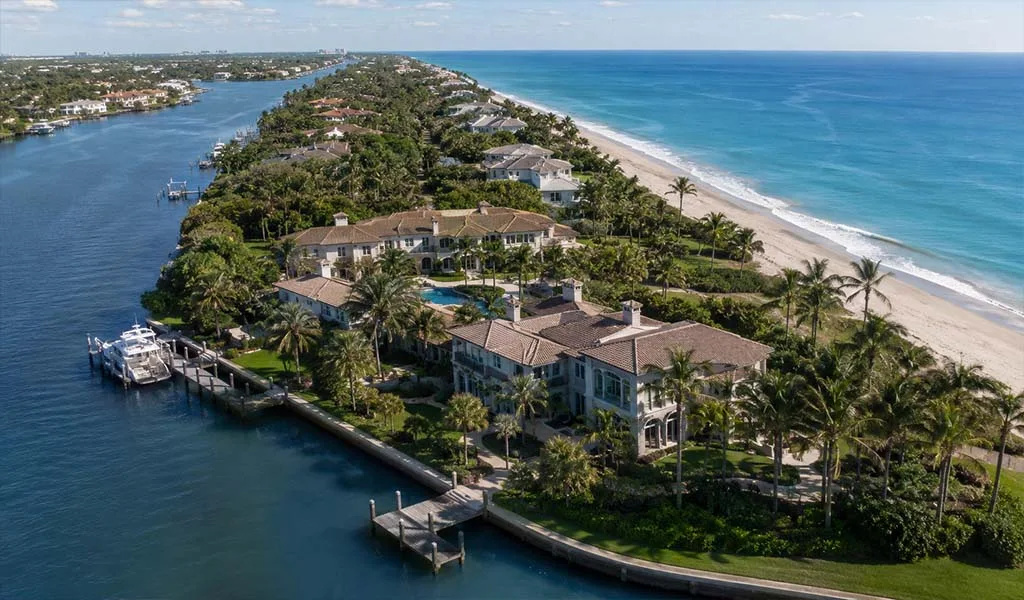
Manalapan is not the same market it was three years ago. Larry Ellison’s cumulative investment is now over $450 million. Two weeks ago, he and David MacNeil split a $67 million land parcel neither of them needed to build on. Jeff Greene is here. Tony Robbins is here. Sean Hannity is here. The average asking price for a single-family home is around $60 million.
When I walk a Manalapan estate for the first time, this is what I’m looking at.
Our detailed coverage on Manalapan trophy real estate security exposure covers the underlying architecture. This is more specifically what I check.
First — the marine side
Every ocean-to-Intracoastal estate has two water perimeters. The Atlantic on one side. The Intracoastal on the other. These are structurally different threat vectors and most security programs treat them as one problem.
I walk the marine sides first because that’s where I’ve consistently found the most exposure. Camera coverage of the dock is usually an afterthought. Watercraft approach patterns aren’t being monitored actively. Beach-side movement isn’t being tracked. Both water perimeters get treated as a single “waterfront concern” rather than as two operational domains that each need their own coverage.
The specific thing I look at on the Intracoastal side: what’s the deterrent for a boat that idles past the dock at 3 AM? What happens if that same boat idles past three nights in a row? On the ocean side: what’s the operational awareness of what happens on the beach when household staff isn’t watching?
Our specific coverage on marine-side surveillance for Manalapan estates covers the architecture that closes this gap.
Second — the reconnaissance environment
Every trophy estate in Manalapan is now internationally documented. Multiple architecture and real estate publications have run detailed coverage of specific properties. Katherine Clarke’s WSJ Mansion coverage of the Ellison strategy has documented the pattern specifically because it matters.
For an organized adversary, the reconnaissance work has been done publicly. Which property is worth targeting is knowable. What it looks like is knowable. Where its perimeter runs is knowable from aerial imagery. Who lives there is knowable from real estate records.
The reconnaissance environment isn’t something you can eliminate. It’s something you have to manage.
What I look at is whether the household is operating with any counter-surveillance discipline at all. Are routines varying? Is anyone watching for the observers? Is the digital exposure being managed? Or is everything running on autopilot because “nothing’s ever happened” — which is the exact assumption that a resourced adversary is counting on.
Third — the household staff and vendor pattern
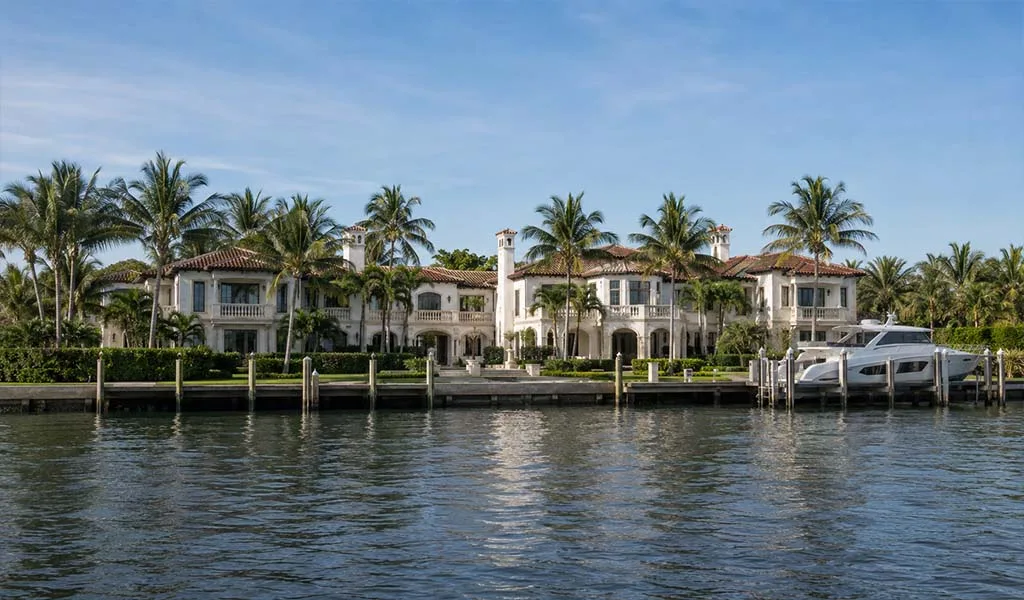
Manalapan estates typically engage substantial vendor and staff pools. Landscape, pool, marine services, IT, household management, personal chefs, drivers, security. For an estate of the size and complexity common in Manalapan, the pool can exceed 30 companies.
Every one of those companies represents access. Most have some level of documented property or network access. Very few have been vetted at the level the exposure profile actually requires.
Our coverage on staff vetting for Manalapan estates and insider risk covers the specific vetting architecture.
The specific question I ask when I walk an estate: when a landscape crew member gets fired, what happens to the gate code they’ve been using for six months? When a vendor company loses your contract, what happens to the intelligence they accumulated during the relationship? Most estates have no answer to either question.
Fourth — the current environment overlay
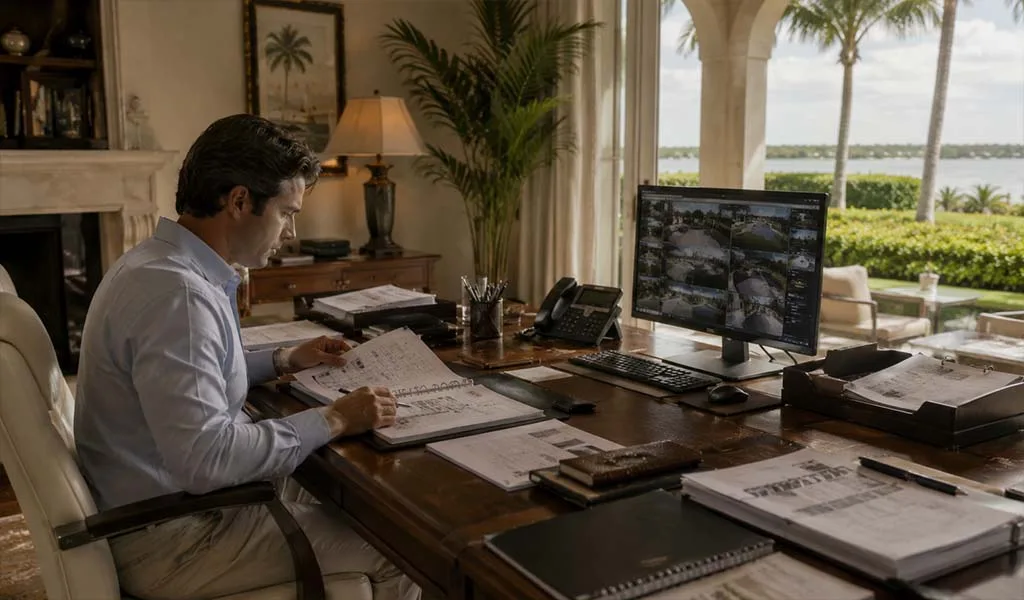
The Eau Palm Beach Resort & Spa, which Ellison acquired for $277 million in 2024, is the largest structure in town. The recent land control transactions have reinforced that Manalapan’s trophy tier is not a housing market. It’s a land control market where the most valuable purchase is often the property you never intend to build on.
What that means operationally is that the target profile in Manalapan has evolved specifically toward long-duration, resourced adversaries. Not opportunistic burglars. Sophisticated engagement operations that spend months in reconnaissance before any physical activity.
Standard residential security architecture is designed for opportunistic threats. Trophy estate architecture has to be designed for something different.
Fifth — the hurricane season overlap
Peak hurricane season starts in about six weeks. For Manalapan estates, hurricane season adds a specific vulnerability window I always check on before we get into July.
Vessels that need to be moved. Marine assets that need to be secured. Household staff who evacuate to their own residences. Contractor arrivals for storm preparation and eventual damage response.
The specific post-storm window is where the compound exposure is highest. Vacant estate. Reduced staff presence. Elevated legitimate vendor access. Reduced law enforcement patrol as municipal resources focus on broader community response. This is where I’ve seen trophy estates get hit historically.
Our coverage on the Palm Beach Daily News — Darrell Hofheinz specifically has documented the Manalapan trophy market with detail — is worth reading for the ongoing operational picture.
What I look at last
Before I leave a Manalapan estate assessment, the last thing I look at is whether the current security is running as a program or as a collection of pieces.
Cameras. Alarms. Patrol. Access control. Staff vetting. Digital exposure. Family office coordination. Insurance documentation. If all of these are being handled by separate providers with no unified command structure, the estate has coverage but not a program.
The gap between coverage and a program is what current threats are designed to exploit. When something happens, coverage responds after the fact. A program prevents the specific exposure the threat was designed to find.
Where to Go From Here
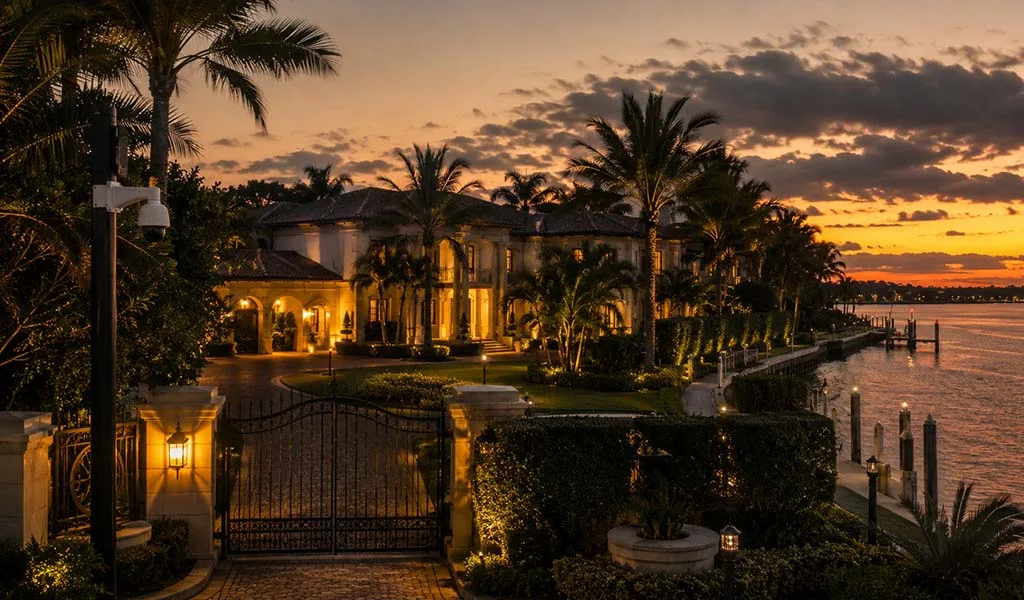
Start with the Estate Operations & Insider Risk Checklist — the 15-point audit we run on every new Manalapan estate.
If you’re ready for a direct conversation, request an audit here. I’ll walk the estate personally. Confidential. If your current provider is doing what needs to be done, I’ll tell you.
For the specific framework we recommend for provider evaluation, read How to Choose a Security Firm for a Manalapan Estate.
I’m John Hamilton, HKDS founder. We provide estate security, executive protection, and converged physical-digital security for Manalapan trophy estates. Licensed Florida Class B, D, and G. Contact us.