
Wellington operates through five and a half months of intense equestrian season activity. That’s Wellington’s identity. That’s also, from a security perspective, only half of Wellington’s year.
The other half is the off-season. From May through November, most seasonal residents have gone. Trainers and grooms rotate out. Barns quiet down. Estates transition to something close to seasonal vacancy.
What I’ve seen consistently is that the off-season isn’t a quieter version of the season. It’s a fundamentally different threat environment. Here’s what threat actors are actually doing during that window.
Our coverage on event security for Wellington polo and equestrian operations addresses the peak-season architecture. Related coverage on the US Open Polo Championship in Wellington covers the concentrated event windows.
The pattern I keep seeing
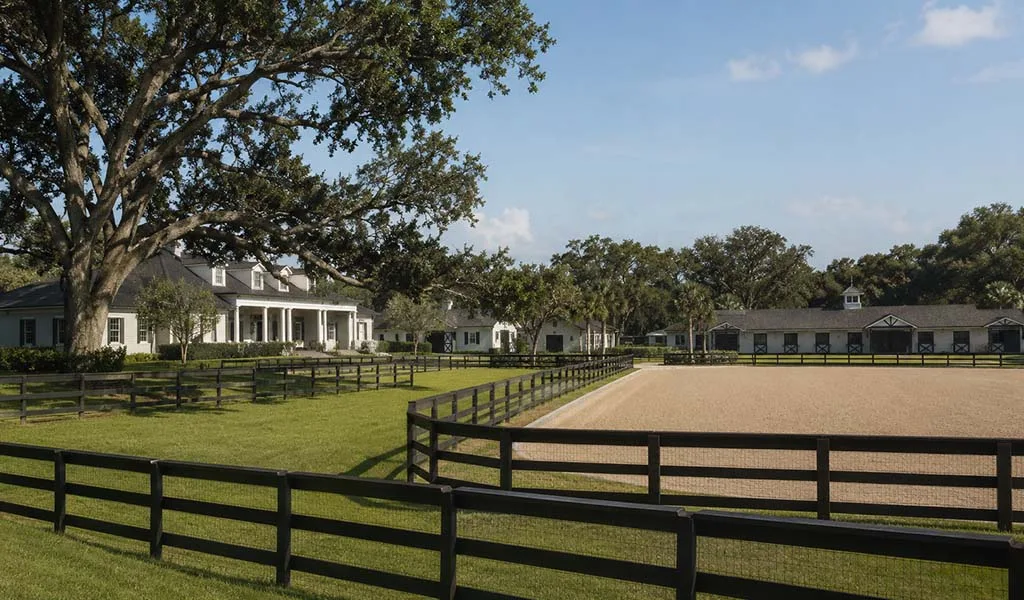
Organized crews that target high-value residential estates don’t operate primarily during peak occupancy. They operate primarily during predictable absence. Wellington’s off-season is one of the most predictable absence windows in Florida because the seasonal calendar is publicly documented, the departures are correlated, and the properties are structurally identifiable as equestrian estates from aerial imagery, from social media, from real estate documentation.
The pattern I keep seeing is that off-season incidents at Wellington properties are not random burglaries. They’re selected engagements against studied properties. Reconnaissance happens during the season when the property is active and identifiable. Operational engagement happens during the off-season when the property is vacant and the response window is longest.
That’s not opportunism. That’s studied targeting.
The reconnaissance patterns during off-season
What I’ve actually observed during off-season reconnaissance operations:
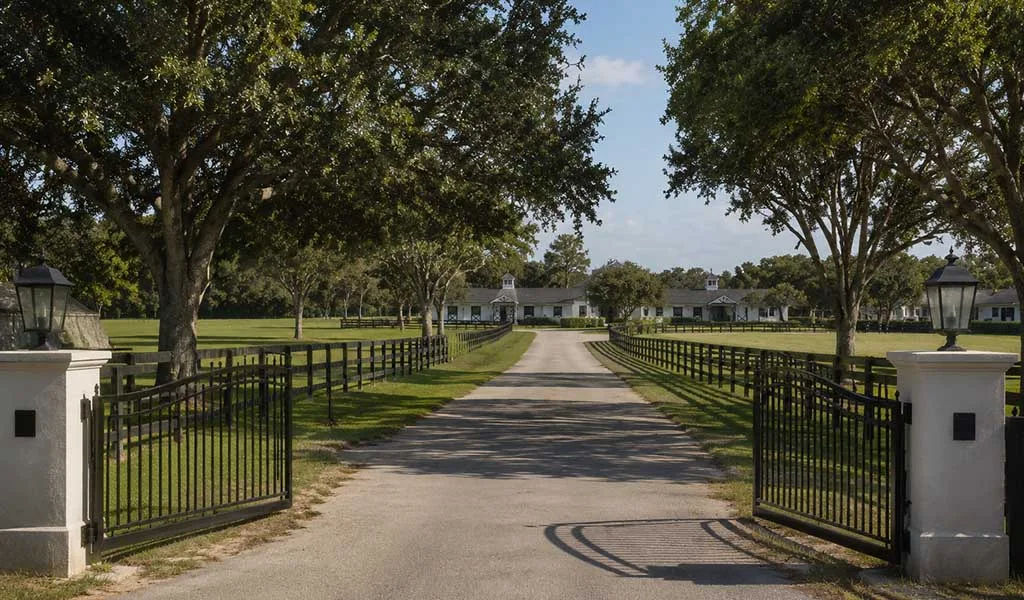
Sustained observation from adjacent properties. Wellington’s estate spacing means that observation from an adjacent lot can produce detailed intelligence over weeks without triggering any operational response from the target estate.
Vendor and contractor impersonation. During the off-season, the reduced staff presence means that individuals presenting as vendors, contractors, or utility workers face substantially less operational scrutiny than they would during peak season.
Property boundary and access mapping. Documenting perimeter architecture, security infrastructure, and access patterns. Producing the intelligence foundation for eventual operational engagement.
Household staff exit interviews. Departing seasonal staff represent an information vector that most estates don’t manage systematically. Grooms, exercise riders, and support personnel who leave at season’s end retain knowledge of estate operational patterns, security configurations, and household routines.
Digital reconnaissance targeting the specific equestrian community. Wellington’s equestrian professional community is well-networked and documented. Social media, professional networking platforms, and industry publications provide intelligence collection targets that support both target selection and operational planning.
The equestrian infrastructure exposure
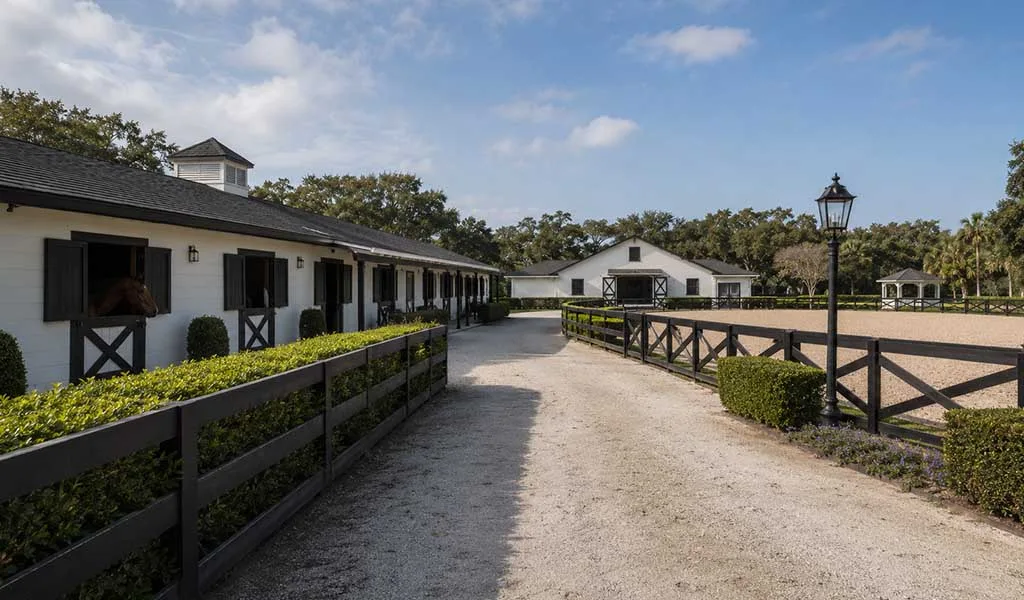
Barns aren’t residential structures. They have different security profiles. Tack rooms can hold six-figure equipment per horse. Feed and pharmaceutical storage represents both direct value and secondary risk if compromised. Riding arenas have infrastructure that can be damaged expensively without triggering standard residential intrusion detection.
Standard residential security architecture is designed for main-house protection. Equestrian infrastructure requires specific coverage that most residential programs don’t provide.
For estates with 15-30 horses in professional training, the equestrian infrastructure value can substantially exceed the main residence contents value. The security architecture proportion often doesn’t match.
Daphne Nikolopoulos’s coverage in Palm Beach Illustrated has documented the Wellington equestrian community’s operational rhythms. That documentation, while valuable community coverage, also functions as intelligence for adversary targeting.
The seasonal staff rotation problem
The Wellington equestrian industry has traditionally operated on informal staffing standards. Reputation and referral. Reference checks through professional networks. Background investigation is rare. Structured vetting rarer still.
The pool of individuals who have or recently had property access at a Wellington estate during peak season can easily exceed 20 people. Grooms, exercise riders, trainers, working students, farriers, veterinarians, transportation crews. Most rotate in during December-January and out during April-May. Many are international. Many won’t return the following season.
What happens to gate codes when a groom leaves in April? What happens to smart home credentials when a trainer’s contract ends? What happens to knowledge of estate operational patterns when an exercise rider moves to a different barn?
For most Wellington estates, the honest answer is “nothing.” The access persists. The knowledge persists. The vulnerability persists.
The intermittent activity pattern
Wellington International’s Annual Series continues through the summer and fall with competition weeks in August, September, and October. Those events bring intermittent activity spikes that don’t restore full seasonal operation.
Property owners return briefly for competition weeks. Staff cycle in and out. Visitor traffic elevates during specific windows.
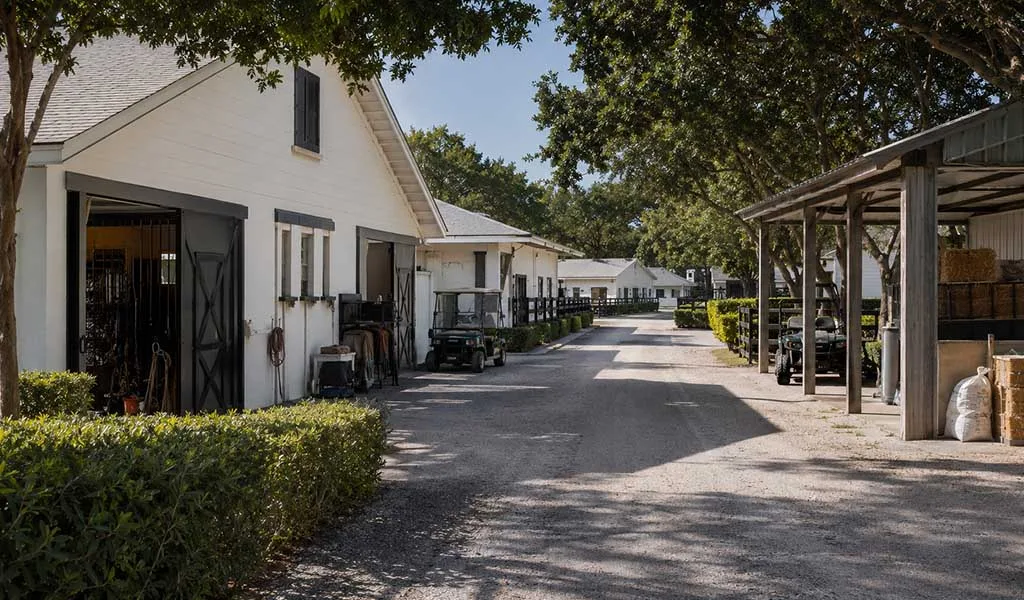
That intermittent activity pattern is arguably harder to manage from a security perspective than either full occupancy or full vacancy. It produces access patterns that reconnaissance can study and exploit specifically.
The events themselves — competitions, hosted parties, industry gatherings — provide legitimate access windows for individuals whose real purpose is intelligence collection rather than participation.
The compound off-season and hurricane exposure
Peak hurricane season overlaps directly with Wellington’s off-season. August through October is both peak Atlantic hurricane activity and the deepest window of Wellington seasonal vacancy.
For estates that maintain horses on site during the off-season, hurricane operational planning has additional complexity. Horse evacuation logistics require pre-arrangement measured in weeks, not days. Barn infrastructure needs specific storm assessment. On-site personnel presence is critical during storm windows regardless of principal residency.
The post-storm window compounds the exposure further. Contractor rotation for damage assessment, cleanup, and restoration. Insurance adjuster access. Utility restoration personnel. Municipal service coordination. All operating in an environment where standard operational oversight is reduced.
What I'd recommend
For Wellington equestrian estate owners heading into peak off-season, three practical priorities.
Formalize your off-season security architecture. Continuous rather than intermittent operations. Not the season architecture with reduced intensity — the off-season architecture as its own designed operational picture.
Address the equestrian infrastructure exposure specifically. Standard residential security architecture isn’t designed for barns, tack rooms, and equestrian equipment concentrations.
Vet your seasonal staff and vendor pool structurally before the December-January rotation begins. Structured background investigation. Documented off-boarding protocols for departing staff. Periodic re-screening for returning staff.
Where to Go From Here
Start with the Estate Operations & Insider Risk Checklist — the 15-point framework specifically designed for equestrian estate seasonal staffing patterns.
If you’re ready for a direct conversation, request an audit here. We understand equestrian property architecture specifically.
For the specific EP architecture in Wellington, read our executive protection coverage for Wellington.
I’m John Hamilton, HKDS founder. We provide estate security, executive protection, and staff vetting for Wellington equestrian properties across Palm Beach Point, Grand Prix Village, and the broader Wellington equestrian corridor. Licensed Florida Class B, D, and G. Contact us.