
Manhattan is a different operational picture than any other market we work in. You live in a shared building. Some of the security is handled for you. Some of it isn’t. If you’re evaluating your current architecture, or figuring out what you need, the specific question is where the building’s coverage ends and where yours has to start.
I’ll tell you what I’ve seen.
What the building handles well
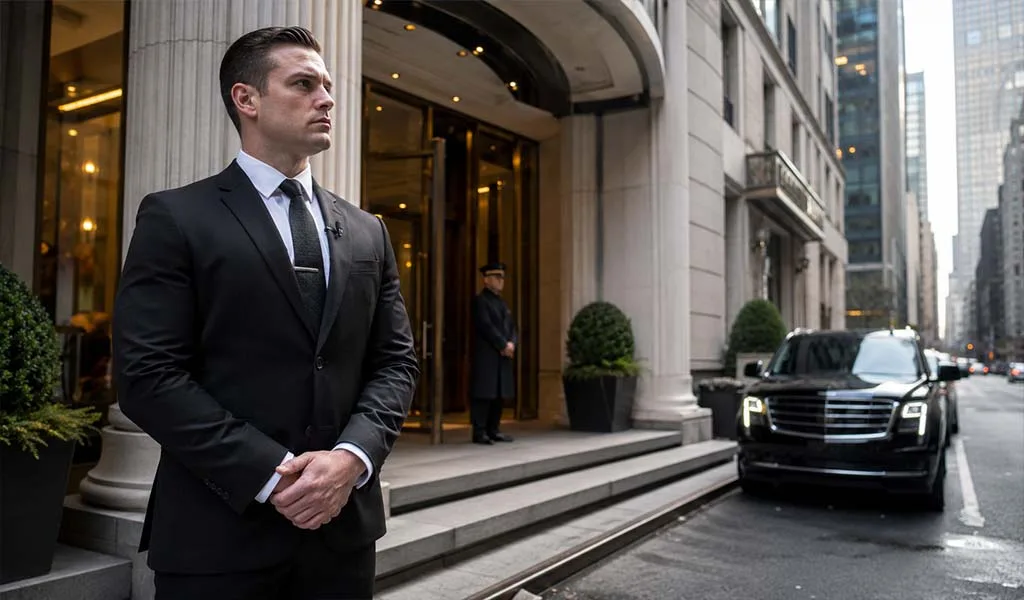
Most Manhattan luxury buildings run real security infrastructure at the ground floor. Doorman coverage. Concierge services. Elevator access control. Camera coverage in common areas. Package management. Visitor identification protocols. Fire and life safety systems that coordinate with FDNY.
For most residents, the building-level baseline is sufficient. That includes many UHNW residents whose profile doesn’t include documented public exposure or specific threat concerns.
Random and opportunistic threats don’t get past the ground floor. Casual reconnaissance is difficult in that environment. Unauthorized access requires either sophisticated deception or forceful engagement — both of which building personnel are trained to detect.
If your profile is standard UHNW and you don’t have specific threat exposure, the building probably handles what you need. Don’t over-engineer.
What the building doesn't do
Here’s where I see the gap.
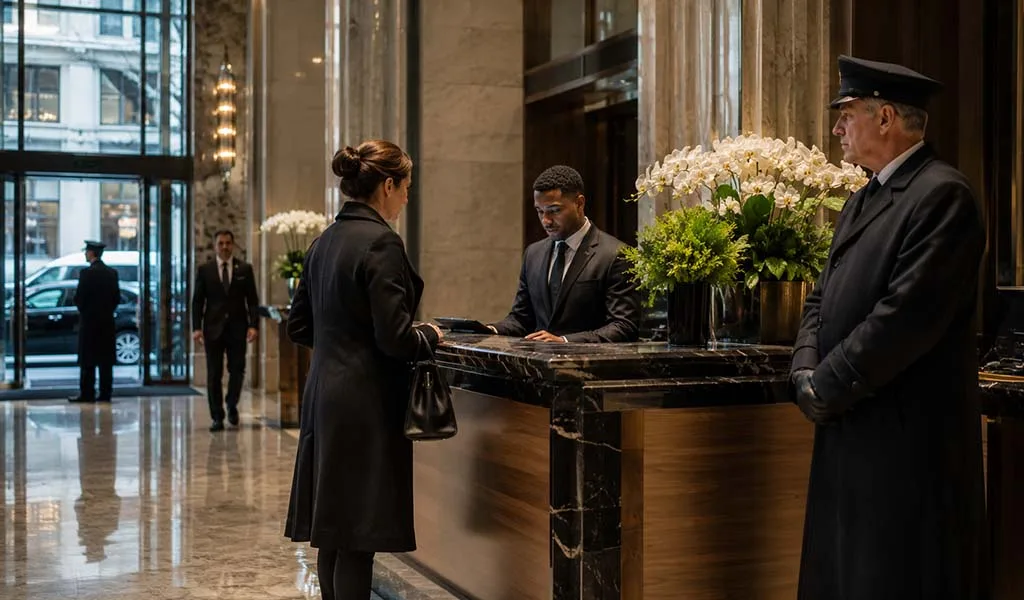
Building personnel handle access at the building level. They don’t vet the household staff you employ or the vendors you engage. That’s your responsibility. The people who work for you have full access to your residence. Have you verified who they are? Do you know what happens to their access when they leave your employment?
Building personnel identify visitors at the ground floor. They don’t monitor sustained reconnaissance targeting you specifically. If someone’s been watching your daily patterns from the coffee shop across the street for three weeks, the building doesn’t know that.
Building infrastructure includes some baseline cyber protection. It doesn’t extend to your individual residence’s home automation, your personal network, your household staff’s devices, or your personal device ecosystem. Compromised smart home credentials produce physical access. Compromised staff devices produce schedule intelligence. Voice cloning against your household manager produces both financial and physical exposure.
Building security handles residence access. It doesn’t address the transitions between residence and office, residence and airport, residence and event venues. This is the vulnerability Brian Thompson’s killing exposed. Not the residence. Not the office. The window between them.
The Thompson pattern
Eighteen months later, the specific thing his killing showed is worth restating clearly.
He wasn’t attacked at home. He wasn’t attacked at his office. He was attacked during a transition — arriving at a hotel for a shareholder meeting. Public schedule. Predictable timing. Established pattern.
If you’re a Fortune 500 executive, a public company CEO, a financial services principal with visible public profile — you have documented public exposure that produces the same kind of schedule intelligence. Where you’ll be next Tuesday morning is knowable. That knowledge is the operational foundation of a coordinated engagement.
Our coverage on why boards must prioritize CEO protection addresses the governance framework that has emerged. According to the October 2025 World Security Report from Allied Universal, 97 percent of institutional investors now say companies should invest in executive security. 42 percent of security chiefs report significant threat increases.
This is the environment now. It’s not going back.
The Billionaires Row overlay
For residents in the 57th Street corridor — Central Park Tower, 220 CPS, 111 West 57th, One57, Aman NY Residences — there’s a specific additional dynamic. The concentration of ultra-wealth in that corridor is possibly the densest anywhere in the world. The building-level architecture at these towers was not designed for state-actor-level intelligence collection, sophisticated social engineering targeting specific residents, or long-duration reconnaissance operations.
The buildings handle the baseline they were designed for. The gap between building coverage and required coverage for Billionaires Row residents is materially larger than at less-concentrated Manhattan luxury buildings.
The seasonal migration reality
Private floor security that operates independently of building coverage. Enhanced access control at the residence level.
Staff and vendor vetting under structured frameworks that operate independently of building visitor management.
Sustained counter-surveillance operations. If your profile includes documented public exposure, you need someone actively watching for the reconnaissance that building staff aren’t watching for.
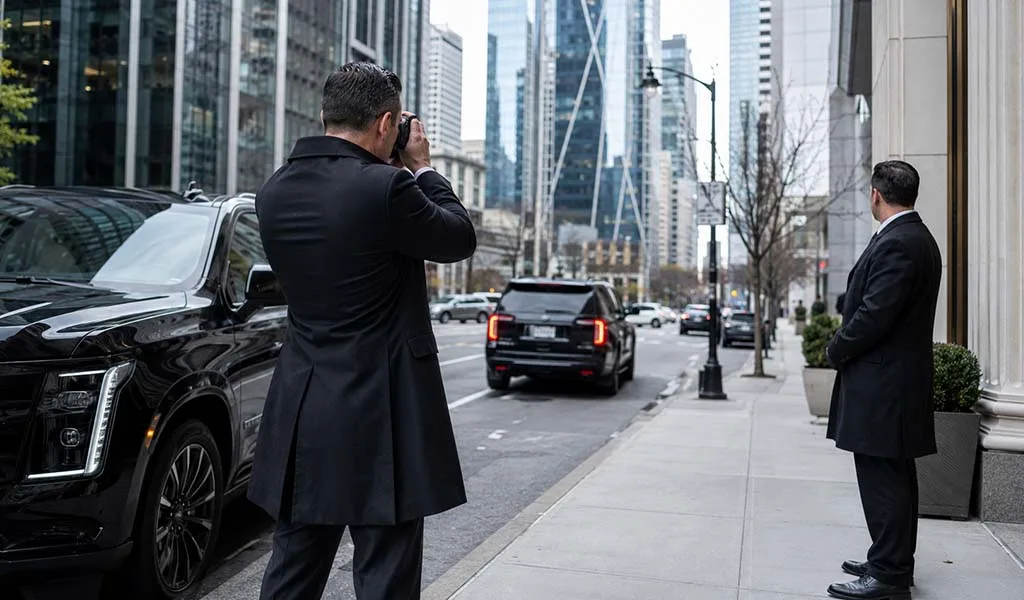
Transition security that addresses the movement pattern between residence and everywhere else. Vehicle protocols. Route planning. Site advance. Timing management.
Cross-market operational continuity between Manhattan and Palm Beach if that applies.
Documentation and governance-ready reporting that satisfies board-level and institutional investor scrutiny. This is what the post-Thompson environment now expects.
What to do now
Assess whether your current architecture matches your actual exposure profile. If your last comprehensive review predates December 2024, you’re operating on assumptions from before the environment permanently shifted.
If your profile includes corporate governance visibility, get the documentation piece right. Boards, insurers, and institutional investors will ask about this whether you initiate the conversation or not.
If you maintain a Palm Beach County residence, integrate the two operations under one command structure.
Where to Go From Here
Start with the Founder Security Checklist — the 15-point framework specifically designed for high-visibility corporate leadership.
If you’re ready for a confidential conversation, request an audit here. We’ll assess your architecture across the specific dimensions the post-Thompson environment now requires.
For the New York-specific operational context, read our adaptive private security coverage for changing New York threats.
I’m John Hamilton, HKDS founder. We provide executive protection, corporate security, and residential security across Manhattan, all NYC boroughs, Westchester County, and the Hamptons. Our Northeast operations serve principals who move between New York and Palm Beach. Contact us.