
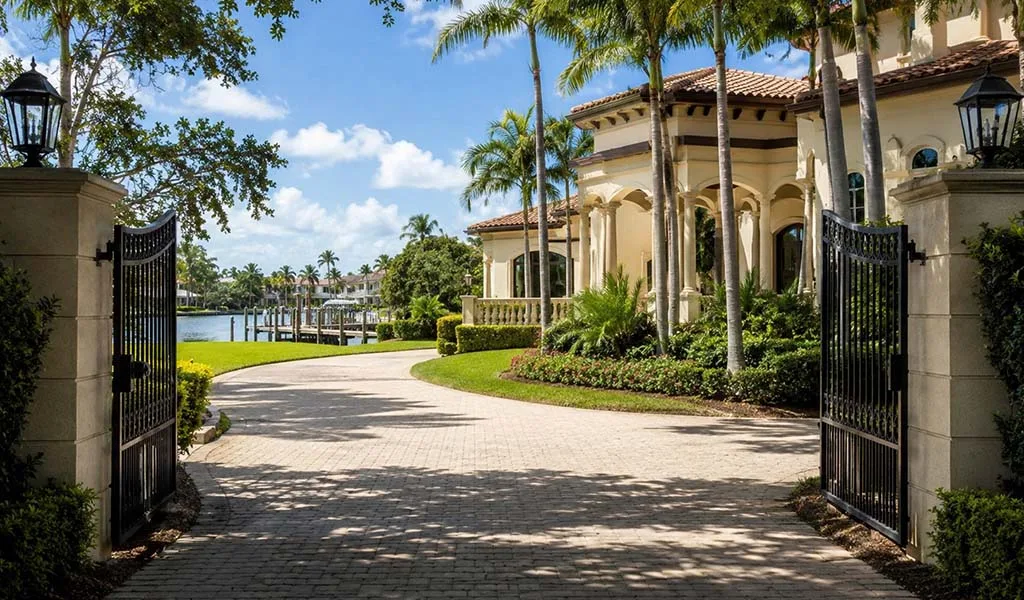
Jupiter is a genuinely safer market than most of South Florida. The gated communities that anchor the market provide real perimeter security. The overall environment supports the operational preferences of principals who chose Jupiter specifically for its quieter profile.
That safer baseline is real. It’s also not the same thing as complete security architecture. Five specific vulnerability categories consistently show up in my casework across the Jupiter corridor, and each is inadequately addressed by standard gated community protocols alone.
Our coverage on estate security in Jupiter addresses the underlying architecture. Related coverage on 24/7 security and mobile patrol in Jupiter covers the operational cadence.
Vulnerability 1 — Marine approach vectors
Jupiter’s estate market is disproportionately waterfront. The Loxahatchee River, Jupiter Inlet, Intracoastal Waterway, and canal systems within specific gated communities all provide direct water access to individual estates. Admirals Cove alone was built around a network of man-made canals with 74-slip marina access.
The vulnerability pattern is consistent. The marine side of the property is routinely covered less operationally than the street side. Camera coverage on the dock is often an afterthought. Watercraft approach patterns aren’t monitored in real time. Dock access from the water is functionally uncontrolled unless the estate has specifically architected marine surveillance into the security posture.
Reconnaissance from the water side is straightforward. Normal canal boat traffic provides cover for sustained observation. Boats transiting the Intracoastal document dock activity, waterfront perimeter, and marine access patterns without triggering any operational response from residence or community security.
For principals whose property includes waterfront access, marine approach is the vulnerability category most likely to be underweighted relative to the actual exposure it represents.
Vulnerability 2 — Household staff turnover exposure
Jupiter estates typically engage substantial household staff. Housekeepers, chefs, drivers, nannies, personal assistants, gardeners, pool maintenance, and various specialized roles. The pool of individuals who have or have recently had property access at any given estate is larger than most principals realize.
The vulnerability pattern operates through several channels. Direct exploitation by a current staff member with legitimate access. Social engineering that recruits a current or former staff member for intelligence. Turnover-related exposure when departing staff retain access credentials, information, or knowledge of security patterns.
The specific gap that most estates leave open is the off-boarding process. When a household staff member departs, gate codes, smart home credentials, network access, key duplicates, and knowledge of security patterns typically persist. The formal off-boarding checklist that many corporate environments now require hasn’t typically been transferred to the residential UHNW context.
The FBI’s IC3 data on insider involvement in high-value incidents applies at Jupiter estates specifically because the vetting and off-boarding standards typical in residential domestic staffing are frequently less rigorous than in adjacent professional contexts.
Vulnerability 3 — Seasonal vacancy patterns
Jupiter’s resident profile includes both year-round and seasonal residents. For estates whose primary occupancy is seasonal, the off-season produces a predictable vacancy window that organized threats are architected to exploit.
The vulnerability pattern operates through calendar-based targeting. Seasonal departure schedules are documented through social media, corporate announcements, event calendars, and observable household patterns. Organized crews identify the transitions and plan engagement during the vulnerability windows.
The specific structural issue is that community-level security is designed for the community perimeter, not for individual estate occupancy management. Gate security continues to function during off-season periods but doesn’t compensate for the estate-level operational awareness that’s reduced during seasonal absence.
Our coverage on hidden security risks during quiet times addresses the specific off-season architecture required.
Vulnerability 4 — Waterfront pattern-of-life exposure
For principals whose property includes private dock access, marina slips at community facilities, or Intracoastal waterway use, the movement patterns associated with waterfront activity produce documentable pattern-of-life intelligence.
The vulnerability pattern operates through observation of vessel movements. Departure timing from the private dock or community marina. Return timing after excursions. Fueling patterns. Guest activity on the vessel. All observable from Intracoastal traffic or from adjacent properties.
For principals whose vessels transmit AIS signals, the movements are also publicly documented digitally. The correlation between vessel departure and residence occupancy patterns provides reconnaissance signal that organized threats specifically look for.
The specific gap that most estates leave open is that waterfront activity is treated as a lifestyle category rather than a security category. Vessel movements, marine excursions, and Intracoastal patterns are managed operationally by household staff or captains rather than integrated into the estate’s overall security operational awareness.

Vulnerability 5 — Community trust exploitation
Gated communities operate on a foundation of resident trust. Residents typically know each other. Community security recognizes regular vehicles and personnel. Vendor rotations follow community norms. The community-level security architecture works because the environment operates on documented trust patterns.
The vulnerability pattern operates by exploiting exactly those trust dynamics. Impersonation of legitimate vendors. Presentation as a moving crew for a supposed neighboring resident. Social engineering against community gate personnel. Exploitation of the community’s documented courtesy patterns during specific events or seasonal periods.
The specific gap is that community-level security is architected for perimeter access control rather than for the sophisticated impersonation and social engineering patterns that current threats display. Gate personnel are trained to verify identity but not typically trained to detect coordinated deception operations that specifically target their identification protocols.
For principals whose estate is inside a community where the trust environment is established, community trust exploitation is a category that individual estate security architecture needs to address specifically.
The pattern across the five vulnerabilities
The common thread is that community-level security handles the perimeter well but doesn’t address the specific vulnerability categories at the individual estate level. That’s not a criticism of community security. It’s a structural limitation of what perimeter-level architecture can address.
The estates that operate effectively in the Jupiter environment layer individual estate security architecture on top of community-level security. The two work together. The individual layer closes the specific vulnerabilities that community-level architecture isn’t designed to address.
For principals whose current security architecture depends primarily on the gated community security, the exposure across these five vulnerabilities is where operational risk concentrates.
Darrell Hofheinz’s Palm Beach Daily News coverage has documented the resident profile shift across Palm Beach County. The community dynamics apply directly to Jupiter’s gated community environment.
Where to Go From Here
Start with the Residential Threat Integration Checklist — the 15-point framework covering the specific vulnerability categories.
If you’re ready for a direct conversation, request an audit here. We assess for gated community context specifically.
For the specific EP architecture in Jupiter, read our executive protection coverage for Jupiter.
I’m John Hamilton, HKDS founder. We operate across Jupiter, Jupiter Island, Tequesta, Juno Beach, and North Palm Beach. Licensed Florida Class B, D, and G. Contact us.