
Fort Lauderdale operates on a maritime geography that produces threat patterns distinct from other Florida luxury markets. The canal system that gives the city its “Venice of America” identity provides thousands of estates with direct water access. The concentration of yacht industry infrastructure at Bahia Mar, Pier Sixty-Six, and Port Everglades produces marine industry density that no other American market matches.
Here are the four maritime threat patterns I see consistently across the corridor.
Our coverage on maritime superyacht security in Fort Lauderdale addresses the specific integrated architecture the current environment requires. Related coverage on how to secure a luxury yacht covers the specific vessel-side architecture.
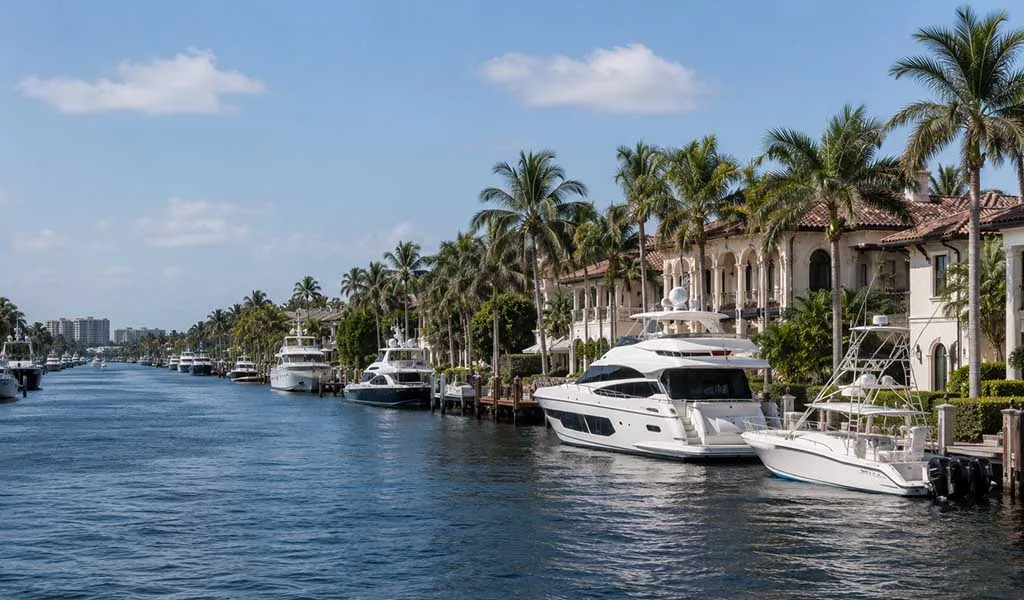
Pattern 1 — Canal-based reconnaissance
The canal system that shapes Fort Lauderdale’s residential geography is functionally open to marine traffic. Normal canal boat activity is constant. Vessels transit for legitimate purposes including transportation, recreation, fishing, service delivery, and social visits. The traffic volume and legitimate diversity provide cover for reconnaissance activity that would be immediately visible in a controlled land-side environment.
The specific pattern operates through several mechanisms. Recreational vessels transiting canal systems document residential patterns from the water side. Fishing vessels linger at positions that provide sustained observation of specific properties. Service vessels including provisioning boats and maintenance craft produce closer approach opportunities that legitimize prolonged proximity. All operating within traffic patterns that appear normal to observers on the residential side.
The vulnerability that most canal-front residences leave open is that marine-side operational coverage is treated as an afterthought relative to street-side coverage. Camera coverage of the dock is often present but not actively monitored. Watercraft approach patterns are not tracked in real time. Distinguishing between normal canal boat traffic and reconnaissance activity requires operational discipline that most standard residential security programs don’t deploy.
For principals whose residence sits on a canal or on the Intracoastal Waterway, canal-based reconnaissance is the vulnerability category most likely to be underweighted relative to actual exposure.
Pattern 2 — AIS-based intelligence collection
Automatic Identification System broadcasting is required for commercial vessels and for most yachts above certain size thresholds. The system was designed for maritime safety. It has become one of the most reliable sources of intelligence about yacht movements available anywhere.
For a Fort Lauderdale yacht owner with a vessel above 65 feet, the vessel’s movements are effectively public information. Departure timing from Bahia Mar. Transit through Port Everglades. Position in the Bahamas, Caribbean, or transatlantic. Return timing. All of it visible through publicly accessible AIS tracking services that require nothing more than a browser.
The specific threat pattern operates through the correlation between vessel movements and residence occupancy. When the yacht departs, the owner is presumably not at the residence. When the yacht returns, the owner is presumably back. The correlation is imperfect but reliable enough to support operational planning.
For threat actors targeting specific principals, AIS provides advance intelligence about residence vulnerability windows. Departure timing supports operational planning. Extended voyages create extended residential vulnerability. Return timing supports engagement window closure.
The vulnerability that most yacht owners haven’t addressed is that AIS visibility is treated as a maritime regulatory matter rather than a security intelligence matter. The regulatory compliance is required. The security implication is that vessel movements produce a category of intelligence that security architecture needs to account for operationally.
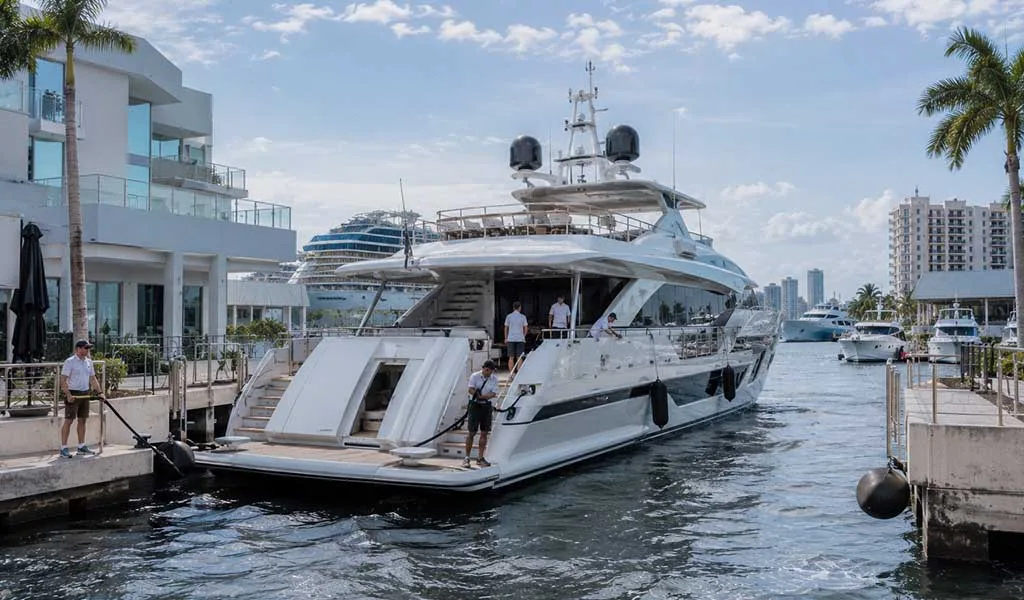
Pattern 3 — Marine industry vetting gaps
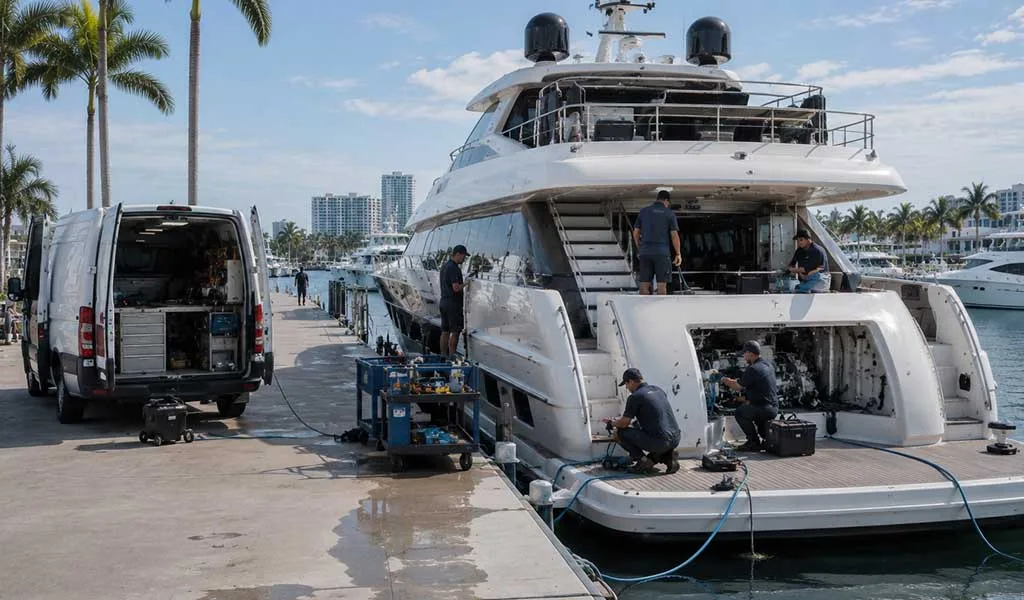
Fort Lauderdale’s marine industry concentration produces substantial vendor and personnel access to vessels and to adjacent residential environments. Captains and crew. Provisioning services. Marine electronics contractors. Maintenance and repair personnel. Fuel delivery. Charter guests during charter operations. Cleaning and interior services. Broker representatives during listing periods.
The vetting standards typical in the marine industry vary substantially. For owner-operated vessels below certain sizes, vetting is often informal and reference-based. For professionally captained vessels, standards are higher but not always sufficient for the trophy-yacht profile. For charter operations, guest vetting operates on charter company protocols that vary widely.
The specific threat pattern operates through multiple channels. Direct exploitation by personnel with legitimate access. Intelligence collection during legitimate service periods that supports later engagement. Turnover-related exposure when departing personnel retain vessel or residence intelligence. Charter operation exposure when high-value assets are accessed by rotating charter guests.
The FBI’s IC3 data on insider involvement in high-value incidents applies at Fort Lauderdale specifically because the vetting standards typical in the marine industry are structurally less rigorous than in adjacent enterprise environments handling comparable value.
The Sun Sentinel’s ongoing coverage of the Fort Lauderdale marine ecosystem provides local context for how the industry actually operates.
Pattern 4 — Hurricane season and yard storage vulnerability
Hurricane season creates specific maritime security exposure that combines with residential exposure. Vessel movements during pre-storm periods produce documented positioning changes. Yard storage during storm periods concentrates high-value vessels at specific locations. Post-storm marina and yard operations produce elevated personnel access with reduced oversight.
The specific pattern operates through several mechanisms. Pre-storm vessel movements are documented through AIS and through marina operations. Yard storage concentration creates target density that isn’t present during normal operations. Post-storm cleanup and repair operations bring rotating personnel through yards and marinas with less rigorous vetting than normal operations require.
For canal-front residences, the hurricane season overlay adds residential exposure to the maritime exposure. Vessels moved to yard storage separate from the residence. Residences potentially unoccupied during storm evacuation. Post-storm contractor arrivals at residences before owners return.
The vulnerability that most integrated yacht-and-residence operators haven’t addressed is that hurricane season security is often handled separately by marine and residential security operations rather than coordinated as an integrated operational picture.
The Fort Lauderdale International Boat Show overlay
The Fort Lauderdale International Boat Show in late October concentrates hundreds of high-value vessels and their owners in a defined location over five days. The concentration is a business opportunity for the industry and a security concentration for owners.
For principals attending, hosting, or exhibiting during the show window, the operational picture includes documented presence at a documented location with adjacent vessels of substantial value. Reconnaissance during the show produces intelligence that persists past the show itself. Post-show follow-up operations against principals identified during the show is a documented pattern.
The architecture that addresses maritime threat patterns
Security architecture that addresses these four patterns has characteristics that residential-focused architecture doesn’t display.
Integrated vessel-and-residence operational picture under unified command rather than separated coverage areas. Marine surveillance and residential surveillance feeding into shared incident awareness. Canal traffic monitoring that operates continuously rather than episodically.
AIS-aware operational planning that accounts for vessel movement intelligence. Departure and return windows managed as residential vulnerability windows. Extended voyage protocols that address extended residential exposure.
Marine industry vetting frameworks that operate at trophy-yacht standards rather than at general industry norms. Captain and crew vetting. Vendor and contractor vetting. Charter guest vetting where applicable. Periodic re-screening. Off-boarding protocols.
Hurricane season coordination that integrates vessel security, residential security, and post-storm access management into a single operational picture rather than separated coverage domains.
The principals who operate this architecture manage the maritime environment effectively. The principals who operate fragmented coverage are running architecture that the current threat environment is designed to exploit.
Where to Go From Here
Start with the Estate Operations & Insider Risk Checklist — the 15-point framework covering integrated vessel-and-residence vetting.
If you’re ready for a direct conversation, request an audit here. We assess the integrated profile specifically.
For the executive protection architecture across the corridor, read our executive protection coverage for Fort Lauderdale.
I’m John Hamilton, HKDS founder. We provide estate security, executive protection, marine security integration, and captain and crew vetting for Fort Lauderdale yacht owners and canal-front residents. Contact us.