
Manhattan’s UHNW seasonal migration pattern produces a specific summer operational reality that residential-standard security frameworks don’t fully address. Principals migrate northbound to the Hamptons, southbound to Palm Beach if they maintain dual residences, or internationally to European or Middle Eastern destinations. Their Manhattan residences transition from occupied and staffed to reduced-presence or vacant during summer months.
The specific characteristic that shapes summer vulnerability is that the vacancy is often more predictable than the peak-season occupancy. Departure timing is documented through social media, corporate calendars, philanthropic event schedules, and observable staff patterns. Return timing is similarly documented. The window between departure and return is the specific vulnerability period that summer security architecture has to address.
Here’s what I’ve seen operationally.
Our coverage on adaptive private security for changing New York threats addresses the underlying architecture. Related coverage on travel security across the Manhattan-Palm Beach corridor covers the cross-market operational picture.
The building-level baseline during vacancy
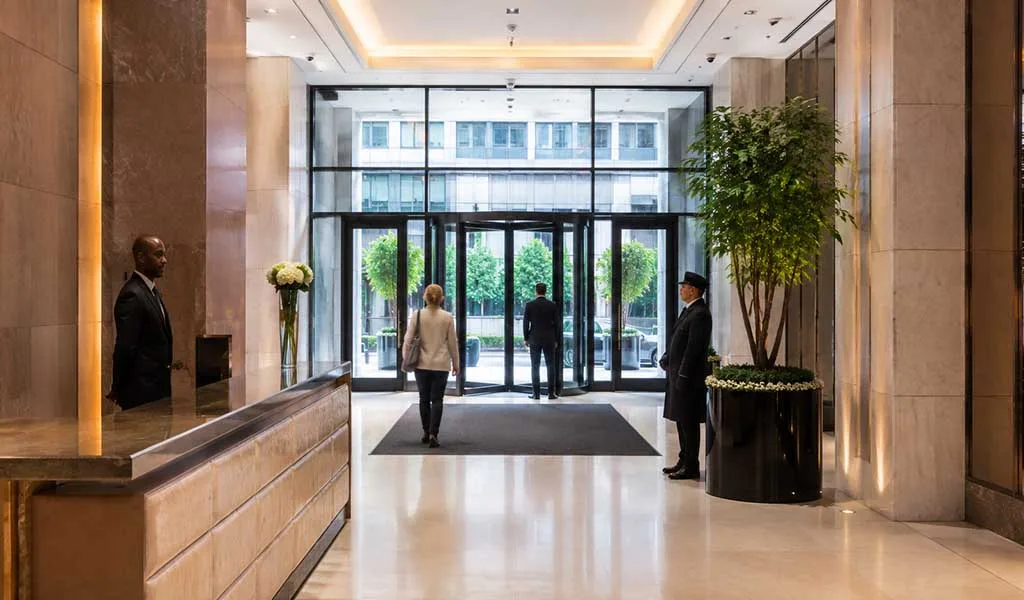
Manhattan luxury buildings continue to operate their standard security architecture during summer months regardless of individual residence occupancy. Doorman coverage. Concierge services. Building-level access control. Elevator monitoring. Package management. Visitor vetting at the ground floor.
For most residents whose profile is standard UHNW without specific threat considerations, the building-level baseline continues to provide adequate coverage during vacancy. Building personnel monitor floor access, restrict elevator access to authorized destinations, and manage visitor identification consistent with normal operations.
The specific consideration is that building-level architecture is designed for continuous residence occupancy patterns. During extended vacancy, the building continues to operate its standard architecture but doesn’t modify operations to address the specific vulnerability categories that extended vacancy produces.
For most residents, this is appropriate. Don’t over-engineer.
Extended vacancy at trophy-tier residences
For residents whose profile includes documented public exposure, Billionaires Row concentration, or specific threat considerations, extended vacancy produces exposure categories that building-level architecture doesn’t address.
Sustained reconnaissance operations targeting specific residents can operate during extended vacancy periods with reduced operational signature. Building personnel identify visitors at the ground floor but don’t typically monitor sustained reconnaissance operations that operate from adjacent public spaces, from adjacent buildings, or through indirect access to the target’s residence.
Household staff and vendor access continues during vacancy periods for maintenance, cleaning, and coordination purposes. During peak occupancy, that access operates against continuous principal presence. During extended vacancy, the access operates against reduced operational oversight. Building-level architecture screens the personnel at the ground floor but doesn’t monitor their activity once inside the residence.
Cyber-physical exposure operates continuously regardless of occupancy. Compromised household staff devices produce exposure whether the principal is present or not. Compromised smart home systems produce access opportunities that extended vacancy makes more valuable.
Cross-market seasonal coordination
For principals whose seasonal migration includes Palm Beach County or Hamptons operations, effective summer security involves cross-market coordination that isolated Manhattan operations can’t provide.
The specific consideration is that seasonal migration produces transition windows twice each year during which security operations move from one primary location to another. Threat intelligence transitions. Standing relationships transition. Household patterns transition. Vendor access patterns transition.
Coordinated cross-market operations under unified command produce continuous coverage across the seasonal transition. Fragmented local providers operating independently in each market produce coordination gaps at every transition point.
For principals in the Manhattan-Palm Beach seasonal pattern specifically, the corridor operates as a single security environment across two markets. Continuous intelligence. Consistent protocols. Integrated documentation. Response coordination that operates across geographic distance.
Our detailed coverage on the NYC-Palm Beach security corridor addresses the specific architecture.

Family member and household staff patterns during summer
Extended summer vacancy at Manhattan residences typically involves compressed household staff coverage and specific family member patterns that differ from peak-season operations.
Household staff may reduce to caretaker coverage during extended vacancy. Regular cleaning, maintenance, and property management continues but at reduced intensity and often on documented schedules that produce predictable access patterns. Family members may return to the residence at documented times for specific commitments, producing brief occupancy windows within the broader vacancy pattern.
The specific vulnerability operates through the predictability of these patterns. Caretaker schedules are often the same week over week. Family member returns are often for documented events. The pattern of “generally vacant with occasional occupancy” produces reconnaissance intelligence that supports operational planning against specific occupancy windows.
Residents that manage this effectively vary the patterns to reduce reconnaissance value. Non-standard schedules. Variable timing. Documented protocols that don’t produce week-over-week repetition.

Return window operational coordination
The return from summer migration to Manhattan produces its own specific operational window that requires coordination.
Return preparation typically involves advance staff arrivals to prepare the residence, vendor visits for pre-return maintenance, and coordination of the family’s actual arrival. The transition period from full vacancy to full occupancy produces access patterns that are less rigorously controlled than either full vacancy or full occupancy operations.
The specific consideration is that return timing is often documented through the same channels that supported reconnaissance during vacancy. Return coordination visible through household staff communications, vendor scheduling, and family member patterns. The reconnaissance operations that persisted during vacancy have advance intelligence about return timing.
For threat actors targeting specific residents, the return window can provide the last engagement opportunity before the residence returns to full occupancy. Operational activity timed to the transition period may operate against the reduced oversight that the transition produces.
Residents that manage return coordination effectively treat the transition as a security operational window with specific protocols. Structured return coordination. Documented staff and vendor access. Continuous operational awareness through the transition.
The corridor and cross-market picture
Manhattan summer security ultimately intersects with cross-market operations for principals whose profile includes multiple locations. Effective architecture treats the seasonal migration as a continuous operational picture rather than as separate coverage periods in each market.
For principals whose Manhattan residence remains vacant during Palm Beach County summer operations, integrated architecture maintains Manhattan residential coverage while primary operations focus on the summer location. When the seasonal transition returns principals to Manhattan, the integrated architecture supports the transition without coordination gaps.
Fragmented providers in each market produce coordination gaps. Unified command across markets produces coordinated coverage.
Katherine Clarke’s WSJ Mansion coverage has documented the seasonal migration dynamics across the corridor. That reporting provides useful context on how the corridor’s UHNW community actually operates through the transitions.
The 2026 FIFA World Cup and remaining season overlay
The 2026 FIFA World Cup finals are being held at MetLife Stadium in late July. That elevated event security posture affects the broader Manhattan operational environment for the remainder of the summer. Corporate executive protection requirements are elevated. Public event exposure is compressed. Cross-market travel patterns intersect with World Cup security operations.
For Manhattan residents whose profile includes corporate role visibility or public event exposure, the World Cup final window adds an operational consideration to the ongoing summer vacancy pattern.
What I'd recommend
For Manhattan UHNW residents in the seasonal migration pattern, three practical priorities.
Design summer vacancy architecture explicitly. Continuous rather than intermittent operational awareness. Documented protocols for the extended vacancy period.
Integrate your Manhattan and Palm Beach County operations under unified command. Fragmented providers produce coordination gaps at every seasonal transition.
Manage the return window as a specific security operational period. This is where reconnaissance operations that persisted during vacancy translate into engagement opportunities.
Where to Go From Here
Start with the Founder Security Checklist — the 15-point framework specifically designed for high-visibility principals with multi-market exposure.
If you’re ready for a confidential conversation, request an audit here. We assess for the specific seasonal migration profile.
For the specific EP architecture in Manhattan, read our executive protection coverage for Manhattan.
I’m John Hamilton, HKDS founder. We provide executive protection, corporate security, and residential security across Manhattan, all NYC boroughs, Westchester County, and the Hamptons. Our Northeast operations serve principals who move between New York and Palm Beach. Contact us.