
Miami’s private island enclaves face hurricane operational requirements distinct from mainland UHNW estates. Indian Creek’s single-bridge access. Star Island’s guard-gated bridge. Fisher Island’s ferry-only operation. Each produces specific considerations that hurricane planning has to account for explicitly.
Here’s what I’m doing right now for our Miami island principals heading into peak season.
Our coverage on estate security at Fisher Island, Star Island, and Indian Creek addresses the tier-by-tier architecture each environment requires.
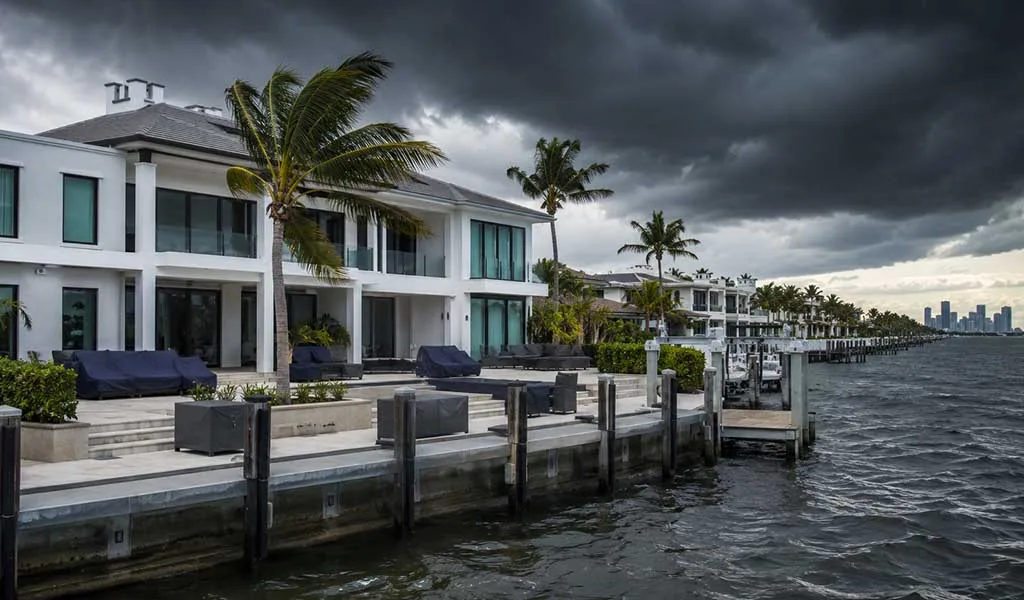
Bridge and ferry access during storm windows
For Indian Creek and Star Island, the bridge access typically remains operational until wind conditions exceed established thresholds. During and after storm conditions, the bridge may be closed for damage assessment before residents can return.
The specific consideration is that the window between “island evacuation possible” and “island evacuation required” is narrower than mainland evacuation windows. There’s less flexibility to time your movement optimally. What that means operationally is that evacuation decisions have to be made earlier than mainland principals would consider necessary.
For Fisher Island, ferry operations transition to storm protocols with modified schedules and eventual suspension. The specific consideration is that Fisher Island residents face a longer effective evacuation lead time because ferry logistics can’t match bridge logistics for volume or timing.
For all three enclaves, post-storm reentry timing depends on bridge or ferry restoration timing, which depends on damage assessment and infrastructure verification. Post-storm reentry often occurs before full residence infrastructure verification, which produces the specific residential vulnerability window that requires operational architecture.
What I’m doing right now: establishing pre-storm evacuation timing protocols that account for the narrower windows. Documenting the specific triggers that activate evacuation decisions. Coordinating with village and community operations.
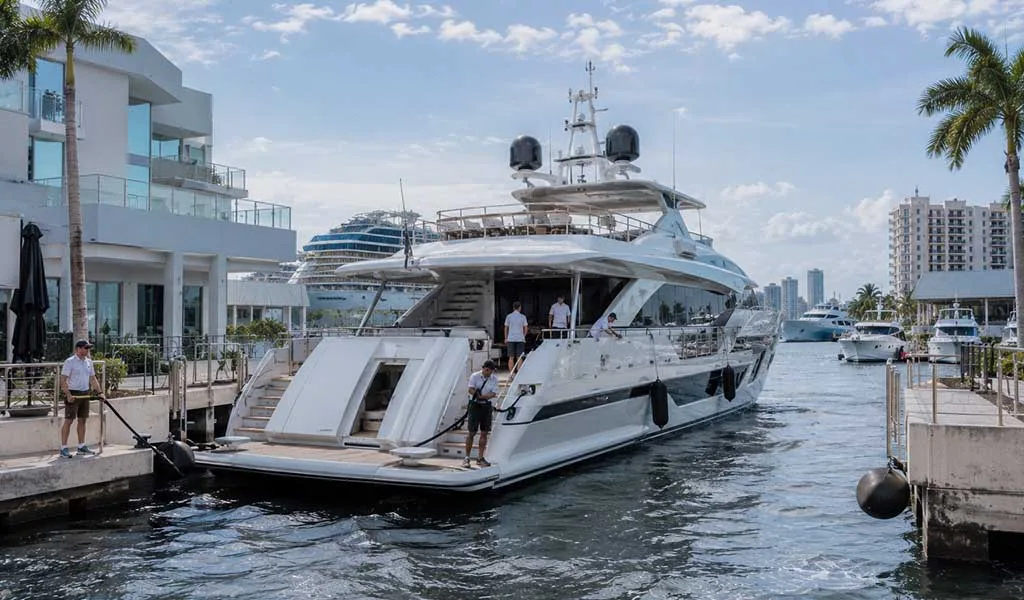
Marine exposure and vessel management
Private island estates on Indian Creek, Star Island, and Fisher Island typically maintain vessels at private docks or nearby marinas. Hurricane operations for these vessels involve considerations that mainland dock operations don’t fully replicate.
Vessels at private docks face direct exposure to Biscayne Bay conditions during storm windows. Storm surge from the west affecting Intracoastal exposure. Wind-driven waves from the east affecting Atlantic-side exposure. Debris impact from adjacent structures. All operating in a confined water environment where vessel movement during storms is constrained.
Vessels moved to yards or protected marinas for hurricane storage require pre-arranged coordination that increasingly compresses as regional yard capacity fills during storm approach windows. The specific consideration for Indian Creek, Star Island, and Fisher Island vessels is that available protected storage tends to fill quickly as regional demand exceeds capacity during confirmed storm windows.
For principals with vessels above certain sizes, hurricane operations require pre-arranged coordination measured in weeks rather than days.
What I’m doing right now: confirming yard reservations for principals whose vessels require inland storage above storm threshold. Coordinating transportation. Verifying insurance documentation.
Village and community coordination
Indian Creek Village operates as an independent municipality with its own police force. Star Island operates on HOA-level community infrastructure. Fisher Island operates on the amenity-driven community model with ferry-dependent access.
Each enclave’s community-level infrastructure operates specific hurricane protocols. Indian Creek’s village operations transition to storm protocols with modifications to standard police coverage and utility services. Star Island’s community operations coordinate with mainland Miami Beach operations. Fisher Island’s operations coordinate with the ferry infrastructure and community management.
The specific consideration for individual estate security is that community-level operations during storm windows may reduce standard coverage. Village police may evacuate under specific conditions. HOA security may transition to reduced protocols. Ferry operations may suspend. All appropriate for community-level operations but creating gaps that individual estate security has to address.
Estates that maintain private security architecture through hurricane windows manage those gap periods effectively. Estates that depend entirely on community-level infrastructure face the community reductions without individual estate coverage to compensate.
The post-storm vulnerability window
The post-storm reentry period at private island enclaves produces specific vulnerability that mainland estates don’t face in identical form.
Reentry timing depends on bridge or ferry restoration, damage assessment by community authorities, and utility restoration coordination. Residents typically face compressed timing between reentry authorization and return to normal operations. During this window, contractor and utility personnel access to islands is elevated for infrastructure restoration.
For Indian Creek specifically, the vendor access during infrastructure restoration produces the wastewater management and infrastructure access consideration that operates as a broader access category. Post-storm restoration produces elevated legitimate access that residential-standard security architecture cannot fully address.
The estates that manage post-storm windows effectively establish operational architecture designed specifically for the reentry period. Continuous rather than intermittent presence. Documented access control for arriving contractors and utility personnel. Coordinated protocols for extended coverage until full community-level operations resume.
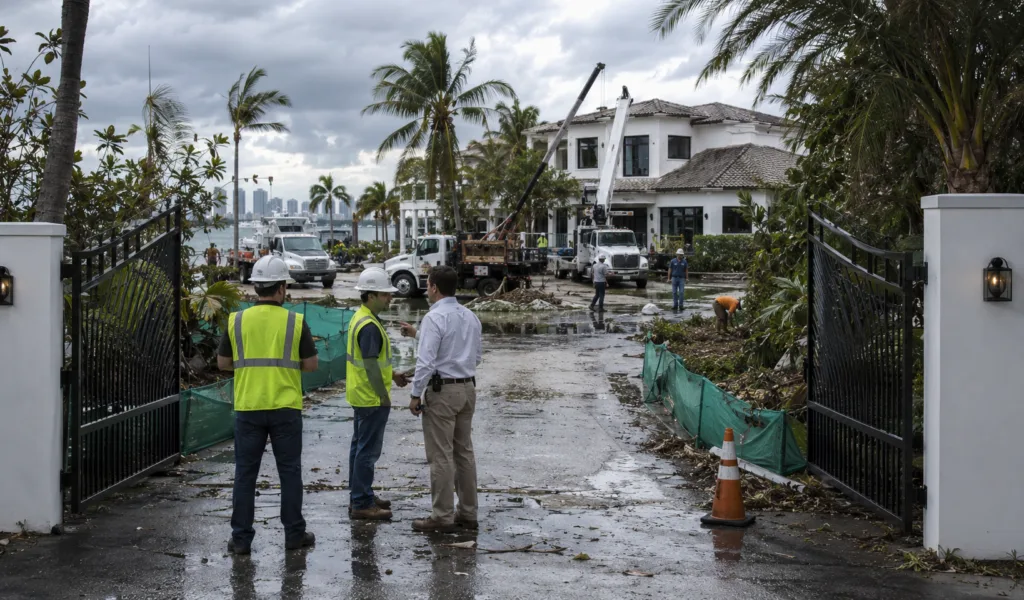
The Zuckerberg-Bezos concentration effect on storm operations
The current Indian Creek concentration reset by Zuckerberg’s $170 million March 2026 purchase and the Bezos $230 million cumulative investment produces specific storm operational considerations.
The concentration of principals at this wealth and public visibility level produces media and public attention during storm windows that ordinary residential enclaves don’t attract. Media documentation of storm impacts to specific properties. Public speculation about specific residents’ storm preparation and impacts. Aerial documentation opportunities from post-storm assessment and news operations.
The specific consideration is that the post-storm reconnaissance environment at Indian Creek and comparable enclaves is more sophisticated than at less-concentrated environments. Aerial documentation persists past the immediate storm window. Media coverage produces intelligence about specific property impacts. Recovery activity produces documentation that supports later reconnaissance operations.
Estates in the current concentration environment require post-storm architecture that specifically addresses this reconnaissance dimension alongside the immediate operational requirements.
The NBC 6 South Florida coverage provides ongoing local context for the operational environment. Katherine Clarke’s WSJ Mansion coverage has documented the concentration effect specifically.
What I'd recommend
For Miami private island estate owners heading into peak hurricane season, three practical priorities.
Establish pre-storm evacuation protocols that account for the narrower operational windows.
Complete vessel storage coordination now. Yard capacity is finite and confirmed storm approach windows compress the coordination timeline.
Design post-storm operational architecture explicitly. This is where the compound exposure is highest and where the reconnaissance environment at concentration levels is most sophisticated.
Where to Go From Here
Start with the Estate Operations & Insider Risk Checklist — the 15-point framework covering the vendor and access categories that intensify during post-storm windows.
If you’re ready for a direct conversation, request an audit here. We assess for the specific private island profile.
For the specific EP architecture across Miami, read our executive protection coverage for Miami.
I’m John Hamilton, HKDS founder. We provide estate security, executive protection, and converged physical-digital security across Miami. Contact us.