Most construction executives assume their infrastructure development sites are secure because cameras are installed and guards are on duty. Then something happens—materials disappear overnight, sensitive blueprints leak, or a security incident halts operations for weeks.
The real cost isn’t limited to stolen equipment. Infrastructure development security risks show up as delayed timelines, regulatory scrutiny, reputational damage, and the realization that critical exposures were never identified during the build phase.
Construction sites aren’t just temporary projects. They are exposed environments where millions of dollars in equipment, proprietary designs, and unfinished critical infrastructure exist without the protections of a completed facility.
Every day a project remains under development is another day adversaries can exploit gaps between physical security, cybersecurity, and threat intelligence. When those domains operate in silos, small vulnerabilities compound into crises.
The most overlooked reality is this: the greatest risk during infrastructure development isn’t external intrusion—it’s the assumption that traditional security measures can protect assets in environments designed for access, not control.
Why Security Risks Increase During Infrastructure Development
On large infrastructure projects, access points often shift multiple times per week as phases activate and deactivate. In practice, this often means yesterday’s secured perimeter becomes today’s unmonitored entry—without anyone formally reassessing risk.
We regularly see incidents traced back to routine site activity: a delivery driver given temporary access, a subcontractor reusing credentials, or design documents left accessible in site trailers. None of these trigger alarms, but together they create a clear intelligence picture for adversaries.
Construction sites operate under a paradox. They must remain open enough for heavy equipment, material deliveries, and rotating crews—yet secure enough to protect assets worth millions.
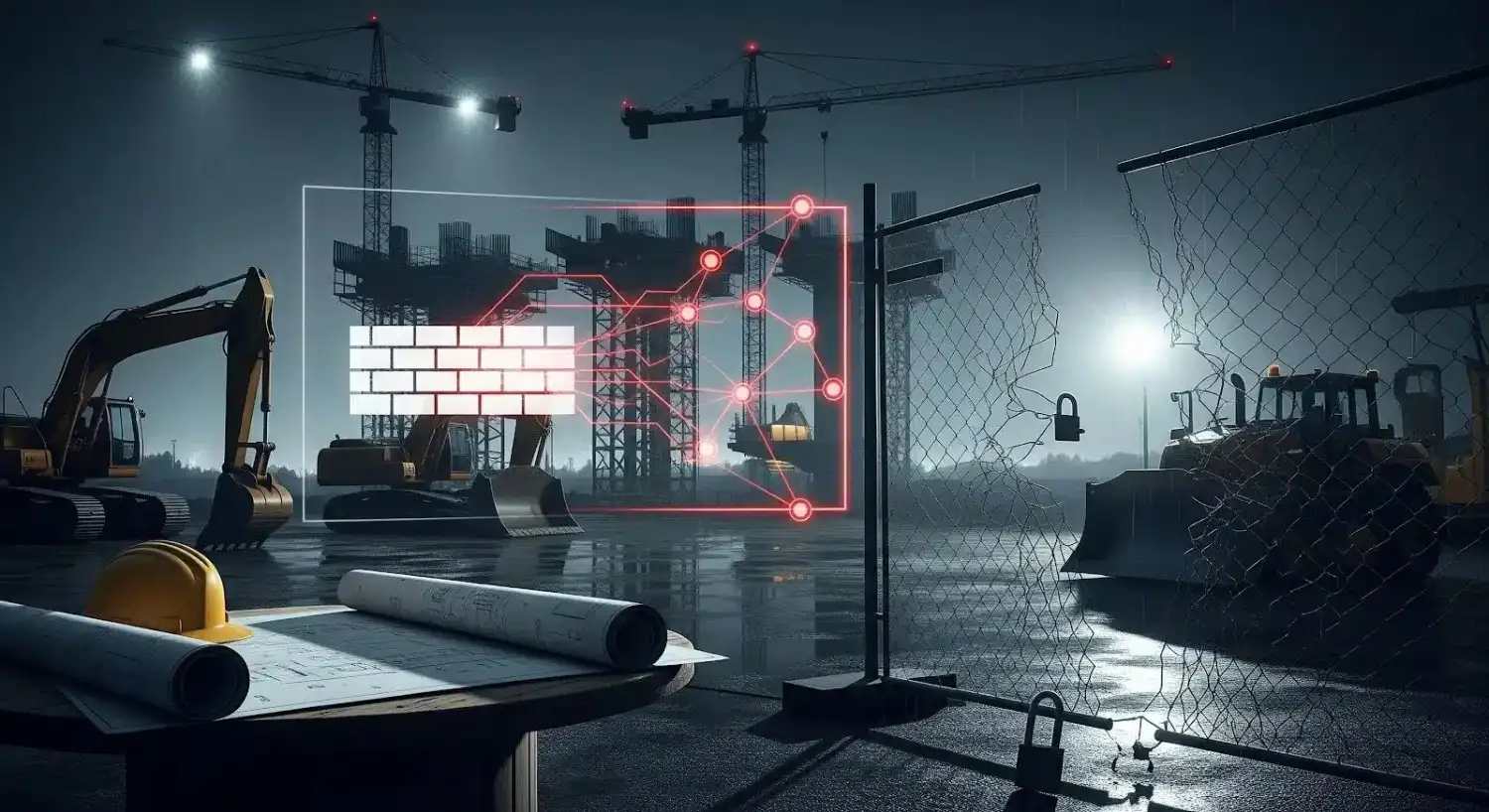
During active development, the perimeter changes constantly. Areas secured in one phase may be exposed in the next as access requirements change. Temporary fencing and access controls create the appearance of boundaries, but rarely provide meaningful deterrence.
Accountability breaks down because construction sites lack the structured access controls of completed facilities. Contractors subcontract. Delivery drivers rotate. Inspectors come and go. Each interaction introduces a new, often undocumented, access point.
Blueprints left in a trailer, project schedules discussed openly, or digital files accessed on unsecured site networks—these leaks don’t trigger alarms. They happen quietly, giving adversaries the intelligence they need to plan more sophisticated attacks or competitive advantages.
The Overlooked Gap Between Physical and Cyber Security on Construction Sites
Most infrastructure projects treat physical security and cybersecurity as separate problems. That separation creates the exact vulnerabilities adversaries exploit.
Consider how modern construction operates. Project management software, design files, communication platforms—everything runs digitally. Site supervisors access blueprints on tablets. Contractors submit progress reports through cloud systems. Surveillance feeds stream to remote monitoring centers.
Each digital touchpoint is a potential entry vector if not properly secured. When your physical security team doesn’t coordinate with your IT security protocols, you’ve created a seam.
A stolen laptop from a site office isn’t just about the hardware cost. It’s about the unencrypted project files, the saved passwords, and the network access that laptop provided.
An adversary doesn’t need to scale your fence if they can access your systems remotely. The same dynamic applies in reverse. Physical intrusions often succeed because digital reconnaissance provided the roadmap.
Public records, social media posts from workers, vendor invoices, permit applications—all of this open-source intelligence maps your site’s vulnerabilities before anyone sets foot on your property. If your security program isn’t monitoring both physical access and digital footprints simultaneously, you’re defending half the battlefield.
Infrastructure projects create additional exposure through the sheer number of connected devices on site. Smart sensors, IoT equipment monitors, and automated access systems—each device is another potential vulnerability if not properly configured and monitored.
The convergence of operational technology and information technology on construction sites has outpaced most security frameworks designed for static facilities.
Why Temporary Construction Security Fails Against Real Threats
The temporary nature of construction invites complacency. Security measures that would never be acceptable in a completed facility somehow become “good enough” during development. That’s backwards thinking, because the risks during construction are often higher, not lower.
Temporary barriers mean temporary protection. Chain-link fencing with padlocks can be breached in seconds by anyone with basic tools. Portable security cameras have blind spots, limited night vision, and depend on someone actively monitoring feeds that often aren’t reviewed until after an incident.
These measures check boxes for insurance and compliance, but don’t actually stop determined adversaries. The workforce composition during construction amplifies risk.
You’re not working with a vetted, stable employee base. You’ve got rotating contractors, subcontractors, day laborers, and vendors—each with varying levels of background screening and accountability.
Traditional badge systems don’t work when hundreds of people need access, and the site layout changes weekly. Incident response during construction is particularly problematic.
There’s often no established security command structure, no clear escalation protocols, and no integration between on-site security personnel and project management. When something goes wrong, the response is reactive and fragmented.
By the time leadership understands what happened, the adversary is gone, and the damage is done. The assumption that “nothing has happened yet” creates false confidence. Most infrastructure development security risks materialize gradually.
Small thefts go unreported. Minor breaches don’t trigger investigations. Pattern recognition fails because there’s no system tracking incidents across phases and shifts. By the time a major event forces a security review, you’re analyzing months of accumulated exposure.
How Converged Security Protects Infrastructure Projects
Converged security doesn’t mean adding more tools. It means removing blind spots. When physical access logs, digital credentials, and intelligence monitoring feed into the same operational picture, risks surface early—before they escalate into incidents.
Real protection during infrastructure development requires integrating physical security, cybersecurity, and threat intelligence into a unified system. That’s not about hiring more guards or installing more cameras. It’s about creating a security architecture where every domain informs and reinforces the others.
Start with intelligence-driven site planning. Before construction begins, map every potential exposure—not just physical access points, but digital vulnerabilities, supply chain risks, and threat actor profiles relevant to your project type and location. That intelligence foundation allows you to design security measures that address actual risks rather than generic concerns.
Physical security becomes smarter when it’s informed by real-time intelligence and digital monitoring. Instead of static perimeter defenses, you implement adaptive systems that respond to patterns and anomalies. Access control integrates with digital credentialing systems that track not just who entered, but what they accessed and when.
Surveillance doesn’t just record—it feeds into analytical systems that flag unusual behavior before it becomes an incident. Cybersecurity can’t sit in isolation. Every digital system on your construction site—from project management software to equipment monitoring—needs to be secured with the same rigor you’d apply to a corporate network.
That means encrypted communications, segmented networks, regular vulnerability assessments, and protocols for contractor device security. Your IT team and your site security team need to be in constant communication. The convergence extends to your vendor and contractor management.
Background screening matters, but so does ongoing monitoring. Are contractors accessing areas they shouldn’t? Are there patterns in when incidents occur that correlate with specific crews or shifts? Intelligence gathering isn’t just about external threats—insider risks from temporary workers represent one of the most significant vulnerabilities during construction.
Incident response improves exponentially when security domains communicate. A physical breach should trigger digital forensics. A cybersecurity alert should prompt physical site checks. When your security operations center sees the complete picture across all domains, response times drop, and containment becomes possible before damage spreads.
Building Security Into Development, Not Adding It After
The most effective security programs don’t treat protection as an overlay added after project planning. They integrate security considerations into every phase of infrastructure development from initial design through completion. During project design, security should influence site layout decisions.
Where will sensitive materials be stored? How will access points be controlled as different phases activate? What digital infrastructure needs to be in place before physical construction begins? These aren’t afterthoughts—they’re design requirements that prevent vulnerabilities from being built into your project.
Procurement decisions carry security implications. The vendors you choose, the materials you specify, the equipment you deploy—each selection should include security vetting. Supply chain attacks don’t just target completed facilities.
Compromised materials, equipment with embedded vulnerabilities, or vendors with poor security practices can introduce risks that persist long after construction ends. As construction progresses, security measures must evolve with each phase. What protects an empty lot won’t protect a site with millions in equipment and partially completed structures.
Your security program needs phase-specific protocols that anticipate how vulnerabilities shift as the project develops. That requires constant reassessment and the ability to adapt quickly. Documentation throughout construction matters more than most project teams realize.
Detailed records of who accessed what, when, and why create accountability and provide critical intelligence if incidents occur. Those records also establish patterns that help identify anomalies. Security isn’t just about preventing incidents—it’s about having the information needed to investigate and respond when prevention fails.
Transition planning is where many projects falter. The move from construction security to operational security needs to be seamless. That means systems installed during construction must integrate with permanent facility security infrastructure.
Personnel who protected development should brief the operational security team on known vulnerabilities, incident history, and lessons learned.
What Construction Executives Need to Know Now
Infrastructure development is the most exposed phase of any critical project. Assets are mobile, access is fluid, and controls are temporary—yet the consequences of failure are permanent.
Construction executives who avoid major security incidents don’t rely solely on cameras and guards. They treat development as a security phase, not a gap. They integrate physical protection, cybersecurity, and intelligence from the first design decision through project handover.
The question isn’t whether your infrastructure project carries a security risk. It’s about whether those risks are being identified and managed while you can still change outcomes.
In environments where every day of construction represents both progress and exposure, assuming existing measures are sufficient is the most expensive assumption a project can make.