
HK Defense Solutions

Topic: Risk Management

Navigate intelligence by domain, from executive protection to digital exposure and insider risk.

Private security team reviewing digital threat data in a modern corporate building, symbolizing adaptive private security responding to evolving risks.

Adaptive Private Security for Changing Threats

Traditional security models struggle in today’s rapidly evolving threat landscape. Adaptive private security uses intelligence, technology, and flexible strategies to help organizations anticipate risks and maintain stronger protection.


Read More »
Executive team in a modern conference room analyzing interconnected data dashboards and global metrics across multiple large screens, highlighting collaboration and enterprise-level decision-making.

Fragmentation Is the Enterprise Risk

Fragmentation is the silent risk eroding enterprise performance. From disconnected systems to misaligned teams, it creates inefficiencies, weakens security, and limits scalability—often without immediate visibility.

Read More »
Three professionals—two executives and a security advisor—review documents in a modern office conference room, discussing risk and security strategy in a biotech setting.

How to Evaluate Biotech Security Services

Biotech companies operate in high-risk environments where intellectual property, regulatory compliance, and insider threats converge. Learn how to evaluate biotech security services using a structured vendor assessment framework.

Read More »
Professional security team reviewing facility blueprints and surveillance feeds inside a modern operations center, natural lighting, candid corporate environment.

How to Evaluate Defense Contractor Security Services

Selecting the right defense contractor security partner requires more than surface-level credentials. Learn how to evaluate defense security services using a structured vendor framework focused on operational depth, intelligence integration, compliance, and scalability.

Read More »
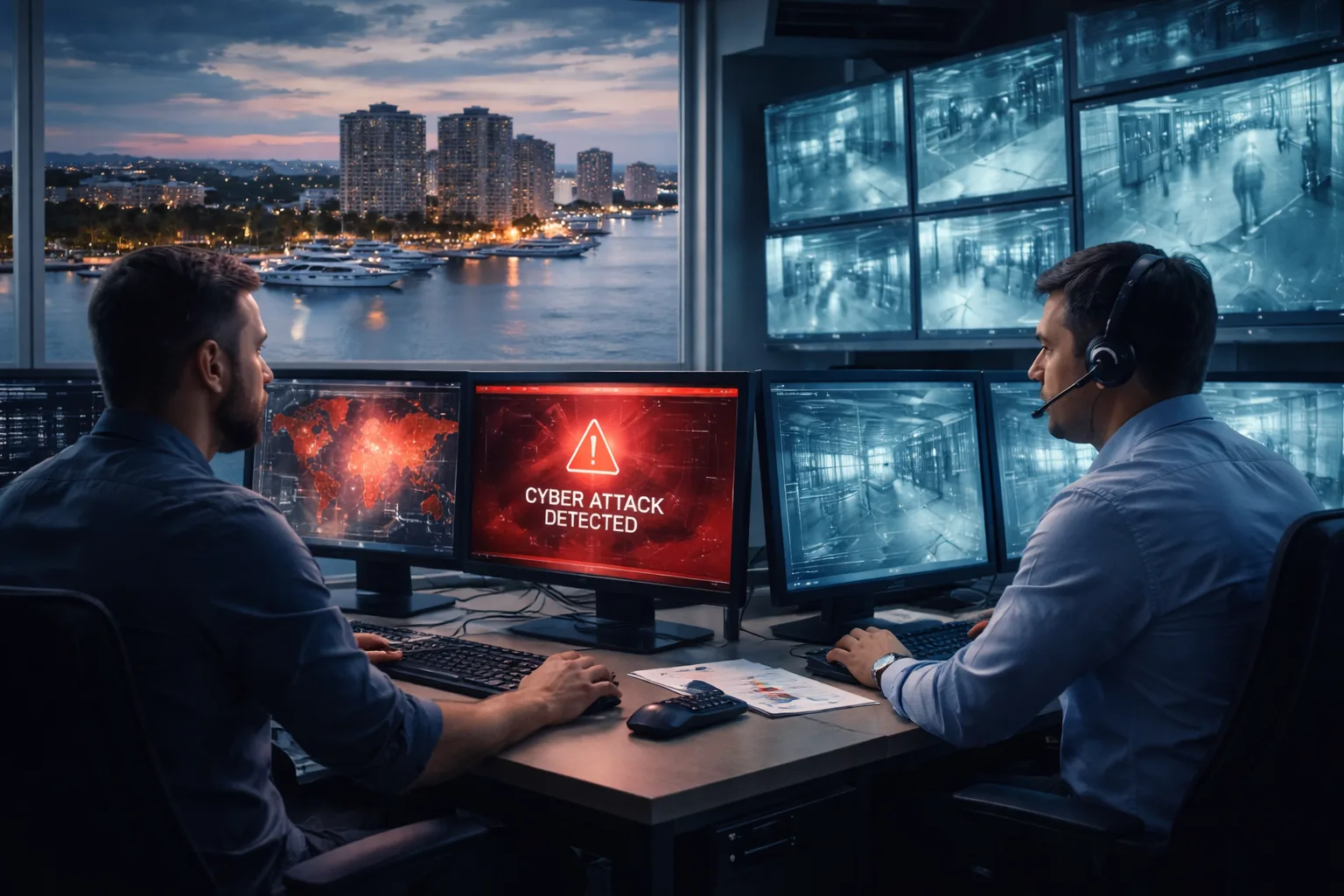
Cybersecurity operations center overlooking Palm Beach waterfront, with two analysts monitoring cyber attack alerts and live surveillance feeds on multiple screens.

The Cyber–Physical Translation Gap

The Cyber–Physical Translation Gap is where digital threats fail to translate into real-world action—leaving high-value environments in Palm Beach and beyond exposed to preventable risks.

Read More »
Power plant and electrical substation near the coast at sunset, with solar panels, transmission lines, and a security fence in the foreground.

Energy Sector Security in Florida for Infrastructure Facilities

Florida’s energy facilities face unique risks—from hurricanes and aging infrastructure to cyberattacks on SCADA systems. This guide explores how operators can strengthen physical security, protect OT environments, and build resilient, compliance-ready programs for critical infrastructure.

Read More »
Talent manager reviewing rising online exposure while discussing security risks with an advisor in a modern office.

When Digital Exposure Never Reaches Protection

Digital exposure can grow overnight for talent and public figures. But when visibility increases faster than protection planning, a gap emerges. This article explores signal delay—the lag between rising public attention and the security needed to manage it.

Read More »
Energy control room with SCADA monitors showing security alerts, representing insider threats, energy sector, and operational sabotage risk

Insider Threats Energy Sector: Prevent Operational Sabotage

Insider threats energy sector operators face can escalate into operational sabotage when privileged access intersects with unresolved grievances. Learn how energy organizations reduce internal risk through structured access control, behavioral monitoring, and governance oversight.

Read More »
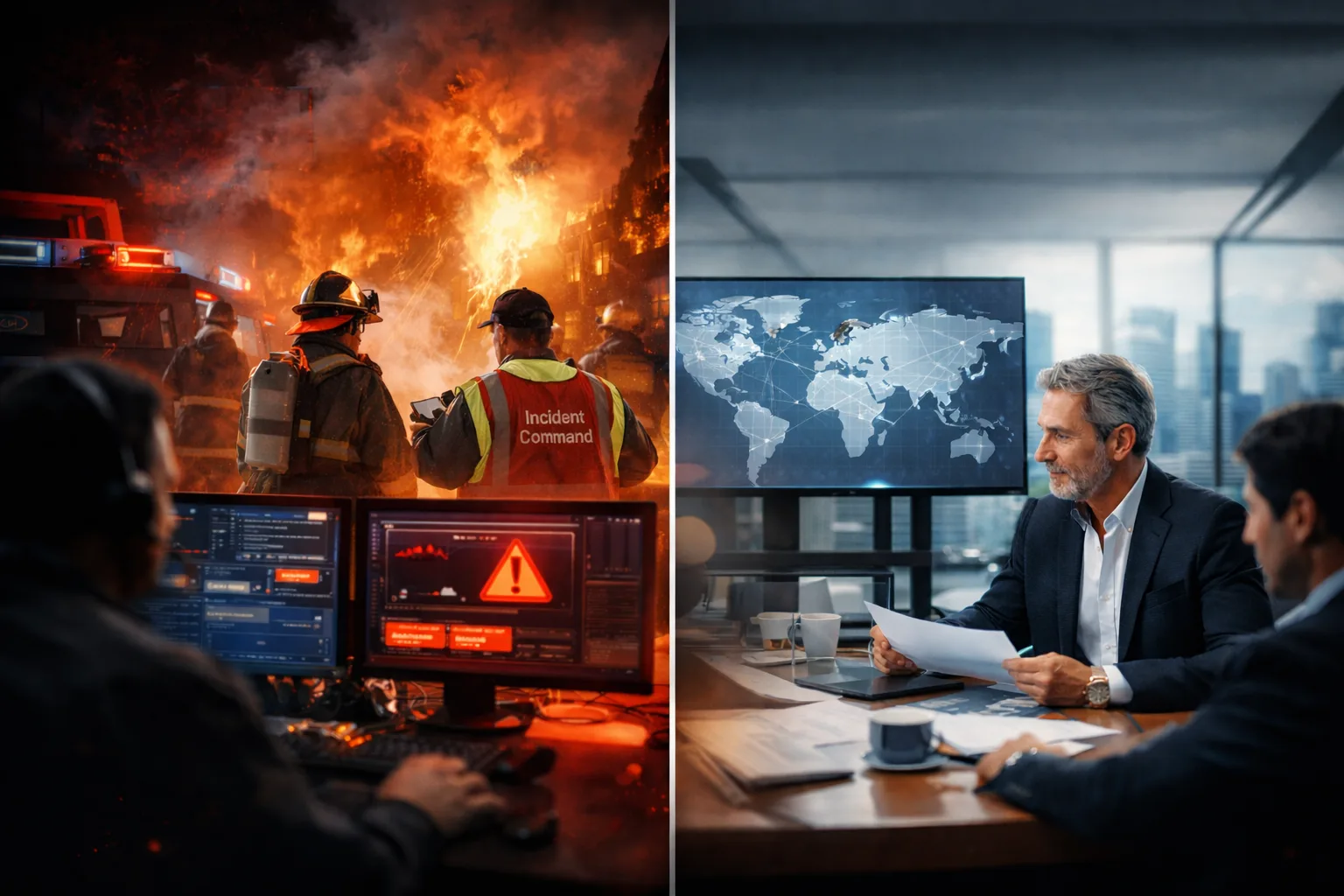
Split-screen image showing an active emergency incident with fire and responders on one side, contrasted with executives reviewing strategy in a modern boardroom on the other, symbolizing response versus continuity.

Incident Response Isn’t Continuity

Most organizations mistake incident response for true resilience. While response manages disruption after it happens, business continuity ensures the enterprise remains stable during it. Here’s why reacting to crises is not the same as architecting endurance.

Read More »