
HK Defense Solutions

Topic: Critical Infrastructure

Navigate intelligence by domain, from executive protection to digital exposure and insider risk.

Professional security team reviewing facility blueprints and surveillance feeds inside a modern operations center, natural lighting, candid corporate environment.

How to Evaluate Defense Contractor Security Services

Selecting the right defense contractor security partner requires more than surface-level credentials. Learn how to evaluate defense security services using a structured vendor framework focused on operational depth, intelligence integration, compliance, and scalability.


Read More »
Energy control room with SCADA monitors showing security alerts, representing insider threats, energy sector, and operational sabotage risk

Insider Threats Energy Sector: Prevent Operational Sabotage

Insider threats energy sector operators face can escalate into operational sabotage when privileged access intersects with unresolved grievances. Learn how energy organizations reduce internal risk through structured access control, behavioral monitoring, and governance oversight.

Read More »
Security Operations Center with threat monitoring screens separated from a corporate boardroom, illustrating the gap between SOC intelligence and executive leadership.

When Intelligence Stops at the SOC

SOC may be detecting threats every day—but if that intelligence never reaches executive decision-makers, your organization remains strategically exposed. Containment is not the same as insight. Here’s why SOC data must translate into enterprise action before disruption forces the conversation.

Read More »
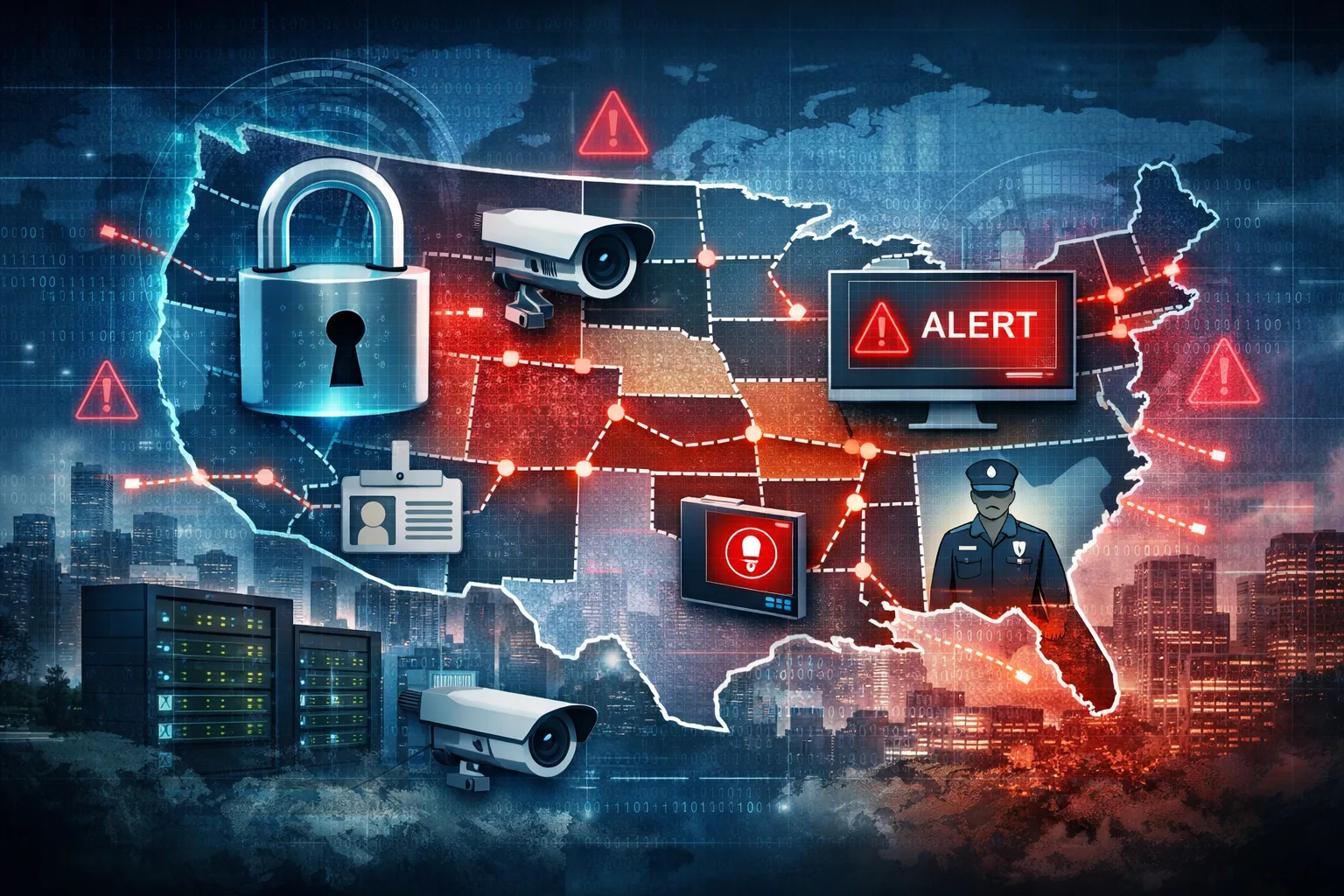
Illustration showing fragmented multi-state corporate security across the U.S., with disconnected access control systems, surveillance cameras, alerts, and warning icons highlighting governance gaps between regions.

Why Multi-State Corporate Security Fails Without Governance

Multi-state corporate security doesn’t fail because organizations grow—it fails when governance, visibility, and accountability don’t scale with that growth. This article explains why fragmented regional security creates enterprise-wide risk and how converged security architectures provide the only model that scales across state lines.

Read More »
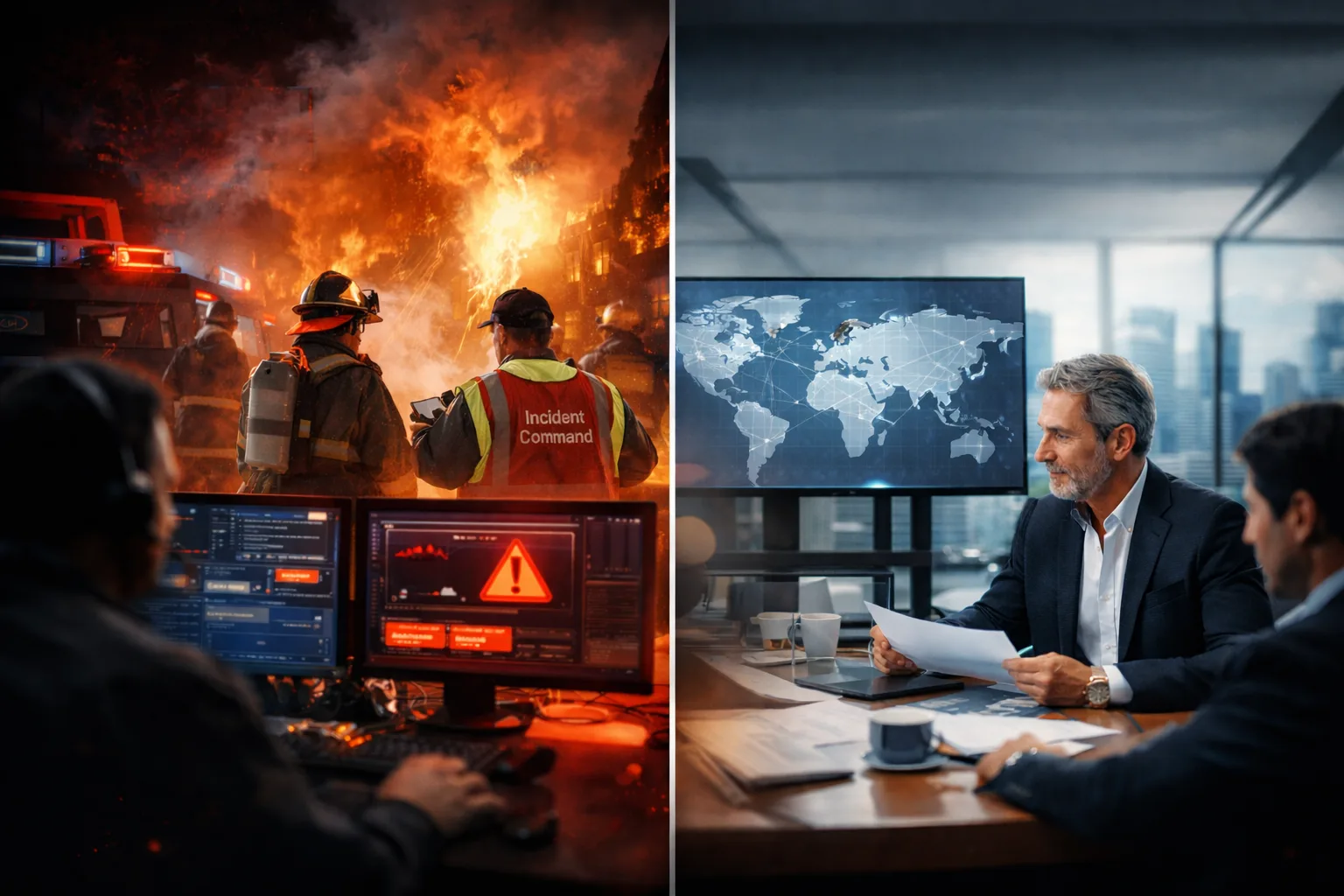
Split-screen image showing an active emergency incident with fire and responders on one side, contrasted with executives reviewing strategy in a modern boardroom on the other, symbolizing response versus continuity.

Incident Response Isn’t Continuity

Most organizations mistake incident response for true resilience. While response manages disruption after it happens, business continuity ensures the enterprise remains stable during it. Here’s why reacting to crises is not the same as architecting endurance.

Read More »