
Fort Lauderdale’s integrated vessel-and-residence operational profile produces hurricane requirements that combine vessel management, residence protection, marine industry coordination, and post-storm operations into a single integrated picture. Hurricane security architecture that treats vessel and residence as separate coverage categories produces coordination gaps during the exact operational windows when integration matters most.
The specific 2026 consideration is that Fort Lauderdale’s yacht industry concentration produces regional capacity constraints during storm approach windows. Yard capacity fills quickly. Marine service capacity fills quickly. Transportation coordination fills quickly. Pre-arranged coordination is what determines whether a specific vessel gets appropriate storm protection or has to accept sub-optimal arrangements.
Here’s what most yacht owners underestimate.
Our coverage on maritime superyacht security in Fort Lauderdale addresses the underlying architecture. Related coverage on how to secure a luxury yacht covers the specific vessel-side architecture.
Vessel haul-out and storage coordination
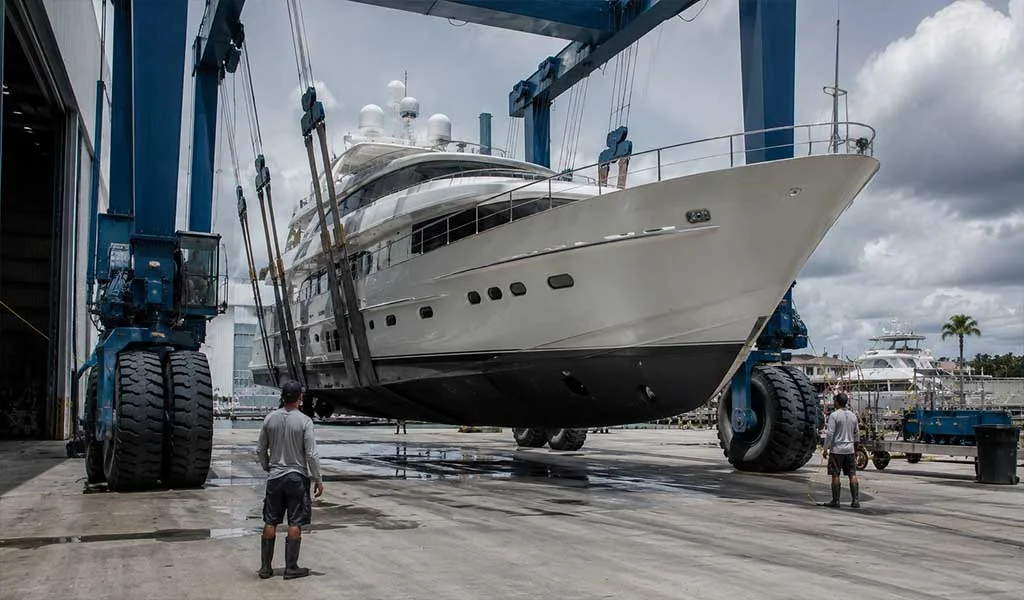
Vessels above certain sizes have documented hurricane operational protocols that determine appropriate storage during storm windows. Insurance requirements typically specify haul-out and inland storage above defined vessel sizes and defined storm strength categories. Marine industry standard practice includes documented protocols for pre-storm vessel movement.
The specific characteristic of Fort Lauderdale operations is that regional yard capacity is finite. During confirmed hurricane approach windows, available protected storage fills faster than most vessel owners realize. Vessel owners who begin haul-out coordination during active watches or warnings frequently find that their preferred yards are fully committed and that alternative arrangements require compromises on distance, quality, or timing.
The vessel owners who manage this effectively establish pre-arranged yard relationships. Documented reservations that activate during storm approach windows. Established transportation coordination. Documented insurance compliance. Payment arrangements that operate through storm windows without requiring active coordination.
For vessels above 100 feet, the coordination complexity increases substantially. Specialized transportation. Specialized yards. Specialized handling requirements. All operating on lead times measured in weeks for major storm windows.
Canal-front residence hurricane operations
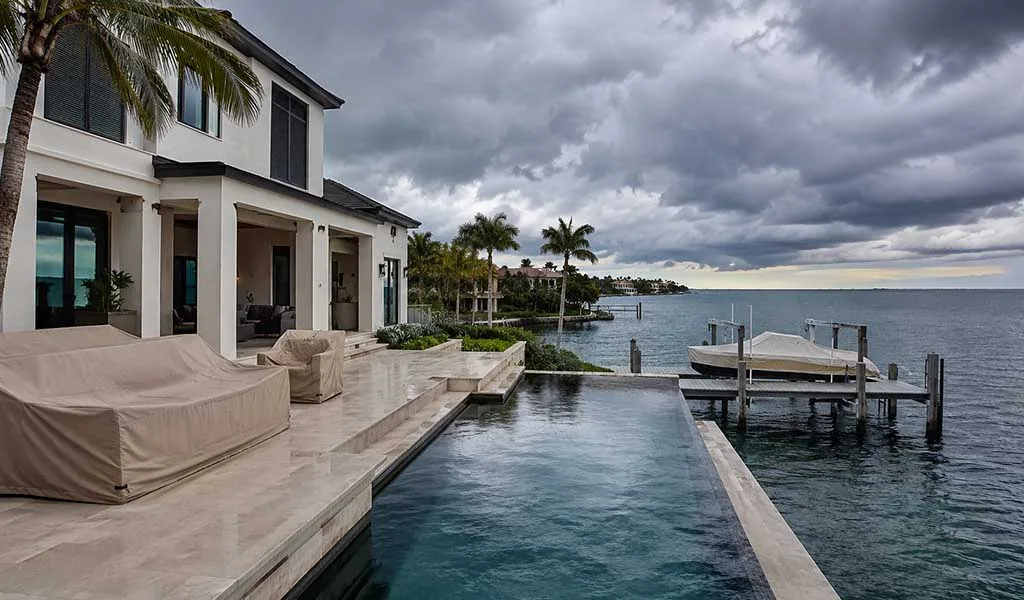
Canal-front residences face specific hurricane exposure that combines standard residential wind and water exposure with marine-specific considerations. Storm surge in canals may exceed surge in open water due to funnel effects. Wind-driven debris from adjacent water traffic and dock infrastructure adds exposure beyond standard wind considerations. Post-storm marine debris including displaced vessels, dock components, and marine equipment produces access dynamics during recovery.
The specific consideration for canal-front residences is that hurricane preparation has to address both the residence and the marine-side infrastructure as integrated elements. Dock preparation. Seawall verification. Vessel management. Marine debris planning. All operating alongside standard residential hurricane preparation.
Estates that manage canal-front hurricane operations effectively treat the marine-side and land-side as coordinated but distinct operational domains. Camera coverage extending through storm windows on both sides. Documented protocols for post-storm marine debris management. Coordinated response between vessel operations and residence operations.
AIS visibility during storm windows
An operational consideration that most yacht owners haven’t addressed explicitly is that AIS visibility during hurricane windows produces specific operational intelligence. Vessel movements during pre-storm preparation are publicly documented. Positioning in yards or protected storage is publicly documented. Return timing to normal berths is publicly documented.
The specific consideration is that AIS-visible vessel movements correlate with residence occupancy patterns. Pre-storm vessel movements often coincide with pre-storm family evacuation. Extended storage timing corresponds to extended residential vulnerability windows. Return timing corresponds to family return.
For threat actors targeting specific principals, AIS visibility during hurricane windows produces the same intelligence category that normal AIS operations produce, but with additional operational specifics that support engagement planning during recovery windows.
The specific implication is that yacht owner hurricane preparation should include operational consideration of the AIS visibility dimension. Security architecture that accounts for the correlation between vessel movement and residential exposure. Coordinated protocols that address the vulnerability windows the AIS pattern reveals.
Post-storm marina and yard operations
The post-storm operational window at Fort Lauderdale marinas and yards produces specific exposure that requires purpose-built architecture.
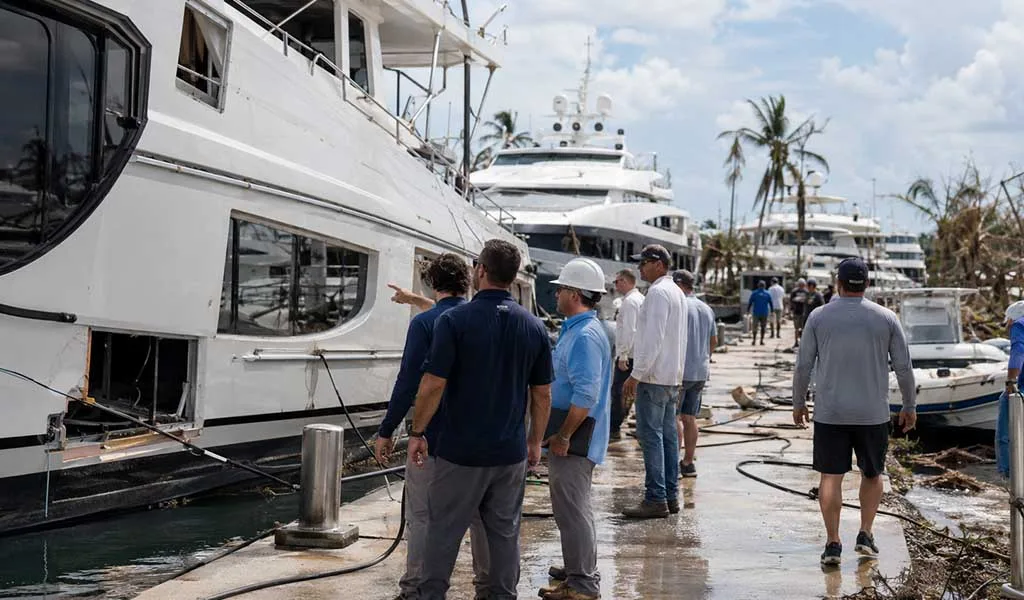
Marina operations during recovery typically involve rotating personnel for damage assessment, restoration work, and normal operational restart. Yards holding vessels during storms transition to release protocols with elevated activity as owners retrieve vessels and marine service crews complete storm-related work. Both environments produce personnel access patterns during periods when standard vetting protocols may not be fully applied due to operational urgency.
For principals whose vessels are held at yards during storms, the recovery period produces specific considerations. Vessel condition assessment. Damage documentation. Coordination with insurance carriers. Coordination with marine service providers for storm damage repair. All operating in an environment where marine industry personnel access is elevated.
Estates that manage this effectively coordinate structured protocols for post-storm vessel operations. Documented personnel identification. Coordinated protocols for vessel retrieval. Documented damage assessment. Insurance documentation architecture that supports both immediate operational needs and eventual claim resolution.
The Sun Sentinel’s ongoing coverage of the Fort Lauderdale marine ecosystem provides local context.
The Fort Lauderdale International Boat Show overlay
The Fort Lauderdale International Boat Show in late October produces a specific operational consideration during hurricane season. The show schedule places major yacht industry activity during the final weeks of peak hurricane season. Vessels planned for show exhibition operate through hurricane windows leading into the show. Show preparation intersects with hurricane operational requirements.
The specific consideration for principals whose vessels are participating in the show is that hurricane operations during September and early October may affect show preparation directly. Vessel movements planned for show positioning may need to accommodate storm operations. Show-related vendor and personnel activity may compress against hurricane coordination requirements.
Estates that manage the show overlay effectively address both operational windows in integrated planning. Hurricane preparation completed with show timing considered. Show preparation completed with hurricane contingency built in.
The July operational window
Fort Lauderdale yacht owner hurricane preparation is a July operational priority. Yard capacity reservations require substantial lead time. Vessel operational protocols require pre-arrangement. Canal-front residence architecture requires establishment. Insurance documentation requires structure.
August, September, and October will produce what the 2026 season produces. Preparation completed in July manages what arrives.
What I'd recommend
For Fort Lauderdale yacht owners and canal-front estate residents, three practical priorities.
Complete yard reservation coordination now. Regional capacity is finite. Confirmed storm approach windows compress the coordination timeline substantially.
Design canal-front residence hurricane architecture explicitly. Marine-side and land-side as coordinated but distinct operational domains.
Address the AIS visibility dimension. The correlation between vessel movement and residence occupancy is the specific intelligence organized crews are architected to exploit during storm windows.
Where to Go From Here
Start with the Estate Operations & Insider Risk Checklist — the 15-point framework covering integrated vessel-and-residence vetting.
If you’re ready for a direct conversation, request an audit here. We assess the integrated profile specifically.
For the executive protection architecture across the corridor, read our executive protection coverage for Fort Lauderdale.
I’m John Hamilton, HKDS founder. We provide estate security, executive protection, marine security integration, and captain and crew vetting for Fort Lauderdale yacht owners and canal-front residents. Contact us.