
West Palm Beach sits at the operational center of the Palm Beach County UHNW corridor. Our headquarters at 1500 N Florida Mango Road is 8 minutes from the Royal Park Bridge, 20 minutes north of Boca Raton, 20 minutes south of Jupiter, and 30 minutes from Wellington. That geographic positioning is not incidental to how effective hurricane operations actually function during peak season.
The specific characteristic that shapes hurricane operational security in the Palm Beach County corridor is that principals commonly operate across multiple locations simultaneously. A single family may maintain a Palm Beach Island residence, a corporate presence in West Palm Beach, a weekend property in Jupiter, and business relationships extending to Boca Raton. Hurricane operations that address each location in isolation produce fragmentation at exactly the moments when integrated coverage matters most.
Here’s what corridor-wide hurricane operations actually look like.
Our coverage on private security in West Palm Beach addresses the underlying architecture. Related coverage on 24/7 security and mobile patrol in West Palm Beach covers the operational cadence.
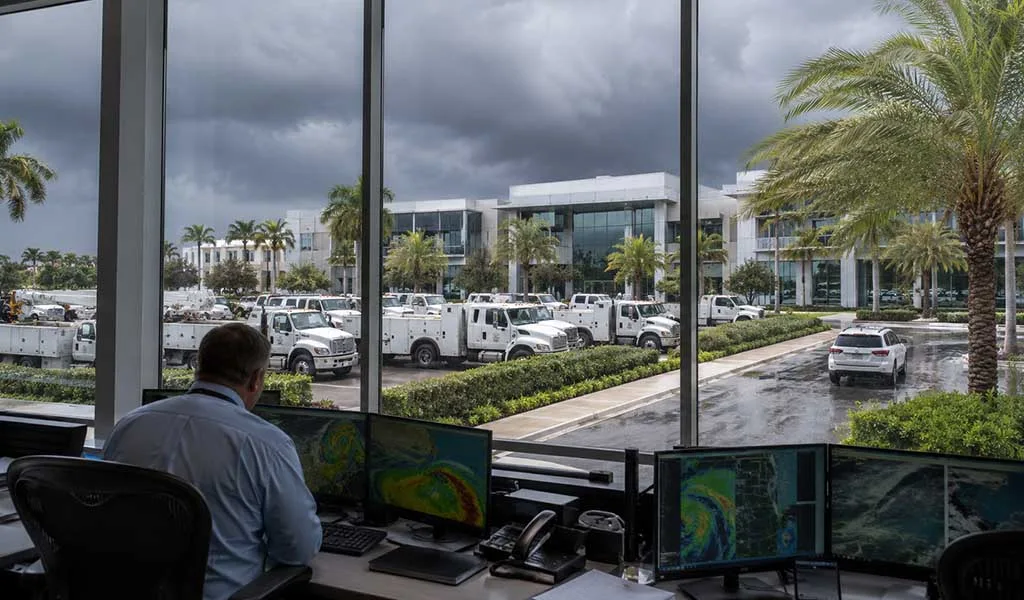
Corridor-wide operational continuity
The specific characteristic of hurricane operations across the Palm Beach County corridor is that storm impacts affect the corridor unevenly. A storm tracking one path may affect Palm Beach Island substantially while producing lesser impacts in Wellington. A different track may reverse the pattern. Coastal exposure differs from inland exposure. Waterfront exposure differs from land-locked exposure.
Effective corridor-wide operations require architecture that scales response to the specific impact pattern of each storm. A single operations center coordinating across multiple locations produces coordinated response. Fragmented local providers operating independently produce coordination gaps at exactly the moments when integrated response matters.
For principals whose profile includes multiple locations across the corridor, the operations center positioning matters directly. Response time to any specific location depends on geography. West Palm Beach positioning provides response capability across the full corridor within windows that Miami-based or Fort Lauderdale-based operations can’t match.
Cross-location family coordination during evacuation
Executive and UHNW families frequently distribute across multiple locations during normal operations. Principal at one location, family members at another, corporate operations at a third. Hurricane evacuation coordination has to account for this distribution while producing coordinated family safety and operational continuity.
The specific consideration for the Palm Beach County corridor is that evacuation from different locations may proceed on different timelines with different destinations. A principal in Palm Beach Island may evacuate northward through the bridge and I-95 corridor. Family members in Jupiter may evacuate north to Vero Beach or further. Corporate operations in West Palm Beach may require different continuity considerations than personal evacuations.
The households that manage this effectively establish evacuation coordination protocols that address the family distribution. Documented destinations for each family member. Documented transportation. Documented communication that operates through infrastructure disruption. Coordinated timing that accounts for both storm timing and location-specific evacuation constraints.
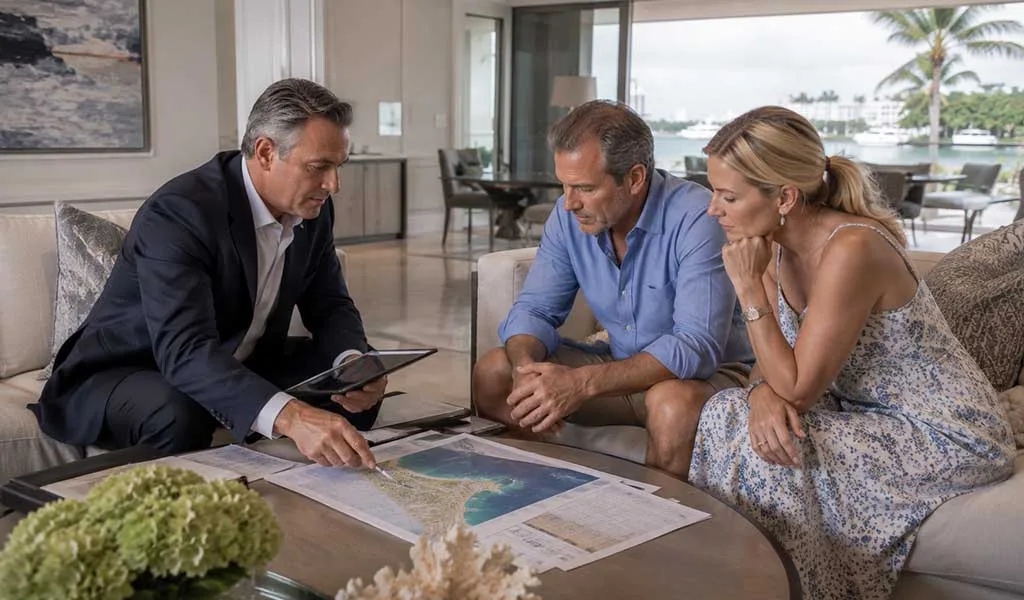
Pre-storm coordination window
The specific operational window that matters most for corridor-wide hurricane response is the pre-storm coordination period. Typically 48-96 hours before landfall depending on storm characteristics and forecast confidence.
During this window, effective operations produce coordinated preparation across all corridor locations. Vendor coordination. Marine asset movement. Staff coordination. Family evacuation decisions. Business continuity coordination. Executive protection protocol activation. All operating on compressed timelines with limited ability to adjust once storm conditions arrive.
The specific vulnerability is that fragmented providers operating in different locations often produce coordination gaps during exactly this pre-storm window. Location A completes preparation. Location B lags. Location C proceeds on different assumptions. The compound effect is that families face different preparation states across their multiple locations at the moment when storm conditions eliminate the ability to adjust.
Corridor-wide operations under unified command produce coordinated preparation across all locations simultaneously. Same protocols. Same timing. Same documentation. Same communication rhythm.
Storm-day operational coverage
During active storm conditions, effective security operations continue while broader infrastructure degrades. Emergency response is focused on immediate community needs. Standard law enforcement patrol is reduced. Utility services face restoration priorities. Communication infrastructure may be affected.
The specific requirement during storm-day operations is continuous coverage that operates through infrastructure degradation. Backup communication systems. Backup power for operations centers. Distributed personnel presence that doesn’t depend on transportation infrastructure. Coordinated response that operates through direct radio and satellite communication when standard systems fail.
For high-value estates and executive protection operations, storm-day coverage may include on-site personnel presence, continuous operations center monitoring, and coordinated response protocols that operate independently of standard emergency response infrastructure.
Post-storm corridor recovery
The post-storm operational window produces the compound exposure that combines several of the vulnerability categories discussed in adjacent briefs. Elevated vendor and contractor access. Reduced operational oversight. Elevated reconnaissance opportunity. Reduced law enforcement patrol. Extended timeline for full operational restoration.
The specific corridor consideration is that recovery proceeds at different rates in different locations. Waterfront estates may face extended marine debris and dock restoration timelines. Gated communities may face community-level infrastructure restoration that affects estate-level operations. Corporate operations may face continuity requirements that affect executive protection during recovery.
Corridor-wide operations during post-storm windows produce coordinated recovery response. Standardized contractor vetting across locations. Coordinated protocols for extended coverage. Documented access records across all locations. Communication rhythm that supports both immediate operational needs and eventual review requirements.
The West Palm Beach operational advantage
The specific characteristic that shapes effective hurricane operations across the Palm Beach County corridor is operational positioning. Providers based outside the corridor face response time constraints that intensify during storm windows. Fragmented local providers face coordination gaps that intensify during coordinated operational periods.
West Palm Beach-based operations provide response capability across the full corridor within response windows that matter. Operations center positioning at 1500 N Florida Mango Road places the operational base within response range of every corridor location without the geographic constraints that outside providers face.
For principals whose profile includes multiple locations across the corridor, operational positioning is not incidental. It is central to how effective hurricane operations actually function.
Rachelle Blair-Frasier’s coverage at Security Magazine has documented how enterprise security operations have adapted to the current environment. The frameworks apply directly to corridor-wide UHNW residential and family office operations.
The July operational window
Corridor-wide hurricane preparation is a July operational priority for the specific reason that coordination complexity requires substantial lead time. Cross-location protocols have to be established. Vendor relationships have to be coordinated across locations. Family evacuation planning has to account for distributed family locations. Executive protection integration has to be documented.
August, September, and October will produce what the 2026 season produces. Preparation completed in July manages what arrives across the full corridor.
What I'd recommend
For principals with multiple locations across the Palm Beach County corridor, three practical priorities.
Establish unified command across your locations before storm season peaks. Fragmented providers produce coordination gaps at every location transition.
Complete family evacuation coordination protocols for the distributed family situation. Documented destinations. Documented transportation. Documented communication.
Design post-storm coordinated recovery response. This is where corridor-wide operations under unified command outperform fragmented local providers most significantly.
Where to Go From Here
Start with the Residential Threat Integration Checklist — the 15-point framework covering integrated corridor operations.
If you’re ready for a direct conversation, request an audit here. We assess for the corridor operational profile.
For the specific EP architecture in West Palm Beach, read our executive protection coverage.
I’m John Hamilton, HKDS founder. We’re headquartered at 1500 N Florida Mango Road in West Palm Beach, positioned 8 minutes from the Royal Park Bridge. Licensed Florida Class B (B 3500148), D, and G. Contact us.