
Hurricane Ian’s September 2022 impact on Naples produced destruction that shifted the operational standard for luxury estate hurricane security. Ian’s storm surge reached documented heights of 12-15 feet in the Naples area. Port Royal and Aqualane Shores estates faced compound flooding from Gulf-side surge combined with canal system backflow. Recovery timelines for the most damaged properties extended into 2024 and, for some structural rebuilds, into 2026.
The specific operational lesson from Ian was that pre-storm preparation and immediate storm-window operations, while necessary, weren’t sufficient. The recovery phase produced its own compounding exposure that estates without purpose-built post-storm architecture managed poorly.
Here’s what I learned from Ian that still applies to the 2026 season.
Our coverage on estate security consulting for complex residences addresses the specific architecture required for multi-property, extended-exposure principals.
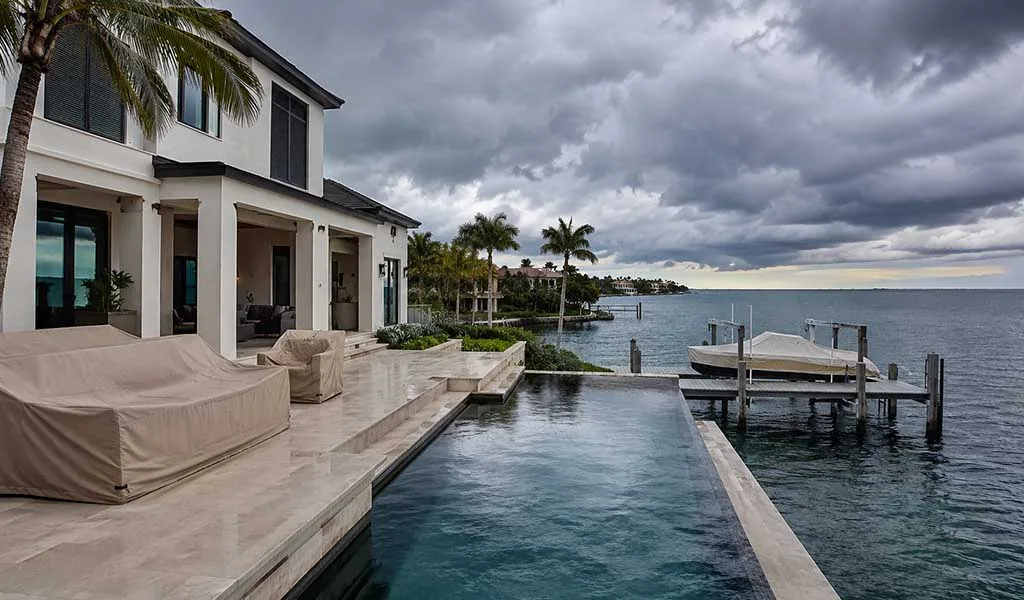
The 90-day window
The specific characteristic that Ian revealed was that recovery from major storm impact at luxury estates extends over 12-36 months, and that the first 90 days produce the highest concentration of operational exposure.
The recovery phase involves rotating vendor and contractor access. Structural engineers. Insurance adjusters. Restoration specialists. Marine services for dock and vessel damage. Landscape restoration. Interior restoration if water intrusion occurred. All operating over extended periods with rotating personnel and elevated legitimate access.
The specific vulnerability during the extended recovery is that most estates operate reduced security architecture during periods when principals aren’t present. Insurance requirements drive some baseline coverage. Practical urgency defaults to informal verification. The gap between what standard practice supports and what trophy-tier operational security actually requires is where post-Ian recovery exposure concentrated.
The FBI’s IC3 data on insider and vendor involvement in high-value incidents applies specifically during recovery periods when contractor access is elevated over extended windows and standard operational oversight is reduced.
Pre-storm evacuation planning
Naples estate evacuation during hurricane windows involves considerations that mainland Florida evacuation planning doesn’t fully replicate. Collier County’s geographic position on the Gulf Coast, combined with the seasonal migration pattern of many principals, produces specific pre-storm operational requirements.
Many principals aren’t physically present in Naples during peak hurricane months because the seasonal pattern places them elsewhere. Evacuation coordination often involves coordinating between principals in northern locations, seasonal staff at the Naples estate, and vendor coordination for storm preparation. The compound complexity means evacuation decisions require coordination measured in days rather than hours during watch and warning windows.
The estates that manage this effectively establish clear pre-storm decision protocols. Documented authority for staff to make storm preparation decisions during principal absence. Documented protocols for vendor coordination during storm windows. Documented communication rhythms that support decision-making across geographic distance.
Waterfront storm exposure
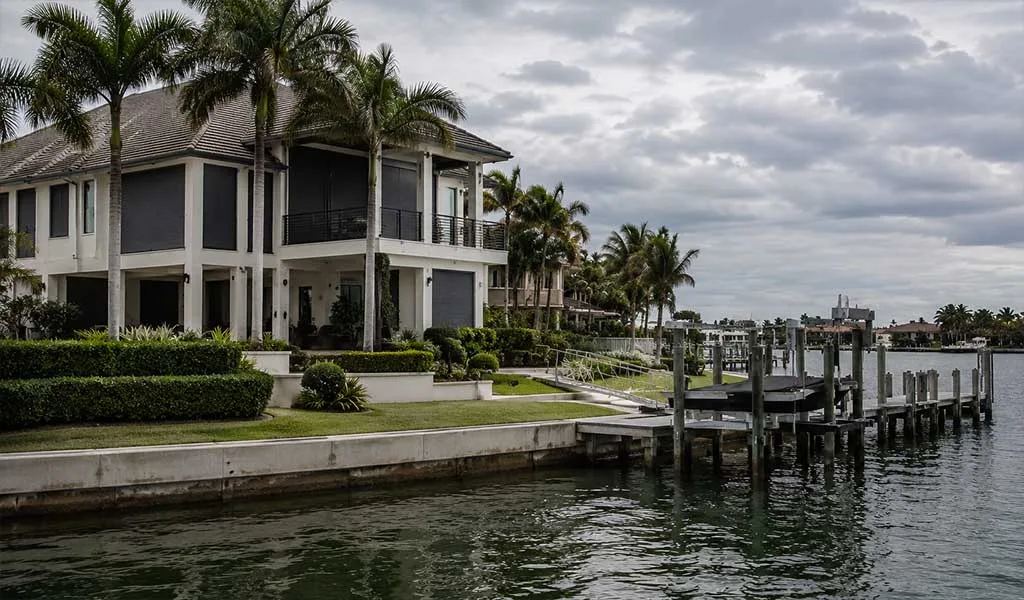
Port Royal’s canal system, Aqualane Shores’s canal exposure, and Gulf-facing beachfront estates each face specific hurricane operational requirements that differ from residential-standard preparation.
Storm surge in Naples’s canal system operates differently from open-water surge. The canal geometry can amplify surge levels in specific areas while providing partial protection in others. The compound effect during major storms is that individual estates within the same neighborhood may face substantially different flooding levels based on their specific position within the canal system.
Beachfront estates face direct Gulf exposure combining storm surge, wind-driven waves, and beach erosion during major storm events. The $225 million DeGroote estate transaction and comparable beachfront transactions reflect properties whose hurricane exposure profile is distinct from canal-front properties.
Estates that manage waterfront hurricane exposure effectively treat the water-side exposure as an operational category requiring specific architecture. Elevated structural elements. Storm shutter systems designed for the specific exposure category. Flood-resistant infrastructure at critical structural points.
Extended recovery architecture
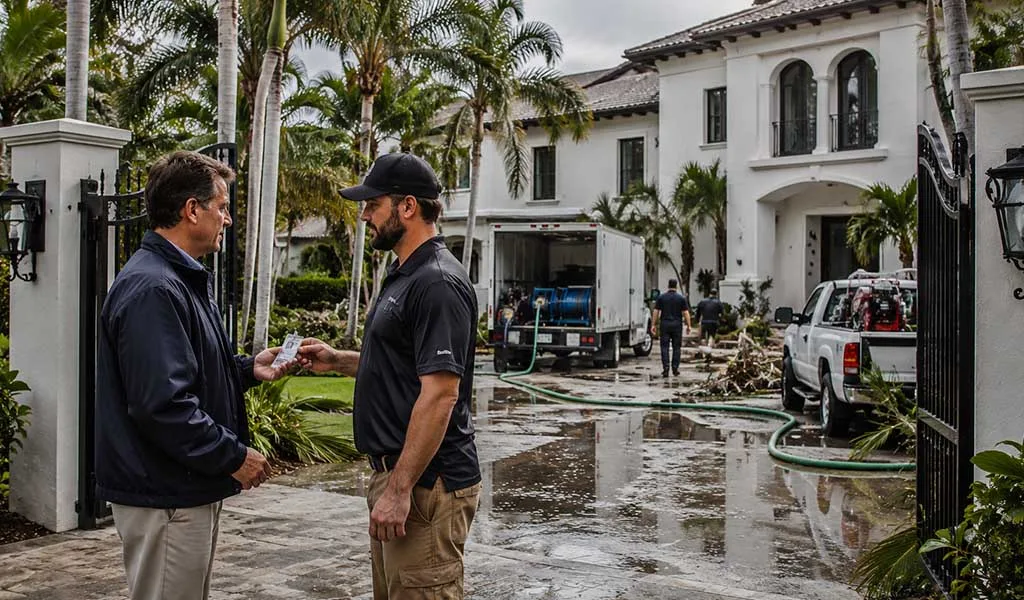
Recovery at trophy-tier Naples estates involves the rotating vendor and contractor access I described. The specific operational challenge is that this access is legitimate. Insurance carriers require access for damage assessment. Restoration specialists require access for repair operations. Marine services require access for dock and vessel restoration. All of it necessary. All of it operating in an environment where standard security architecture wasn’t designed for the volume or duration.
The estates that managed Ian recovery effectively had operational architecture designed specifically for the extended recovery window. Documented vendor relationships. Structured identification for extended access. Coordinated protocols for contractor rotation. Documentation that supported both security operational continuity and eventual insurance claim resolution.
Estates that didn’t have that architecture faced compound exposure that produced downstream vulnerability during subsequent months and years. The reconnaissance intelligence gathered during post-Ian recovery windows supported engagement operations against affected estates through 2023 and into 2024.
Katherine Clarke’s WSJ Mansion coverage has documented the Naples market recovery pattern. That reporting provides useful context on how the recovery actually proceeded across different estate profiles.
Insurance coordination through extended timelines
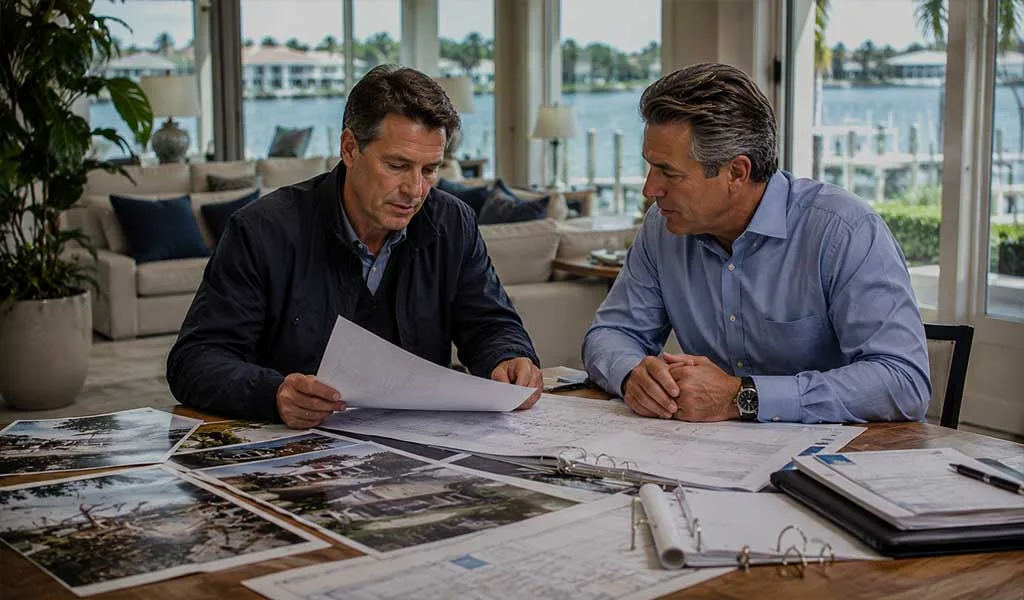
Naples luxury estate insurance operations during and after major storms involve coverage dimensions that produce specific documentation requirements throughout extended recovery periods.
Windstorm coverage. Flood coverage. Contents coverage. Marine coverage. Business interruption if applicable. Coordination between multiple carriers if coverage is layered. Chain of custody documentation for high-value contents during extended recovery. Documentation of security operational continuity during recovery.
The specific consideration is that insurance carriers for coverage limits reaching into the eight and nine figures increasingly require documentation of ongoing security operations during recovery. Structured security architecture produces this documentation naturally. Ad hoc security produces documentation gaps that affect claim resolution.
For principals whose coverage limits are substantial, the documentation dimension of hurricane operations is central to eventual claim recovery. Estates that operated structured security architecture through Ian produced documentation that supported cleaner claim resolution. Estates that operated informal security produced documentation gaps that extended claim resolution timelines.
The current 2026 environment
Naples has become one of the most active UHNW markets in the country. The DeGroote family’s $225 million oceanfront sale in 2025 was the second-largest US residential transaction that year. David Hoffmann’s $85 million Port Royal purchase set the Collier County record. Pending sales up 56 percent year-over-year in early 2026.
Daphne Nikolopoulos’s coverage in Naples Illustrated documents the current resident profile shift. The equity migration pattern has brought younger, corporate-active principals to Naples. Their threat profile is different from the traditional Naples resident profile. Their security requirements are different. Their expectations for post-storm operational architecture are different.
The July operational window
Naples hurricane preparation is a July operational priority. Pre-storm decision protocols require establishment. Waterfront exposure architecture requires review against the current standard. Marine asset coordination requires pre-arrangement. Extended recovery architecture requires design. Insurance coordination requires documentation. Seasonal coordination requires protocols.
What I'd recommend
For Naples estate owners heading into peak 2026 hurricane season, three practical priorities.
Address the extended recovery architecture specifically. Pre-storm preparation is the easy part. The 90-day recovery window is where the compound exposure is highest and where most estates have the biggest gap.
Formalize your contractor and vendor vetting for storm-period access. Documented relationships established now — before storm windows arrive — are the difference between managed post-storm recovery and uncontrolled contractor rotation.
Get the insurance documentation architecture right. If your coverage limits are substantial, the documentation dimension of hurricane operations is not incidental.
Where to Go From Here
Start with the Estate Operations & Insider Risk Checklist — the 15-point framework covering the vendor and access categories that intensify during post-storm recovery.
If you’re ready for a direct conversation, request an audit here. We assess Naples estates specifically for the current threat and recovery profile.
For the specific architecture for complex multi-property residences, read our estate security consulting coverage.
I’m John Hamilton, HKDS founder. We provide estate security, executive protection, and event security for Naples UHNW principals across Port Royal, Aqualane Shores, Old Naples, Pelican Bay, Grey Oaks, and Quail West. Contact us.