
Naples’s operational calendar produces one of the most predictable vacancy patterns in Florida UHNW residential markets. Seasonal residents typically depart in April or May and return in November or December. That six-to-seven month window is the primary operational reality that estate security architecture in Naples has to address.
What most residents underweight is that the pattern isn’t random. Organized crews targeting high-value residential estates don’t operate primarily during peak occupancy. They operate primarily during predictable absence. Naples’s off-season is one of the most predictable absence windows in Florida.
Let me walk through the four-phase pattern I see operationally.
Our coverage on estate security consulting for complex residences addresses the specific multi-property architecture the Naples resident profile increasingly requires.
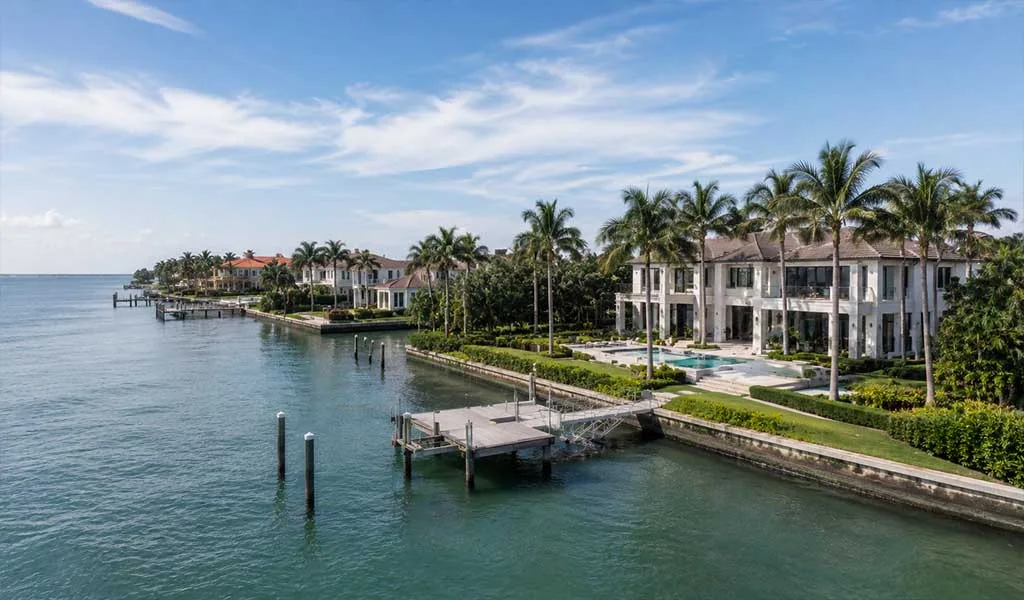
Phase 1 — Studied targeting rather than opportunistic engagement
The specific shift in the Naples threat environment over the past 24 months is that estates are being selected on the basis of studied intelligence rather than opportunity.
The pattern I’ve consistently observed is that off-season incidents at Naples estates are not random burglaries. They’re selected engagements against studied properties. Reconnaissance happens during the season when the property is active and identifiable. Operational engagement happens during the off-season when the property is vacant and the response window is longest.
The estates that get hit tend to share operational profiles. Public documentation of the property. Predictable seasonal residency pattern with clear departure and return dates. Household staff that reduces significantly during the off-season. Security infrastructure that was designed for the occupied months and not adjusted for the vacant ones.
Daphne Nikolopoulos’s coverage in Naples Illustrated has documented the shift in resident profile that has attracted corresponding threat sophistication. The Naples Daily News has covered the transaction pace that shapes the current target environment.
Phase 2 — Departure window intelligence collection
The transition from occupied to unoccupied isn’t an instantaneous event. It happens over a window that produces specific exposure characteristics.
Departure preparations produce documentable activity. Household staff finish their seasonal work. Vendor visits complete. Family members depart at documented times. Storage and preparation activities produce visible patterns. Vehicles are removed or repositioned. Vessels are managed for the off-season.
The window between “principal present” and “estate fully secured for off-season” produces operational intelligence that supports later engagement planning. Reconnaissance during the departure window documents current security infrastructure, current staff patterns, and current access configurations. That intelligence supports operational planning against the estate during the off-season.
The specific vulnerability is that the departure window is typically managed as a household logistics event rather than a security operational event. The security operational picture during the transition is often less rigorous than during either peak season or established off-season.
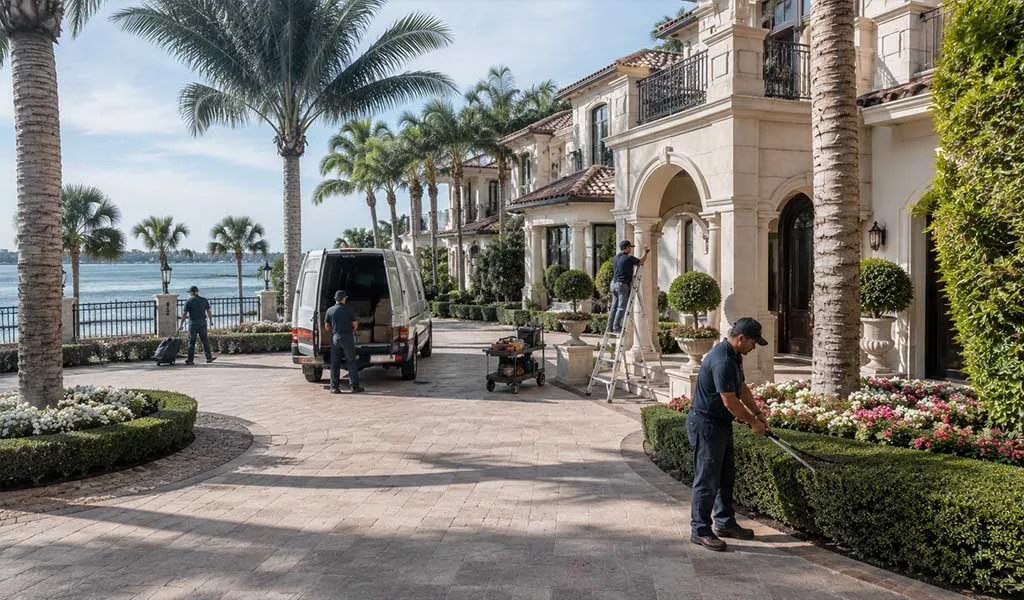
Phase 3 — Extended vacancy operational architecture
Once the estate has transitioned to off-season status, the operational architecture that most Naples estates deploy is inadequate for the current threat environment.
The typical off-season architecture depends on alarm systems, property checks, and community-level security where applicable. The architecture is designed to detect intrusion after it occurs and to summon response after detection.
The specific limitation is that the response window during the off-season is inherently longer than during occupied periods. No household presence to notice anomalies. No staff routine that would identify unusual activity. No immediate operational awareness at the estate. Response depends on external detection followed by external dispatch.
For threat actors with operational discipline, the extended response window supports engagement operations that would be impossible during occupied periods. Sustained access. Detailed operational activity. Planned extraction. All operating within the response window between initial detection and effective response arrival.
Our coverage on hidden security risks during quiet times addresses the specific off-season architecture required.
The estates that manage the off-season effectively run continuous rather than intermittent security operations with variable intensity. The operational awareness stays continuous. The presence of trained personnel at the estate scales with threat conditions rather than defaulting to minimal coverage during the extended vacancy.
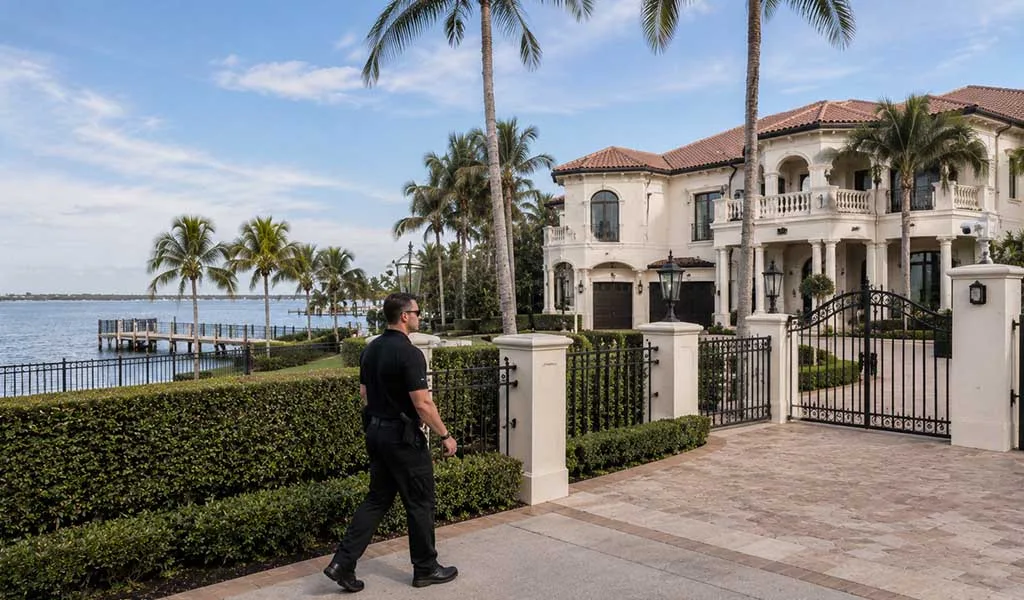
Phase 4 — Return window transition exposure
The reverse transition, from off-season to occupied, produces its own specific exposure category.
The return window operates through several stages. Advance staff arrivals to prepare the property. Vendor arrivals to conduct pre-return maintenance. Family member returns at documented times. Establishment of full operational patterns over days or weeks.
The exposure during the return window operates through documented predictability. Return dates are frequently visible through social media, corporate announcements, event calendars, and community documentation. The transition period produces access patterns that are less rigorously controlled than either full off-season or full peak-season operation.
For threat actors, the return window provides the last engagement opportunity before the estate returns to full occupancy. Operational activity during the transition can be timed to avoid both the reduced off-season monitoring and the elevated peak-season presence.
The current Naples environment
The four patterns operate within the specific current environment that Naples’s UHNW market has become. The David Hoffmann $85 million Port Royal purchase established the Collier County record in April 2025. The DeGroote family’s $225 million oceanfront estate sale ranked as the second most expensive residential transaction in the United States that year. A Goldman Sachs partner acquired another Port Royal estate for $55 million in February 2026. Pending sales were up 56 percent year-over-year.
The equity migration pattern has shifted the resident profile toward younger buyers with active corporate roles, family office operations, and threat profiles that differ substantially from the traditional Naples resident profile. The reconnaissance environment has intensified as documented public exposure of specific properties has expanded.
The specific implication is that Naples’s current target profile is substantially different from the profile that existed even three years ago. Security architecture designed for the earlier profile is inadequate for the current one.
Katherine Clarke’s WSJ Mansion coverage has documented the Naples market transformation specifically because the pattern matters.
The Port Royal, Aqualane Shores, and Old Naples distinctions
Port Royal operates on a canal system with direct deep-water access from individual estates. The dual-perimeter waterfront exposure requires architecture that addresses marine-side access with the same operational discipline as street-side access.
Aqualane Shores operates on a similar canal-front configuration with different community characteristics.
Old Naples has less canal exposure but concentrates Gulf-facing beach access. Beach-side exposure produces different reconnaissance dynamics than canal-side.
Each environment requires architecture designed for its specific profile.
What I'd recommend
For Naples estate owners heading into peak off-season, three practical priorities.
Address the extended recovery architecture specifically. Pre-storm preparation is the easy part. The 30-90 day recovery window is where the compound exposure is highest.
Formalize your contractor and vendor vetting for storm-period access. Documented relationships established now — before storm windows arrive — are the difference between managed post-storm recovery and uncontrolled contractor rotation.
Get the insurance documentation architecture right. If your coverage limits are substantial, the documentation dimension of hurricane operations is not incidental.
Where to Go From Here
Start with the Estate Operations & Insider Risk Checklist — the 15-point framework covering seasonal migration and dual-perimeter waterfront exposure.
If you’re ready for a direct conversation, request an audit here. We assess Naples estates specifically for the current threat profile.
For the specific architecture for complex multi-property residences, read our estate security consulting coverage.
I’m John Hamilton, HKDS founder. We provide estate security, executive protection, and event security for Naples UHNW principals across Port Royal, Aqualane Shores, Old Naples, Pelican Bay, Grey Oaks, and Quail West. Contact us.