
Wellington equestrian estates face hurricane operational requirements that residential-only preparation doesn’t address. The estate operations combine residence, barn infrastructure, horse care, tack and equipment storage, and equestrian professional coordination into an integrated operational picture that requires purpose-built hurricane architecture.
The specific 2026 consideration is that peak hurricane season overlaps with Wellington’s off-season for most estates. Peak season for equestrian activity runs January through April. Peak hurricane season runs August through October. The compound effect is that many Wellington estates are in their reduced-presence operational mode during the exact months when hurricane exposure is highest.
Here’s what horse evacuation logistics actually require, and why they have to be established in July.
Our coverage on estate security in Wellington addresses the underlying architecture.
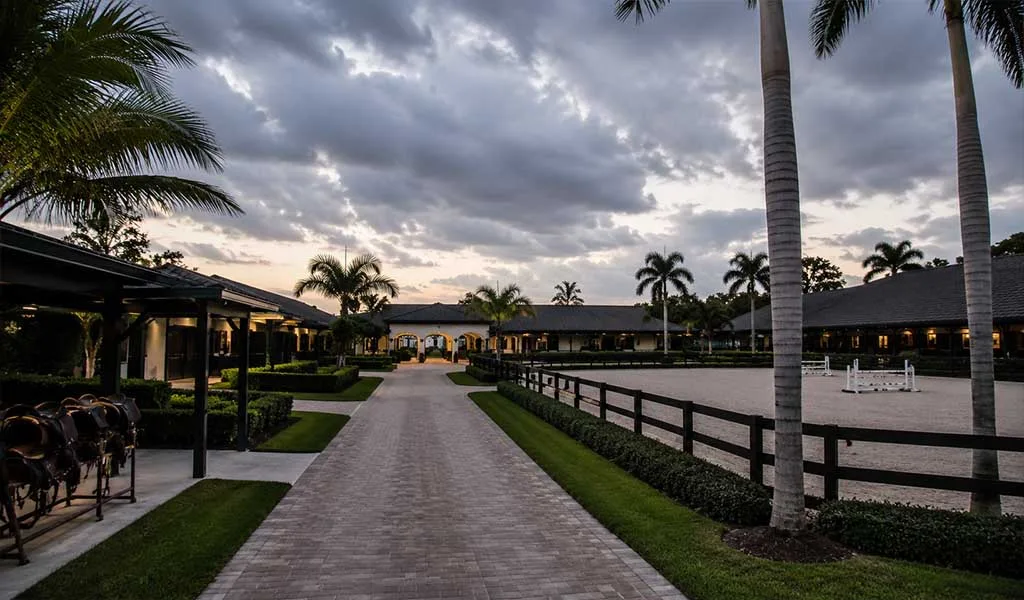
Horse evacuation logistics
The single most consequential operational requirement at an equestrian estate during hurricane threats is horse evacuation planning. This isn’t a decision that can be made during an active watch or warning. It’s a logistics operation that requires weeks of pre-arrangement.
The specific logistics considerations include destination arrangements at facilities north of the projected storm path. Transportation coordination for the specific number of horses at the estate. Timing coordination that supports evacuation before storm-related travel restrictions affect trailer movement. Documentation coordination for interstate transport if evacuation extends beyond Florida. Coordination with attending veterinarians for pre-transport health documentation.
For estates with 15-30 horses in professional training, the evacuation logistics are substantial. Multiple truck-and-trailer combinations. Coordinated departure timing. Destination coordination that can accommodate the specific number and quality of horses. Return transportation coordination once the storm window has passed.
The estates that manage this effectively begin evacuation planning in June or early July for storm windows that may occur in August, September, or October. Coordination attempted during active storm windows produces logistics gaps that force sub-optimal decisions.
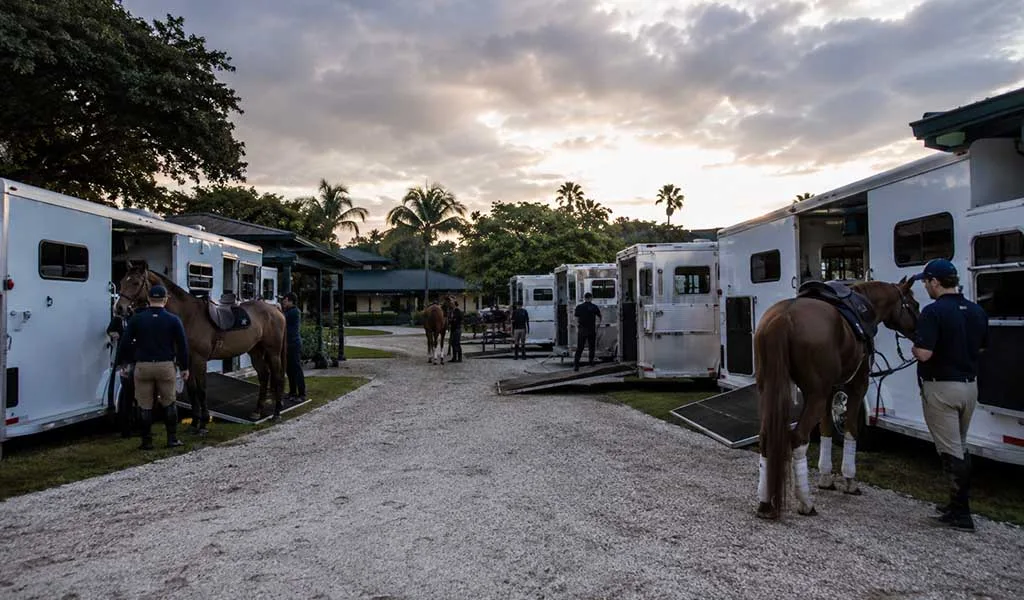
Barn and equestrian infrastructure hardening
Wellington barn infrastructure is typically well-engineered for local weather but not always specifically for major hurricane exposure. The specific considerations include roof integrity under wind loads. Barn door and window integrity. Tack room and feed storage weatherproofing. Riding arena infrastructure exposure to wind-driven debris. Fencing integrity during and after storm windows.
The specific 2026 consideration is that barn infrastructure at estates that haven’t been reviewed since Hurricane Ian’s 2022 documented Florida impacts may not reflect current best practices for equestrian estate hurricane preparation. Insurance carriers for equestrian coverage increasingly evaluate hurricane preparation as part of underwriting.
Estates that manage barn infrastructure effectively conduct annual pre-season reviews with equestrian-specific hurricane preparation specialists. Structural assessment. Door and window verification. Roof integrity review. Tack and equipment storage assessment. All documented as part of both operational security and insurance compliance.
Off-season storm operations
The specific characteristic that shapes Wellington hurricane operations is that peak hurricane season overlaps with the off-season for most equestrian estates. Seasonal residents have typically departed. Household staff has scaled down. Barn management operates at reduced intensity. The estate operates in its most vulnerable configuration during the exact months when hurricane exposure peaks.
Storm operations at an estate in off-season configuration produce specific vulnerability categories that peak-season storm operations don’t face. Absent household presence means no immediate operational awareness. Reduced barn staffing means no personnel who can respond immediately to storm impacts on equestrian infrastructure. Absent principal presence means decision-making operates through phone and messaging with staff who may have limited authority.
The estates that manage off-season storm operations effectively establish clear pre-storm protocols. Which personnel are on site during storm windows. What decision-making authority operates during principal absence. How coordination with owners occurs during and after storms. What continuous operational awareness exists during the off-season storm exposure.
Our coverage on event security for Wellington polo and equestrian operations addresses the peak-season architecture. The off-season architecture is different.
Vendor and contractor storm-period access
Post-storm response at equestrian estates involves substantially more vendor and contractor access than at standard residential properties. Roof repair. Tree removal. Barn structural assessment. Fencing repair. Riding arena restoration. Equestrian equipment replacement. Veterinary access for horses that remained on site. All operating during a period when estate presence is reduced and operational oversight is limited.
The specific vulnerability is that equestrian estates typically have larger vendor pools than residential estates and less formal vetting protocols. Combined with off-season vacancy and post-storm urgency, the compound effect produces contractor access under reduced oversight during periods of elevated exposure.
The estates that manage this effectively maintain year-round relationships with equestrian-specialized vendors who can respond quickly during post-storm windows. Documented vendor relationships. Structured identification for storm-period access. Coordinated protocols for vendor rotation. All established before storms arrive.
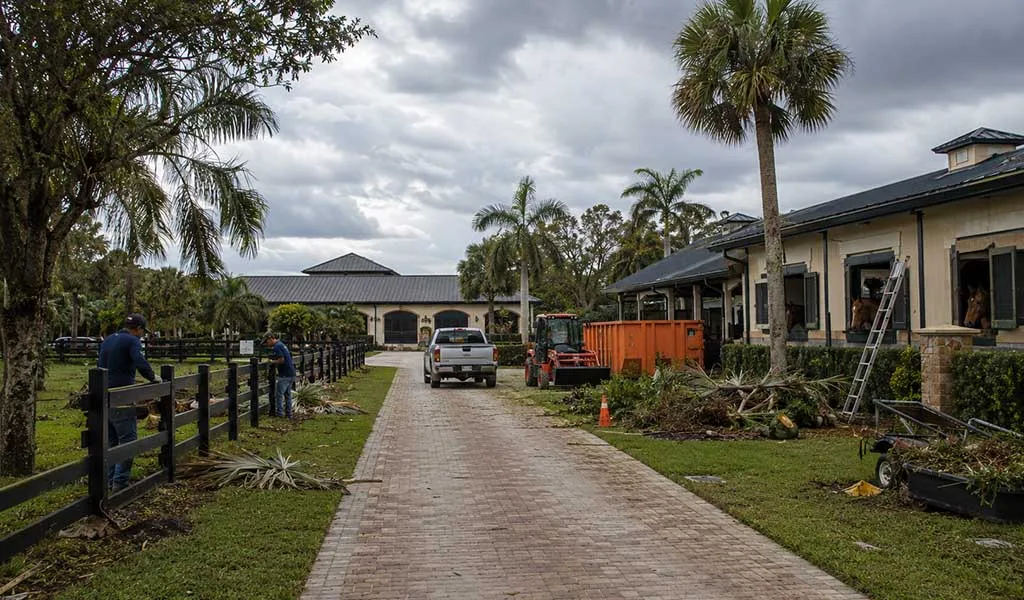
Horse care during storm windows
For estates where horses remain on site during storm windows, either because evacuation wasn’t required or because logistics didn’t support full evacuation, the operational requirements during and after storms are substantial.
Horse care during storm windows requires personnel physically present at the barns. Feed and water systems must operate through potential power outages. Veterinary access must be available if injuries occur. Post-storm assessment must be immediate to identify and address stress-related health impacts.
The specific consideration is that these requirements operate against a broader environment of storm-related infrastructure disruption. Personnel who normally handle horse care may be affected by their own residential impacts. Veterinary access may be constrained by broader emergency response demands. Feed and supply deliveries may be affected by transportation restrictions.
Estates that maintain horses on site during storm windows require specific operational architecture including on-site personnel presence, backup power systems, backup feed and supply arrangements, pre-arranged veterinary coordination, and continuous communication with owners.
Daphne Nikolopoulos’s coverage in Palm Beach Illustrated has documented the Wellington equestrian community’s operational rhythms. That reporting provides useful context on how the community actually operates through the seasonal transitions.
The July operational window
Wellington equestrian hurricane preparation is a July operational priority for the specific reason that the logistics complexity requires substantial lead time. Horse evacuation arrangements. Barn infrastructure verification. Off-season protocol establishment. Vendor relationship confirmation. On-site personnel coordination.
August, September, and October will produce whatever the 2026 season produces. Preparation completed in July manages what arrives. Preparation attempted during active storm windows manages logistics gaps that can’t be closed in real time.
What I'd recommend
For Wellington equestrian estate owners heading into peak hurricane season, three practical priorities.
Complete horse evacuation logistics coordination now. Destination arrangements. Transportation. Documentation. Veterinary coordination. All measured in weeks, not days.
Verify barn and equestrian infrastructure against current storm exposure standards. If your infrastructure hasn’t been reviewed since 2022, the standard has moved.
Design your off-season storm operations architecture explicitly. This is where the compound exposure is highest and where most estates have the biggest gap.
Where to Go From Here
Start with the Estate Operations & Insider Risk Checklist — the 15-point framework specifically designed for equestrian estate seasonal staffing patterns.
If you’re ready for a direct conversation, request an audit here. We understand equestrian property architecture specifically.
For the specific EP architecture in Wellington, read our executive protection coverage for Wellington.
I’m John Hamilton, HKDS founder. We provide estate security, executive protection, and staff vetting for Wellington equestrian properties across Palm Beach Point, Grand Prix Village, and the broader Wellington equestrian corridor. Licensed Florida Class B, D, and G. Contact us.