
Jupiter’s exposure to hurricanes has shifted in ways that most standard household preparation frameworks don’t adequately address. Recent seasons have produced substantial tornado activity in Avenir, Jupiter Farms, and points north that damaged newly built high-value properties not designed for the tornado threat profile specifically.
The National Hurricane Center’s 2026 outlook indicates above-average seasonal activity heading into peak season.
For Jupiter estate owners in Admirals Cove, Frenchman’s Creek, The Bear’s Club, Jupiter Hills, and the broader waterfront and gated community corridor, this July window is the specific operational period when preparation is actually feasible. Here’s what I’ve seen and what I’d address before storm windows arrive.
Our coverage on estate security in Jupiter addresses the underlying architecture.
Tornado risk operational considerations
The specific characteristic that has emerged from recent Jupiter hurricane seasons is that tornado activity within the hurricane environment has produced concentrated damage patterns that differ from standard wind and water exposure.
Tornado activity is by its nature localized and less predictable than the broader storm circulation. Recent seasons have documented multiple tornadoes tracking through areas including Avenir, Jupiter Farms, and other Jupiter-adjacent zones. Damage was severe in the specific paths but didn’t extend broadly across the affected areas.
The specific operational implication is that estates in the affected zones need to consider tornado exposure separately from the broader hurricane exposure. Standard hurricane building codes address wind exposure at documented levels. Tornado wind exposure exceeds those levels. Standard hurricane preparation addresses wind-driven debris. Tornado debris moves at velocities and produces impact patterns that standard preparation doesn’t fully address.
For estates in tornado-prone zones, the operational considerations include reinforced safe rooms, storm shelter protocols, and operational awareness of tornado warnings that operate on shorter timelines than standard hurricane warnings.
Waterfront estate compound exposure
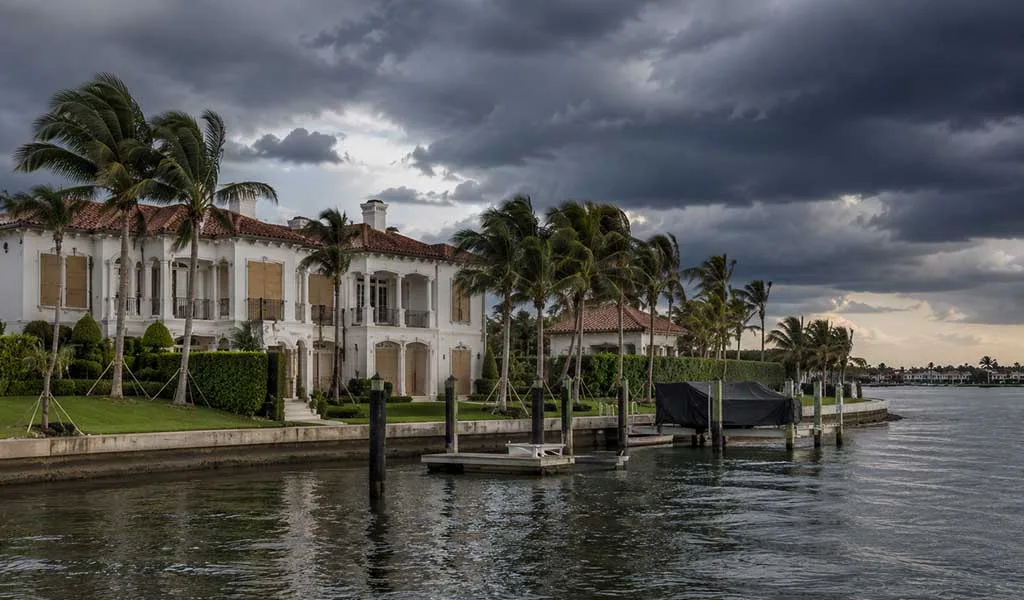
Jupiter’s waterfront estate concentration on the Loxahatchee River, Jupiter Inlet, and Intracoastal Waterway produces compound hurricane exposure that inland properties don’t face.
Storm surge is the primary consideration for coastal properties. Jupiter Inlet exposure combines Atlantic surge with river backflow during major storm events. Loxahatchee River exposure includes surge combined with runoff volumes that can exceed normal channel capacity. Intracoastal Waterway exposure includes wind-driven surge on both the ocean side and the inland side of the barrier islands.
Wind exposure at waterfront properties is elevated compared to inland properties because the water fetch produces higher wind speeds and more wind-driven debris. Storm-driven vessel impacts add exposure that inland properties don’t face. Post-storm marine debris including displaced vessels, dock components, and marine equipment produces access dynamics during recovery that inland properties don’t have to manage.
The estates that manage waterfront exposure effectively treat storm surge, wind, marine debris, and post-storm marine access as distinct operational categories with coordinated but independent response protocols.
Gated community coordination during hurricane events
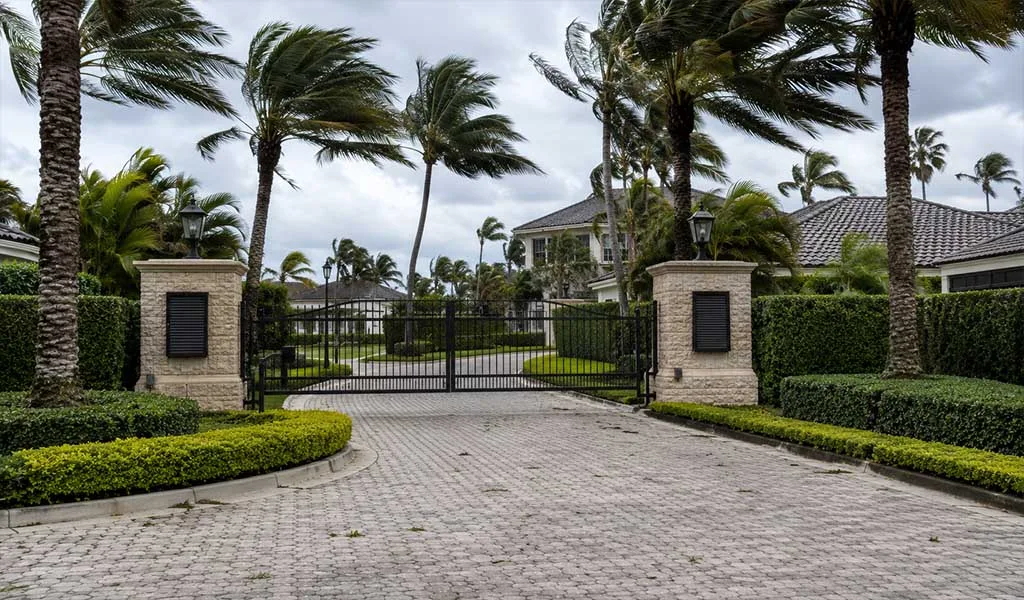
The gated communities that anchor Jupiter’s UHNW estate market provide community-level security infrastructure during normal operations. During hurricane operations, that infrastructure faces specific stress that residents should understand.
Community security personnel typically evacuate under specific conditions defined in community hurricane protocols. Gate coverage may transition to reduced or automated operation. Marina and community facility operations transition to storm protocols. Vendor and visitor access management operates under different rules than during normal conditions.
The specific implication for estate owners is that community-level security coverage during and immediately after storm windows is often reduced from normal operational levels. That reduction is appropriate for community security operations but creates gap periods that individual estate security architecture has to address.
Estates that maintain private security architecture through hurricane windows manage those gap periods effectively. Estates that depend entirely on community security face the community-level reduction without individual estate coverage to compensate.
Our coverage on 24/7 security and mobile patrol in Jupiter addresses the operational cadence the current environment requires.
Post-storm contractor rotation and vetting
The post-storm operational window in Jupiter presents specific contractor and vendor exposure that residential-standard preparation doesn’t typically address at trophy-tier scale.
Roof contractors. Tree services. Debris removal. Interior water damage restoration. Landscape restoration. Marine service for dock and vessel damage. HVAC repair. Structural assessment. Insurance adjusters. Utility restoration personnel. Municipal damage assessment. Extended contractor rotation over a 30-90 day recovery window can produce 60-100 distinct personnel accessing the property.
The specific vulnerability is that most estates don’t have structured contractor vetting protocols for storm-period access. Urgency defaults to informal verification. The gap between standard practice and trophy-tier operational security is where post-storm reconnaissance and social engineering concentrate.
The FBI’s IC3 data on insider and vendor involvement in high-value incidents applies specifically during post-storm periods when contractor access is elevated and standard operational oversight is reduced.
Estates that manage this effectively establish pre-storm contractor relationships with documented vendors. Structured identification for storm-period access. Coordinated protocols for contractor rotation. Documented access records that support both security operational continuity and eventual insurance claim resolution.
Insurance coordination and windstorm coverage
Jupiter estate insurance operations during hurricane response involve specific windstorm and flood coverage requirements that most estate owners understand but that produce operational documentation requirements that residential-standard practice often doesn’t fulfill.
Windstorm insurance coverage requires documentation of pre-storm preparation. Flood insurance coverage requires documentation of water intrusion patterns. Contents coverage requires documentation of losses. All operating on documentation standards that structured security operations produce naturally but that ad hoc preparation doesn’t.
For principals whose coverage limits reach into the eight and nine figures for structure and contents combined, the documentation dimension of hurricane operations is central to eventual claim recovery. Estates that operate structured security architecture through hurricane windows produce documentation naturally. Estates that operate reduced or informal security produce documentation gaps that affect claim outcomes.
Daphne Nikolopoulos’s coverage in Palm Beach Illustrated has documented the Jupiter and Palm Beach County community operational rhythms. That reporting provides useful local context.
The July operational window
Jupiter hurricane preparation is a July operational priority. Tornado risk considerations require operational planning before storms arrive. Waterfront exposure architecture has to be established before conditions require it. Gated community coordination requires pre-arrangement. Contractor relationships have to be established. Insurance documentation architecture has to be in place.
What I'd recommend
For Jupiter estate owners in the gated community corridor, three practical priorities.
Address tornado exposure separately from broader hurricane exposure. Recent seasons have demonstrated that tornado activity produces damage patterns standard preparation doesn’t cover.
Establish contractor vetting protocols for storm-period access before storm windows arrive. Documented relationships. Structured identification. Coordinated protocols.
Design your post-storm security architecture explicitly. Community-level security transitions to reduced operations during storm windows. Individual estate coverage has to compensate.
Where to Go From Here
Start with the Residential Threat Integration Checklist — the 15-point framework covering the integrated architecture required for the current environment.
If you’re ready for a direct conversation, request an audit here. We assess for gated community and waterfront context specifically.
For the specific EP architecture in Jupiter, read our executive protection coverage for Jupiter.
I’m John Hamilton, HKDS founder. We operate estate security and executive protection across Jupiter, Jupiter Island, Tequesta, Juno Beach, and North Palm Beach. Licensed Florida Class B, D, and G. Contact us.