
Standard household hurricane preparation covers wind protection, water intrusion prevention, and basic security during evacuation. That baseline is real. It’s also not the complete operational architecture that Manalapan trophy estates actually require during peak hurricane season.
The specific characteristic that distinguishes trophy estate hurricane operations is that the value at risk, the reconnaissance environment, the vendor and contractor access requirements, and the post-storm vulnerability window all operate at scales that residential-standard preparation isn’t architected for.
Here’s what I do at trophy estates that standard approaches miss.
Our coverage on Manalapan trophy real estate security exposure addresses the underlying architecture. Related coverage on off-season security for Manalapan estates covers the broader operational picture.
Contractor vetting for storm-period access
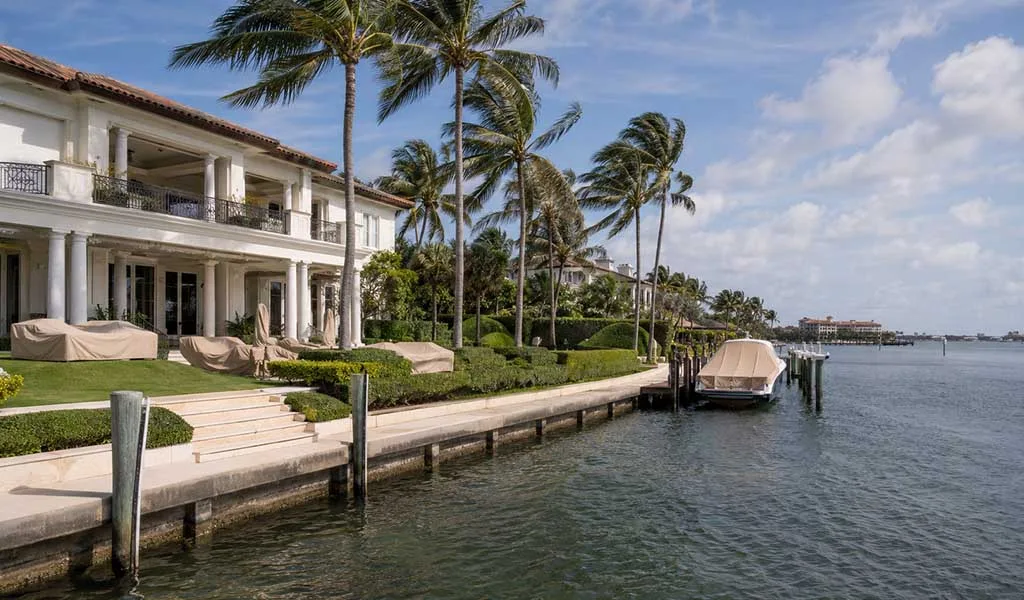
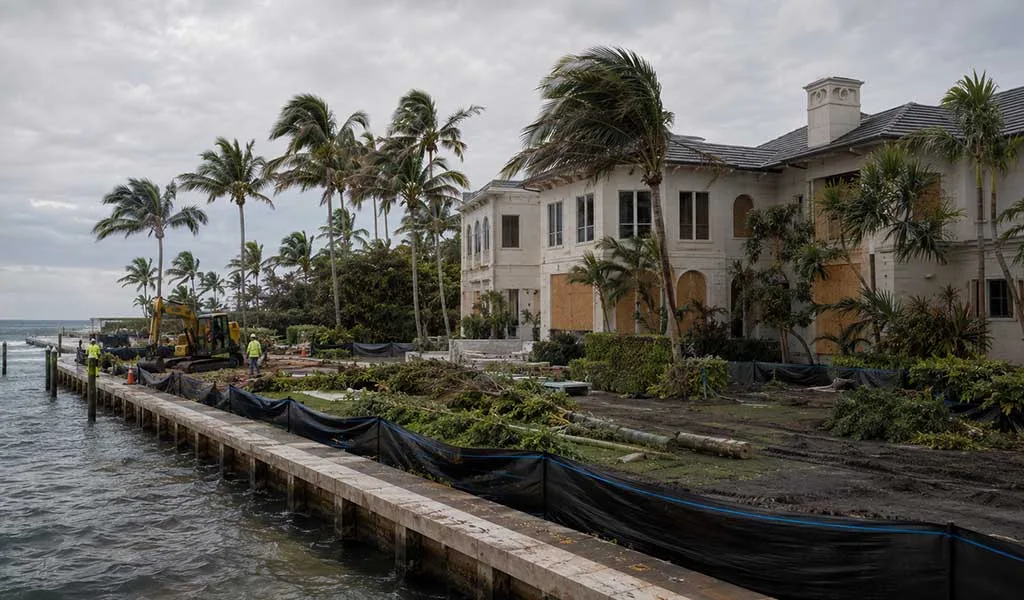
Post-storm response at a trophy estate involves substantially more contractor and vendor access than at a standard residential property. Roofing contractors. Tree services. Interior cleanup. Marine services for dock and vessel damage. Landscape restoration. HVAC and mechanical repair. Interior restoration if water intrusion occurred. Insurance assessors. Structural engineers if significant impact occurred.
The volume of contractor and vendor access during post-storm windows can easily reach 40-80 distinct personnel over the first 30 days following a major storm impact. Most of that access is legitimate. Some of it, at trophy estates specifically, is not.
The pattern that I’ve observed consistently across trophy estates in South Florida is that post-storm windows produce elevated reconnaissance activity against trophy estates. Threat actors present as contractors, insurance personnel, utility workers, or municipal service personnel. The elevated legitimate access volume provides cover for coordinated impersonation and social engineering that would be immediately visible during normal operational windows.
The specific vulnerability is that most estates don’t have structured contractor vetting protocols for storm-period access. Insurance requirements drive some vetting. Practical urgency defaults to informal verification. The gap between what standard practice supports and what trophy estate operational security actually requires is where post-storm reconnaissance concentrates.
What I’m doing right now: pre-storm contractor vetting protocols. Documented vendor relationships. Structured identification for storm-period access. Coordinated protocols for contractor rotation during extended response periods.
Dual-perimeter storm operations
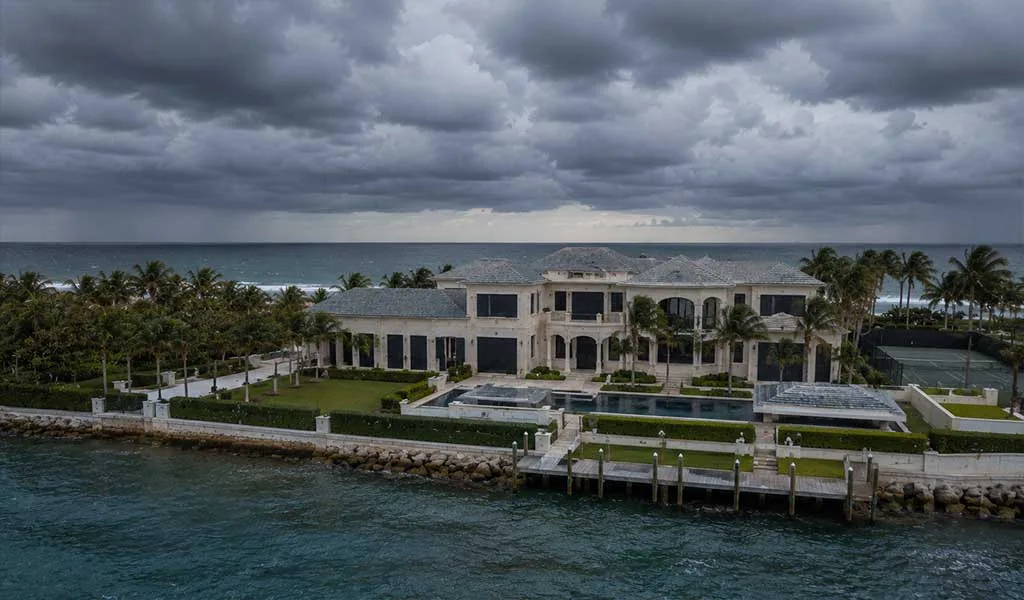
Manalapan’s ocean-to-Intracoastal geography produces hurricane operational requirements that street-facing residential preparation doesn’t address. The Atlantic side and Intracoastal side each face specific storm impacts that require operational coordination.
Atlantic-side exposure includes storm surge, wind-driven wave impact, beach erosion, and post-storm beach access dynamics. The specific security consideration is that storm-damaged beach areas produce access patterns and observation opportunities that don’t exist during normal conditions. Reconnaissance during post-storm cleanup windows can operate under cover of normal beach recovery activity.
Intracoastal-side exposure includes surge from the west, boat impacts on docks and seawalls, marine debris, and post-storm marine access dynamics. Vessels moved during storm preparation may return to different configurations. Marine service personnel access is elevated. The security consideration is that Intracoastal-side operational awareness during post-storm windows requires different architecture than during normal conditions.
The estates that manage dual-perimeter storm operations effectively treat each water side as a distinct operational domain with coordinated but independent response protocols. Camera coverage, monitoring, and coordinated response operating continuously through the storm window on both perimeters.
Our coverage on marine-side surveillance for Manalapan estates addresses the specific architecture required.
Marine asset coordination
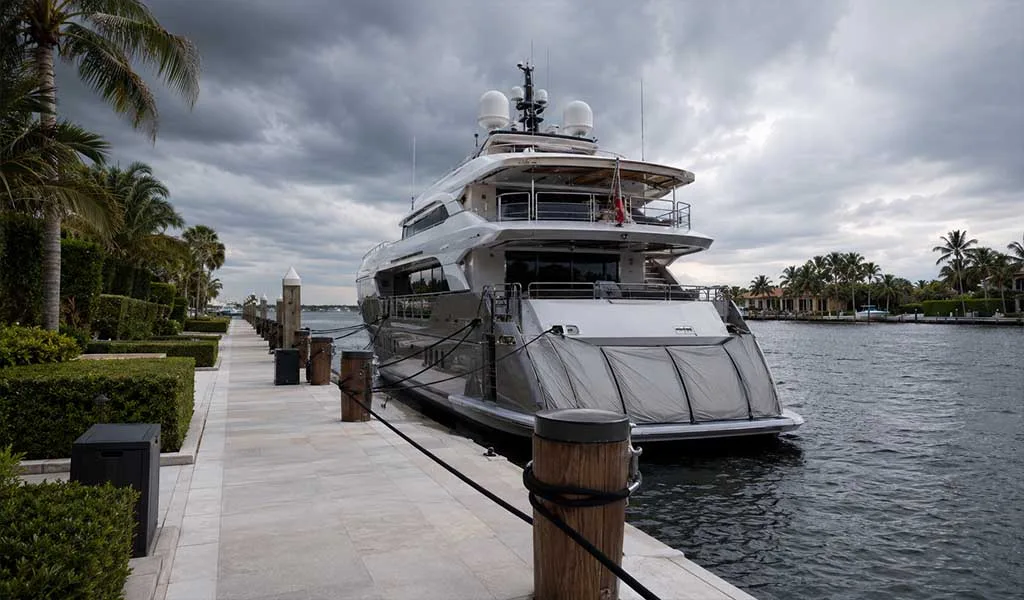
Trophy estates with marine assets face hurricane operational requirements more complex than smaller vessels or standard residential dock arrangements. Vessels above certain sizes have documented hurricane operational protocols. Haul-out coordination with specific yards. Storage arrangements. Insurance requirements for pre-storm movement.
The specific consideration for trophy estates is that vessels often carry substantial onboard value beyond the vessel itself. Personal effects. Art. Electronics. Cash and documents. Guest belongings if the vessel is in charter or entertainment use. Coordination during storm windows has to address both the vessel and its contents.
The June 2026 Ellison-MacNeil land control transactions reinforced Manalapan’s trophy estate profile. Estates in the current concentration produce marine asset profiles that require pre-arranged coordination with specific yards, marine service providers, and hurricane operational specialists. Coordination attempted during an active watch or warning arrives too late.
Post-storm reconnaissance environment
The post-storm operational window produces a specific reconnaissance environment that most estates don’t manage explicitly.
Aerial reconnaissance opportunities are elevated during post-storm periods. Drone activity for damage documentation is normalized. Insurance and municipal assessment produces additional aerial documentation. All operates under cover of legitimate post-storm operations while producing intelligence that persists past the immediate storm window.
Ground-level reconnaissance operates through elevated pedestrian and vehicular access. Storm tourism, damage curiosity, and legitimate assessment activity produce access patterns that reduce the operational signature of dedicated reconnaissance.
Digital reconnaissance operates through elevated social media documentation of storm impacts. Property owners, staff, and adjacent residents produce documentation that provides operational intelligence to observers.
The specific consideration for trophy estates is that the post-storm reconnaissance environment produces intelligence that supports later engagement planning. The immediate post-storm window may not produce direct engagement, but it produces the intelligence foundation for engagement during subsequent months.
The estates that manage this effectively treat post-storm reconnaissance management as a specific operational category with dedicated protocols. Aerial monitoring for drone activity. Access documentation for post-storm visitors. Digital exposure management during recovery windows.
Insurance coordination and documentation
Trophy estate insurance operations during hurricane response require documentation and coordination that residential-standard preparation doesn’t typically produce. Structured damage documentation. Chain of custody for high-value contents. Coordination with adjuster access. Documentation for eventual claim resolution.
The specific consideration is that insurance carriers for trophy estate coverage increasingly require security operational documentation as part of the claim process. Access logs. Vendor identification. Documentation of security operational continuity during the storm window and after.
Estates that operate structured security architecture produce this documentation naturally. Estates that operate informal or reduced security during storm windows produce documentation gaps that affect claim resolution.
Katherine Clarke’s WSJ Mansion coverage has documented the trophy estate profile at Manalapan specifically. That coverage provides useful context on how the current market operates.
The July operational window
Trophy estate hurricane preparation is a July operational priority. Contractor relationships have to be established before storm windows. Marine coordination has to be pre-arranged. Post-storm architecture has to be designed and documented. Reconnaissance management protocols have to be in place.
August, September, and October will produce whatever the 2026 season produces. Preparation completed in July manages what arrives. Preparation attempted during active storm windows is preparation that arrives too late.
What I'd recommend
For Manalapan trophy estate owners heading into peak hurricane season, three practical priorities.
Complete contractor vetting protocols for storm-period access now. Documented relationships. Structured identification. Coordinated rotation protocols.
Address dual-perimeter storm operations explicitly. Atlantic and Intracoastal as coordinated but distinct operational domains.
Design post-storm reconnaissance environment management. This is the specific category that trophy estates require architecture for and that standard household preparation doesn’t address.
Where to Go From Here
Start with the Estate Operations & Insider Risk Checklist — the 15-point framework specifically designed for trophy estate operational profiles.
If you’re ready for a direct conversation, request an audit here. I’ll walk the estate myself.
For the specific framework we recommend for provider evaluation, read How to Choose a Security Firm for a Manalapan Estate.
I’m John Hamilton, HKDS founder. We provide estate security, executive protection, and converged physical-digital security for Manalapan trophy estates. Licensed Florida Class B, D, and G. Contact us.