
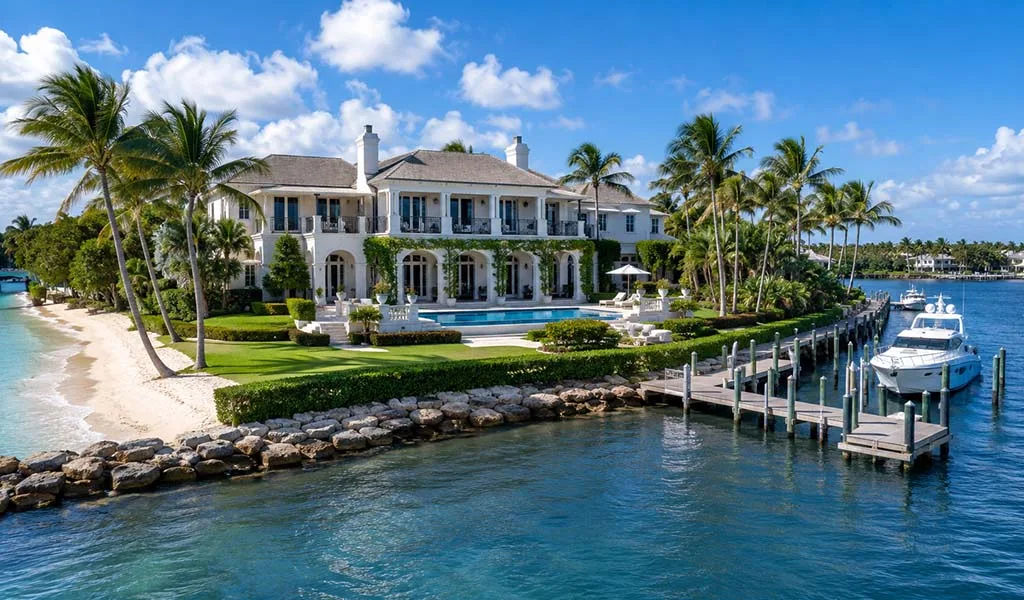
Manalapan operates on a different threat environment than standard residential UHNW markets. The concentration of trophy estates, the international documentation of specific properties, and the operational visibility that current media coverage produces create a threat profile that requires architecture designed specifically for it.
What I want to walk through here is how planned engagements actually operate against Manalapan trophy estates. This is what I’ve seen in casework across the corridor and in adjacent markets over the past 24 months.
Our own detailed coverage on Manalapan trophy real estate security exposure addresses the underlying architecture required.
The trophy estate targeting environment
Larry Ellison’s $173 million Gemini estate purchase established Manalapan as an internationally documented trophy market. Every subsequent nine-figure transaction has reinforced the pattern. The June 2026 Ellison-MacNeil $67 million land split. The $85 million new listing at 3060 South Ocean Boulevard. The ongoing $75 million Villa Tropezina construction. The resident concentration including Jeff Greene, Tony Robbins, Sean Hannity, and David MacNeil.
That identification is the starting condition for trophy estate targeting. When a threat actor can name the estate, identify the owner, document the property boundaries, and assess the operational patterns from public sources alone, the reconnaissance phase has already been shortened significantly.
Manalapan’s current environment provides all of that publicly.
Phase 1 — Target selection
The first phase of planned engagement against a trophy estate is target selection. Threat actors evaluate multiple candidate properties simultaneously and select on the basis of several criteria.
Documented value at the property. Assessed operational vulnerability. Owner profile and estimated resistance capability. Access dynamics including waterfront exposure, community security, and adjacent property patterns. Recovery scenarios including insurance coverage and law enforcement response.
Manalapan trophy estates typically rank high across most target selection criteria. Documented value is public. Owner profiles are internationally known. Access dynamics include the dual-perimeter waterfront exposure that most estates present.
The specific vulnerability that target selection identifies is often not physical infrastructure. It’s operational discipline. Estates that display sophisticated pattern-of-life management, counter-surveillance awareness, and integrated architecture tend to be deselected in favor of properties that display more predictable patterns.
Most estates I assess in Manalapan aren’t operating with sophisticated pattern-of-life management. That’s a selection criterion that puts them at the top of adversary lists rather than the bottom.
Phase 2 — Reconnaissance
Once a target has been selected, the reconnaissance phase produces detailed operational intelligence.
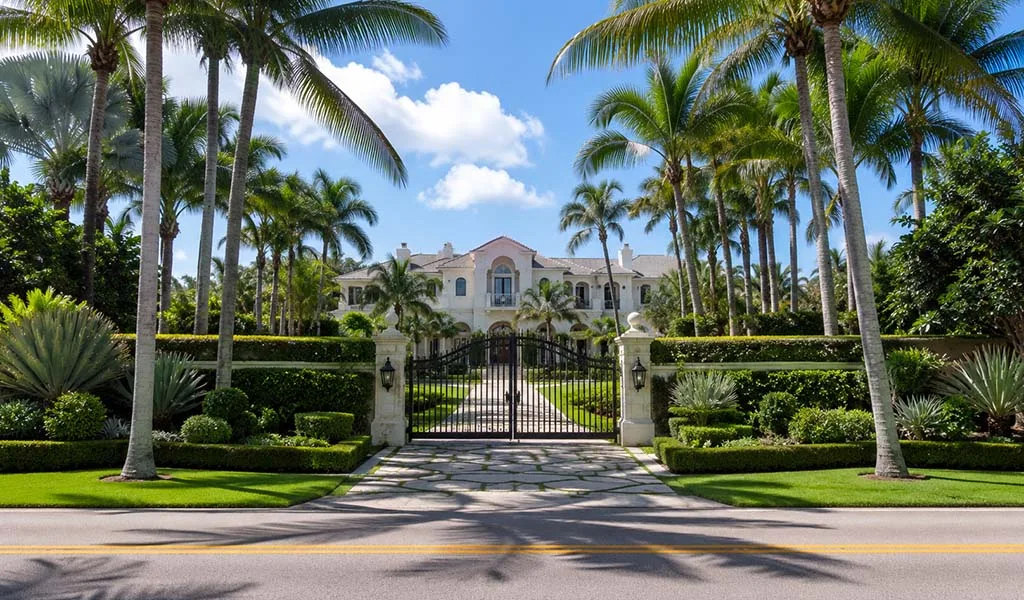
Land-side reconnaissance operates from public roads and adjacent properties. Vehicle-based observation documents traffic patterns, delivery schedules, staff arrivals and departures, and family member movements. Pedestrian-based observation, sometimes conducted by individuals presenting as tourists or maintenance workers, produces closer detail on perimeter architecture and physical vulnerabilities.
Marine-side reconnaissance operates from boats transiting the Intracoastal. Normal canal boat traffic provides cover for detailed observation of dock activity, waterfront perimeter, and marine access patterns. The Intracoastal-facing side of a Manalapan estate is often documented in more operational detail than the road-facing side.
Beach-side reconnaissance operates from the Atlantic beach, which is publicly accessible. Pedestrian traffic on the beach documents beach-facing perimeter and Atlantic-side exposure patterns.
Digital reconnaissance operates through open-source intelligence. Social media documentation of the property, family members, and staff. Employment history of household personnel available on professional networking platforms. Vendor relationships visible through corporate records, tax filings, and social media patterns.
The reconnaissance phase typically extends over weeks or months. It’s not conducted in one visit. It’s not conducted in one week. It’s sustained operation that produces a comprehensive picture before any engagement is planned.
Our detailed coverage on marine-side surveillance for Manalapan estates addresses the specific architecture that closes the marine reconnaissance gap.
Phase 3 — Operational planning
Once reconnaissance has produced sufficient intelligence, operational planning determines engagement parameters.
Timing is selected on the basis of documented occupancy patterns. Seasonal departures. Family member travel. Staff rotation. Event calendars that pull principals off-property. Vendor arrival patterns that create predictable access windows.
Access vectors are selected based on reconnaissance findings. Marine approach via canal or Intracoastal. Beach approach via Atlantic. Land approach via specific streets or through adjacent property lines. Insider or vendor-enabled access when reconnaissance has identified an exploitable individual.
Extraction plans are developed simultaneously with entry plans. The extraction phase is often the most operationally exposed and receives specific attention.
Contingency planning covers unexpected household presence, security response, and law enforcement engagement. Sophisticated operations include multiple contingency plans rather than a single execution pathway.
Katherine Clarke’s WSJ Mansion coverage of the Ellison Manalapan strategy documents the market pattern that shapes the current operational environment. That coverage is public. That coverage is intelligence that phase 3 planning uses.
Phase 4 — Engagement
The engagement phase is the shortest of the four operational phases. Well-planned operations against trophy estates typically execute in windows of 15 to 60 minutes.
The characteristic that distinguishes planned trophy estate engagements from opportunistic residential crime is operational discipline during execution. Movements are efficient. Time on target is minimized. Communication is structured. Extraction is planned as carefully as entry.
The specific vulnerability that most estates encounter during engagement is that residential security architecture is designed to detect and respond to opportunistic threats. Well-planned engagements operate at speed that residential architecture is not designed to intercept.
The architecture that addresses trophy estate threat patterns
Trophy estate security architecture that addresses these four phases operates on different principles than standard residential security.
Phase 1 (target selection) is addressed through operational discipline that makes the estate less attractive as a target than adjacent alternatives. Counter-surveillance awareness. Pattern-of-life management. Reconnaissance environment management.
Phase 2 (reconnaissance) is addressed through counter-surveillance operations that identify and disrupt sustained observation. Marine-side surveillance. Land-side pattern analysis. Digital exposure management.
Phase 3 (operational planning) is addressed through operational unpredictability. Varied routines. Non-obvious protective coverage. Access pattern variation.
Phase 4 (engagement) is addressed through operational response capability that operates at speed matching planned engagement tempo. Trained protective operators. Integrated response protocols. Coordinated support from operations centers positioned to respond within intercept windows.
Our coverage on staff vetting for Manalapan estates and insider risk covers the vetting architecture that closes the phase 2 insider intelligence category.
The current environment
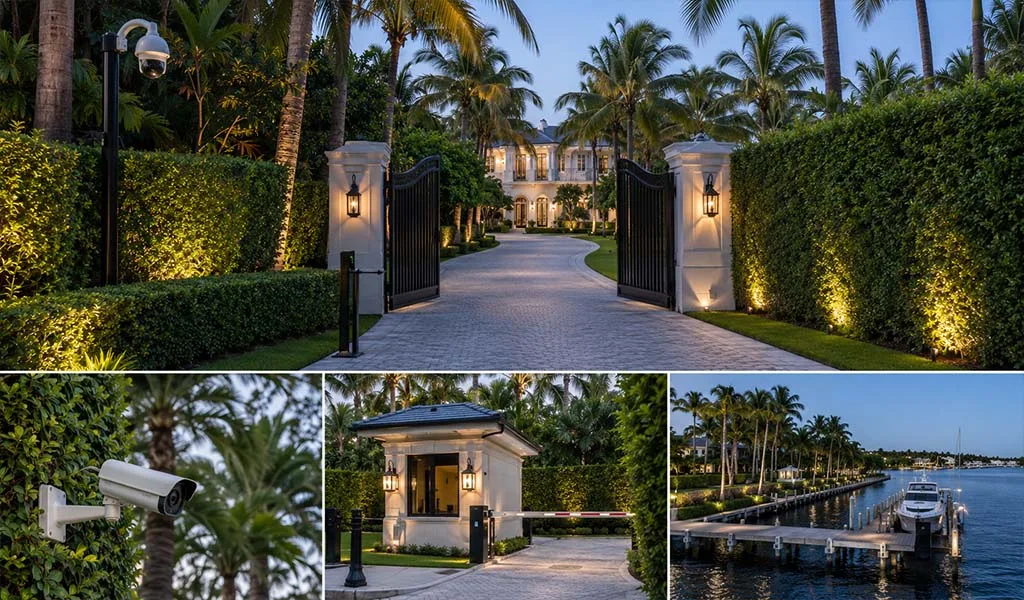
The current environment in Manalapan is genuinely different from what existed even two years ago. The trophy concentration has increased. The international documentation has intensified. The land control patterns have reset the market. The insurance environment has evolved.
Estates operating on 2022 security architecture against 2026 threat patterns are running an operational mismatch that phase 1 target selection is designed to identify.
Where to Go From Here
Start with the Estate Operations & Insider Risk Checklist — the 15-point audit we run on every new Manalapan estate.
If you’re ready for a direct conversation, request an audit here. I’ll walk the estate myself.
For the specific framework we recommend for provider evaluation, read How to Choose a Security Firm for a Manalapan Estate.
I’m John Hamilton, HKDS founder. We provide estate security, executive protection, and converged physical-digital security for Manalapan trophy estates. Licensed Florida Class B, D, and G. Contact us.