
The Side of the Estate No One Defends
Walk through almost any Naples estate security arrangement and a single pattern emerges immediately. The cameras face the street. The gate controls the road. The guard, if there is one, watches the motor court. The alarm protects the doors. Every element of the posture is oriented toward the land, toward the front, toward the direction a visitor would arrive. And for a large share of Naples estates, that orientation defends the wrong direction.
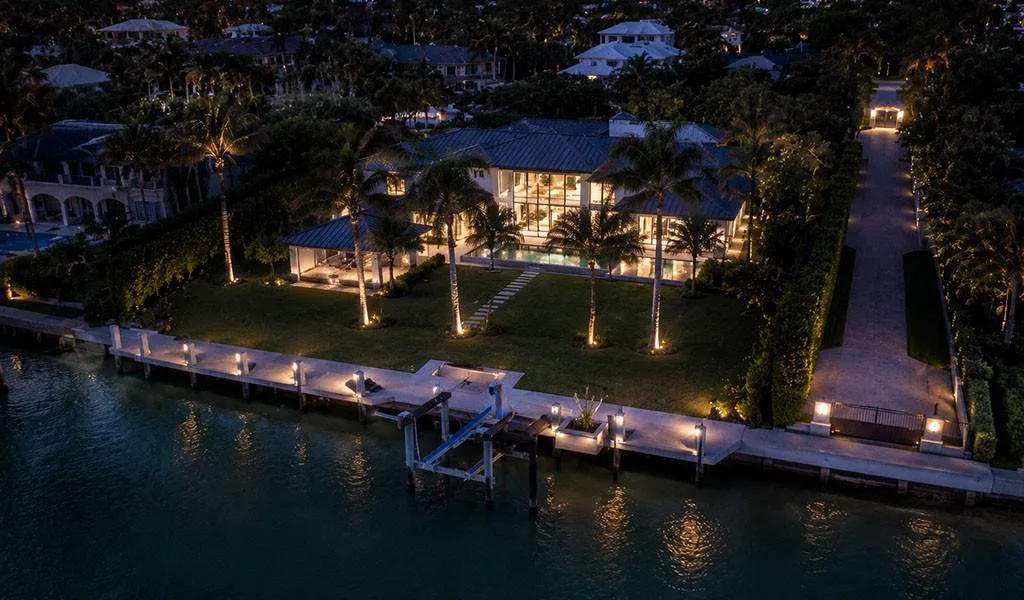
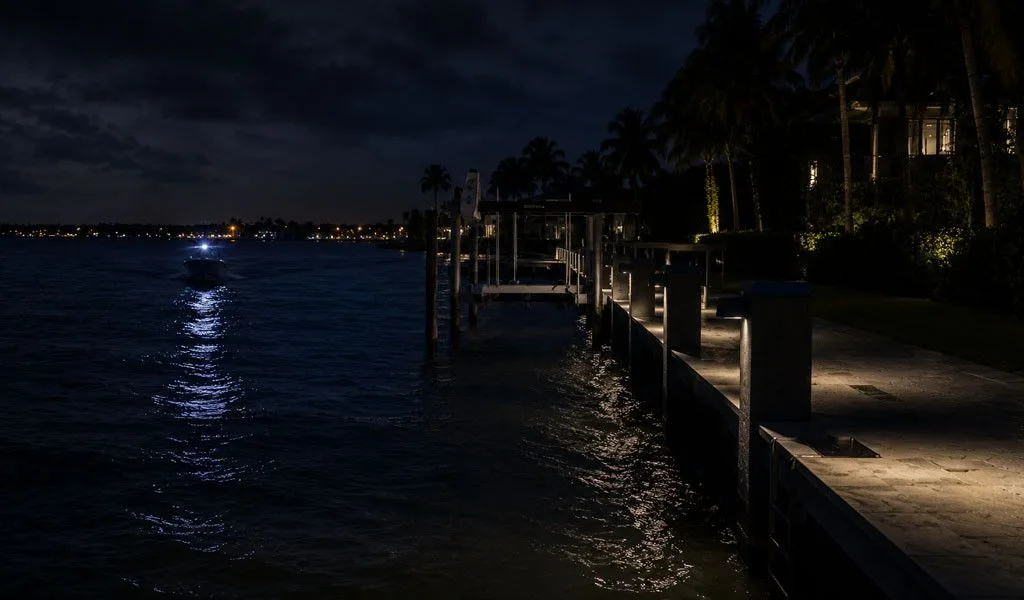
Because the most valuable estates in Naples are waterfront. They sit on navigable deep-water canals, on lakes, on Gulf frontage. The water that makes these properties extraordinary, that drives their value into the tens and hundreds of millions, also gives them an entire approach vector that the street-facing security posture does not cover. The dock. The seawall. The canal. The beach. The water side of these estates is, in most existing security arrangements, simply open.
This is not a minor gap. It is, for waterfront Naples estates, the central vulnerability, and it is the one that conventional residential security, transplanted from inland markets that never had to think about the water, consistently fails to address.
The Waterborne Threat Is Documented, Not Theoretical
It would be easy to dismiss the waterborne approach as an exotic concern, the kind of thing security firms invent to sell more services. The documented record says otherwise.
In a 2026 case in Broward County, an organized burglary crew targeting the gated Weston community faced exactly the kind of vehicle checkpoint that gated communities rely on. The crew did not defeat the checkpoint. They went around it, using inflatable boats on the waterways surrounding the neighborhood to bypass the vehicle entry controls entirely and reach the homes from the water. Over roughly six months, the crew was tied to at least six burglaries in that single community, with stolen property totaling an estimated two million dollars.
That case is a preview of a vulnerability that Naples has in far greater abundance than Weston. The crews working affluent Florida communities have now demonstrated, in practice, that they will use the water to bypass land-based security. And Naples, with its canal neighborhoods, its lake-front communities, and its Gulf frontage, offers vastly more waterborne approach than almost any inland gated community.
The threat is not limited to organized crews. The waterborne approach is available to anyone who understands that the estate’s defenses face the wrong way: a stalker, an extortionist conducting surveillance, an individual with a grievance, an opportunist who has noticed that the dock is unwatched. The water is an approach vector, and an unwatched approach vector is an invitation to whoever thinks to use it.
Port Royal and Aqualane Shores: Designed Around the Vulnerability
The irony of the Naples waterfront is that the neighborhoods at the very top of the market are the ones most defined by the vulnerability, because they were designed around the water.
Port Royal, the most exclusive address in Naples and the site of the most expensive home sales in the country, was developed specifically to provide estates with deep-water canal access to the Gulf. The canals are the entire point. They are what make Port Royal Port Royal, what allow residents to keep significant vessels at private docks behind their homes with direct Gulf access. And every one of those canals is a navigable waterway leading directly to a private dock at the back of an extraordinarily valuable estate.
Aqualane Shores, just south, shares the same DNA. Built around canals that provide boating access, its estates carry the same waterborne exposure. The neighborhoods that command the highest prices in Naples command them in part because of the water access, which means the feature that drives their value is the same feature that creates their central security vulnerability.
This is the waterfront paradox of the Naples luxury market. The more desirable the waterfront, the more navigable the access, the more valuable the estate, and the more exposed the water side becomes. A defense that does not account for the canal is not a defense for a Port Royal estate. It is a defense for the half of the property that faces the street.
Beyond Canals: The Other Non-Street Approaches
Canal-front estates are the clearest case, but the waterborne and non-street approach problem extends across the Naples market in several forms.
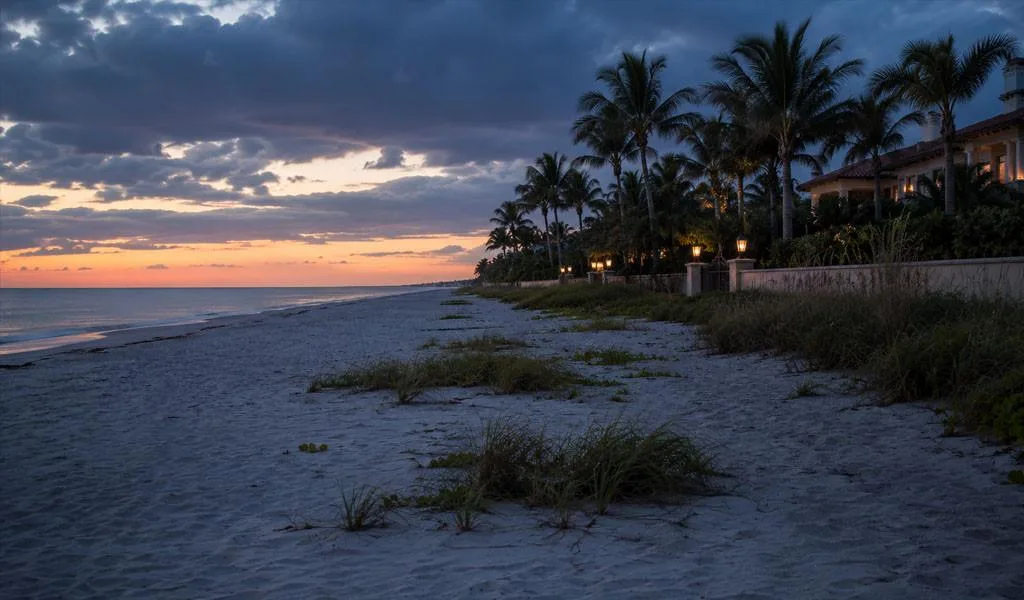
Gulf-front estates face the beach approach. A property with direct Gulf frontage has a beach-side boundary, and in Florida the beach is public to the mean high-water line. That means anyone can legally walk the beach to the boundary of a Gulf-front estate, and the beach approach to the property is open to foot traffic that the street-facing security never sees. For Gulf-front estates, the beach is the unwatched approach, and it requires its own coverage.
Lake-front estates face the water approach in the many Naples communities built around lakes. Properties backing onto community lakes have a water boundary that, like a canal, provides an approach that bypasses the street and the gate. The Weston lesson applies anywhere there is navigable or accessible water behind the homes.
Golf-course-frontage estates face the course approach. The many Naples estates that back onto golf courses have a boundary facing open, accessible green space that provides concealment and an approach route entirely separate from the street. Law enforcement in multiple jurisdictions has specifically noted that organized crews favor homes near golf courses, parks, and other open spaces precisely because they offer easier access and escape routes.
In every case, the principle is the same. The estate has an approach that the street-facing security posture does not cover, and that uncovered approach is the one a serious threat will study and use.
What Real Waterfront Security Requires
Securing a waterfront estate properly means treating the water as a primary perimeter, equal in importance to the street, rather than as an afterthought. The components are specific and they are different from inland residential security.
Marine-side surveillance and detection covers the water approach. This means monitoring oriented toward the canal, the lake, the beach, or the Gulf, designed to detect a craft or an individual approaching from the water, in real time, day and night. The objective is to detect the approach as it develops, the boat slowing near the dock, the individual moving up the beach, rather than to capture footage reviewed after the fact. Detection that produces a real-time response is the difference between preventing a waterborne incident and investigating one.
Dock and seawall coverage addresses the specific point of access. The dock and seawall are where a waterborne approach makes contact with the property, and they require dedicated attention: monitoring, lighting where appropriate, and integration into the overall detection picture so that contact with the dock produces an alert.
Integration with the land-side posture is essential. The water-side security cannot operate as a separate system disconnected from the rest of the estate’s protection. The marine-side detection, the land-side perimeter, the access control, and the response capability all have to function as one picture, so that a waterborne approach engages the same coordinated response as a land-side one. The seam between water-side and land-side security is exactly the kind of gap a serious threat exploits, and integration closes it.
A response capability that accounts for the water completes the picture. Detecting a waterborne approach is only useful if it produces a response calibrated to the waterborne vector. The response planning has to account for how a water-side threat develops and what an effective response to it looks like, which is different from a land-side response.
And the whole posture has to remain discreet. This is Naples, where the premium on invisibility is high and visible security is itself a liability. Effective waterfront security achieves genuine marine-side protection while remaining unobtrusive, integrated tastefully into the dock and seawall structures, invisible to neighbors and guests, consistent with the discretion the community demands.
The HKDS Approach
HK Defense Solutions treats the water as a primary perimeter for waterfront Naples estates, because for those estates it is. Founded by John Hamilton after twelve years in U.S. Air Force special operations, the firm builds estate security around how a property would actually be approached and attacked, which for a Port Royal, Aqualane Shores, lake-front, or Gulf-front estate means accounting for the water.
That means marine-side surveillance and detection covering the canal, lake, beach, or Gulf approach, dock and seawall coverage, integration of the water-side and land-side posture into a single coordinated picture, and a response capability that accounts for the waterborne vector, all delivered with the discretion the Naples market requires. The water side of the estate stops being the open, unwatched approach and becomes a covered perimeter.
The work begins with a Private Threat Mapping Session, which includes a direct assessment of the estate’s waterborne exposure and what covering it requires. For a waterfront estate, this assessment frequently reveals the single largest gap in the existing posture, the open water side that no one had been watching. The assessment stands on its own regardless of what the family decides to do next.
Every map of a Naples estate’s existing defenses faces the street. Every serious threat that studies the property looks at the water. Closing that gap is the defining requirement of waterfront estate security, and it is the one that conventional protection, built for properties that never touched the water, was never designed to meet.
“In Port Royal, the canal is the entire point. It’s what the property is worth paying for. It’s also a navigable road leading straight to a private dock behind a nine-figure estate, and on most properties no one is watching it at all.”
Frequently Asked Questions
Why do waterfront estates in Naples need special security?
Because a large share of Naples estates sit on navigable canals, lakes, or Gulf frontage, every one of those properties has a waterborne approach that street-facing security ignores. The water side is typically the least-watched and most exposed boundary of a waterfront estate.
Is the waterborne threat to Naples estates actually real?
Yes. In a documented 2026 Florida case, an organized crew used inflatable boats to bypass a gated community’s vehicle checkpoints and reach homes from the water, tied to at least six burglaries totaling an estimated two million dollars. The crews working affluent Florida communities have demonstrated they will use the water.
Why are Port Royal and Aqualane Shores especially exposed?
Both neighborhoods were developed specifically around deep-water canal access, which is the feature that drives their value. That same navigable water access creates a waterborne approach to every canal-front estate, making the defining desirable feature also the defining vulnerability.
What about Gulf-front and golf-course estates?
Gulf-front estates face a beach approach that is public to the mean high-water line and open to foot traffic. Golf-course-frontage estates face an open-space approach that crews specifically favor for access and escape. Both are non-street approaches that street-facing security does not cover.
What does real waterfront security include?
Marine-side surveillance and detection covering the water approach, dedicated dock and seawall coverage, integration of water-side and land-side security into one coordinated picture, and a response capability that accounts for the waterborne vector, all delivered discreetly to suit the Naples environment.
How does HK Defense Solutions secure waterfront estates?
HKDS treats the water as a primary perimeter, providing marine-side surveillance, dock and seawall coverage, integrated land-and-water posture, and waterborne-aware response, delivered with discretion. It begins with a Private Threat Mapping Session that directly assesses the estate’s waterborne exposure.