

The Vulnerability Families Never See
A family can invest heavily in physical security, the gate, the cameras, the guards, the alarm, and remain profoundly exposed through a channel that none of that protects. The channel is digital, and the most common point of failure is not a hacker breaching a system. It is a family member, often a younger one, voluntarily broadcasting the exact information a hostile party needs to target the family.
This is the uncomfortable reality of modern UHNW security. The reconnaissance that precedes a targeted incident, a burglary, an extortion attempt, a fraud, a physical approach, increasingly happens online, assembled from sources the family has never thought of as security concerns. And the single richest source is often the family’s own social media.
For families in Naples, where wealth is concentrated, publicly verifiable, and seasonal, this digital exposure is not an abstract privacy concern. It converts directly into physical and financial risk, and it is the part of the security picture that conventional protection ignores entirely.
How Social Media Becomes a Targeting Tool
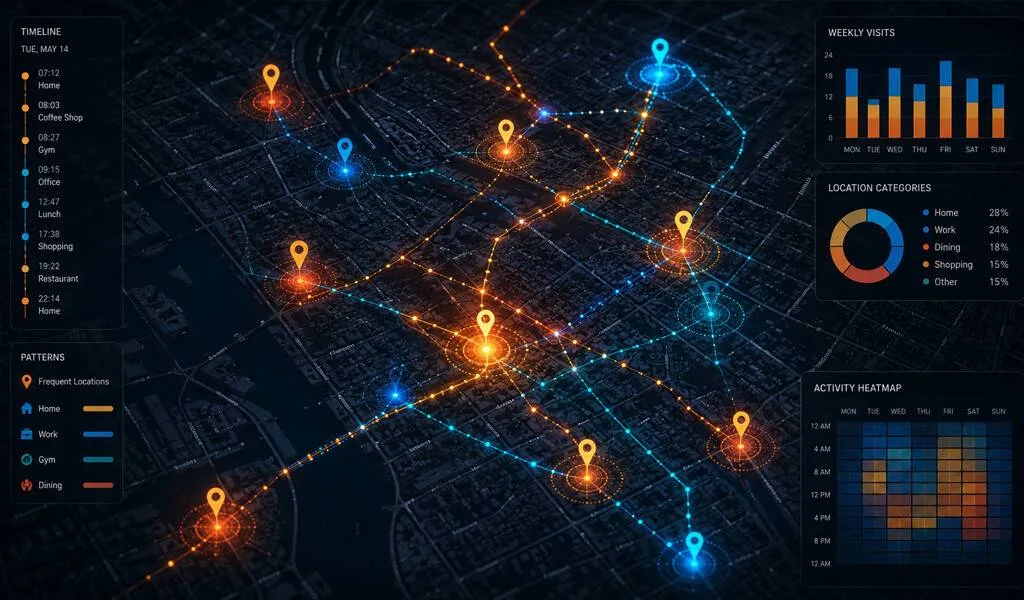
The connection between a family’s social media and its physical security is direct, documented, and exploited by the actual crews working affluent communities.
Organized burglary crews check social media to confirm when targets are traveling. This is not speculation. Law enforcement across multiple states has documented that the transnational crews targeting wealthy homes specifically monitor targets’ social media accounts to determine when residents are away, then time their operations to confirmed absences. A family member who posts vacation photos in real time, who tags a location at a ski resort or a European city, who shares the excitement of a trip as it happens, is providing a crew with the single most valuable piece of operational intelligence: confirmation that the estate is empty right now.
The exposure compounds across the family. The principal may be disciplined about what they share, but security is only as strong as the least careful family member. A teenager documenting their life, a spouse sharing a charity event, an adult child posting from the family compound, each contributes pieces that, assembled, reveal the family’s residences, routines, vehicles, staff, travel patterns, and current location. The crew does not need any single person to be careless. It needs the aggregate of a family’s normal social media behavior, which almost always reveals more than any individual realizes.
Staff social media adds another layer. Household employees, particularly seasonal staff, sometimes post about their work, occasionally identifying the family, the neighborhood, or the routines of the estate. A staff member’s well-meaning post about working for a wonderful family in Port Royal can hand a hostile party the link between a name and a specific high-value property.
Photographs reveal more than their subjects intend. Images posted online often contain embedded location data, show identifiable details of a property’s interior and layout, reveal security measures or their absence, and document valuables. A crew studying a family’s posted photographs can learn the floor plan, the location of valuables, the security posture, and the patterns of life, all from images the family shared without a second thought.
The Exposure Goes Far Beyond Social Media
Social media is the most visible source, but it is only the entry point. The full digital exposure of a UHNW family extends across a data ecosystem that most families have never examined.
Mobile location data is purchasable. Commercial data brokers buy and sell historical location data harvested from mobile devices, and for a small amount of money, a hostile party can purchase the location patterns associated with a device. The daily route from the estate to the club, the children’s school schedule, a spouse’s standing appointments, the timing of the seasonal migration, all of it can be reconstructed from purchasable location data. This is not hacking. It is a commercial transaction, and it requires no technical sophistication at all.
Public property records expose ownership and value. As discussed throughout the Naples security picture, Florida’s public property records reveal the owner, the purchase price, and the assessed value of every estate. A family’s most valuable asset is documented in a public database that anyone can search, linking the family name to the specific property and its value.
Data broker sites assemble comprehensive profiles. Commercial data broker websites compile and sell detailed profiles that can include home addresses, family members, relatives, phone numbers, email addresses, and more. A complete profile of a family can be assembled from these sources for a trivial cost, often under one hundred dollars, and the family typically has no idea the profile exists.
Credential exposure creates additional risk. Data breaches routinely expose login credentials, and reused or weak passwords across a family’s accounts create avenues for compromise that can cascade into financial fraud, impersonation, and further intelligence gathering. Dark web monitoring of a family’s exposed credentials is a standard component of a serious digital exposure program.
Why Naples Families Are Specifically Exposed

The general problem of digital exposure becomes acute in Naples because of the specific characteristics of the market and its population.
The wealth is concentrated and verifiable, which means the digital exposure has high value to a hostile party. A data broker profile or a social media footprint that identifies a family as Port Royal estate owners is far more actionable than the same footprint for an ordinary household, because the public records confirm the wealth and the property value, turning a general profile into a qualified, high-value target.
The seasonal pattern is visible and exploitable. The single most valuable piece of intelligence for a crew or a fraudster is confirmation of vacancy, and the Naples seasonal rhythm makes that confirmation easy to obtain. Social media that documents the family’s departure for the season, combined with the predictable seasonal pattern of the entire community, broadcasts the long vacancy window directly to anyone watching.
The social calendar is public and concentrated. The Naples season fills with high-profile events, and the social documentation of those events, the posts, the photos, the tagged locations, creates a published record of where specific wealthy families are on specific nights, which is exactly the information a crew needs to know when an estate will be empty.
The combination is potent. A family that is identifiable as high-value through public records, whose location and routines are reconstructable through purchasable data, whose seasonal vacancy is broadcast through social media, and whose evening absences are documented through the social calendar, is exposed across every dimension that hostile reconnaissance exploits.
What Effective Digital Exposure Management Looks Like
Reducing this exposure is achievable, but it requires a deliberate program rather than a one-time fix, and it works best as part of an integrated security posture.
It begins with an assessment of what is actually discoverable. A digital exposure audit, often called an OSINT audit, maps what a hostile party can learn about the family from open sources: the social media footprint, the data broker profiles, the public records exposure, the credential exposure, and the intersection points where digital information enables physical targeting. Most families are genuinely surprised by what the audit reveals, because the exposure has accumulated invisibly across years and across every family member.
It includes active removal of what can be removed. Data broker profiles can be removed or suppressed, an ongoing process because the brokers continually rebuild profiles from new data. Credential exposure can be monitored and addressed. The discoverable footprint can be meaningfully reduced through sustained effort.
It includes education, especially for younger family members and staff. Much of the exposure comes from behavior, not systems, and behavior changes through understanding. Helping family members understand how real-time location sharing, geotagged photos, and lifestyle documentation create targeting risk, without asking them to abandon normal life, is one of the highest-value components of the program. The same applies to staff, whose social media discipline directly affects the family’s exposure.
It integrates with physical security. The digital exposure assessment should inform the physical posture, and the physical security should account for the digital reality. When the digital exposure management is connected to the physical security, an identified exposure produces an adjustment in the physical posture, and the two reinforce each other rather than operating blindly in parallel.
The HKDS Approach
HK Defense Solutions treats digital exposure as inseparable from physical security, because for UHNW families the two are inseparable in reality. Founded by John Hamilton after twelve years in U.S. Air Force special operations, the firm operates on a converged model in which digital exposure management and physical protection function as one coordinated capability.
For Naples families, that means an OSINT exposure audit that maps the full digital footprint, from social media to data brokers to credential exposure to the public-records visibility that the Florida market creates, combined with an ongoing reduction program and the family and staff education that addresses the behavioral sources of exposure. And critically, the digital picture is connected to the physical posture, so that what the audit reveals shapes how the family is actually protected.
The work begins with a Private Threat Mapping Session, which includes the digital exposure assessment alongside the physical picture. It shows the family exactly what a hostile party can learn about them, which is often a genuinely sobering experience, and what reducing that exposure requires. The assessment stands on its own regardless of what the family decides to do next.
The gate protects the perimeter. It does nothing about the phone in a family member’s hand that is broadcasting the family’s location, wealth, and current vacancy to anyone watching. For most UHNW families, that phone is the more dangerous vulnerability, and it is the one that conventional security never addresses.
“You can spend a fortune on the gate and the cameras and still be wide open, because the reconnaissance that targets your family is assembled online, often from your own family’s posts, weeks before anyone comes near the property.”
Frequently Asked Questions
How does social media actually create a security risk for my family?
Organized crews check targets’ social media to confirm when families are traveling and time their operations to confirmed absences. Real-time vacation posts, location tags, and lifestyle documentation across all family members reveal residences, routines, valuables, and current location, providing exactly the reconnaissance a hostile party needs.
Isn't my information private if I keep my own accounts locked down?
Security is only as strong as the least careful family member or staff member. Even with disciplined personal accounts, exposure accumulates through other family members, staff posts, geotagged photos, public property records, purchasable mobile location data, and data broker profiles assembled from many sources.
Can someone really buy my location data?
Commercial data brokers buy and sell historical location data harvested from mobile devices, and for a small amount of money a hostile party can reconstruct routines and patterns from it. This is a commercial transaction, not hacking, and it requires no technical sophistication.
What is a data broker and why does it matter?
Data brokers compile and sell detailed profiles that can include home addresses, family members, phone numbers, and more. A complete profile of a family can often be assembled for under one hundred dollars, and most families have no idea the profile exists. Removing and suppressing these profiles is part of digital exposure management.
How do I reduce my family's digital exposure without giving up normal life?
Through a deliberate program: an exposure audit that maps what is discoverable, active removal of data broker and other removable exposure, ongoing credential monitoring, and education for family members and staff on the behaviors that create risk. The goal is reducing targeting risk, not abandoning normal life.
How does HK Defense Solutions handle digital exposure?
HKDS conducts an OSINT exposure audit mapping social media, data broker, public-records, and credential exposure, runs an ongoing reduction program, provides family and staff education, and connects the digital picture to the physical security posture. It begins with a Private Threat Mapping Session that assesses digital and physical exposure together.