
West Palm Beach isn’t Palm Beach Island. The security environment is different. The exposure categories are different. The architecture that works effectively is different.
Most providers I’ve seen operate West Palm Beach as either a bedroom community adjacent to Palm Beach Island or as a corporate corridor adjacent to Boca Raton. Neither framing captures what West Palm Beach actually is operationally. Let me walk through what the corridor data shows and what that means for security architecture.
Our coverage on private security in West Palm Beach covers the underlying architecture. Related coverage on residential burglary patterns in West Palm Beach 2026 addresses specific documented incident patterns.
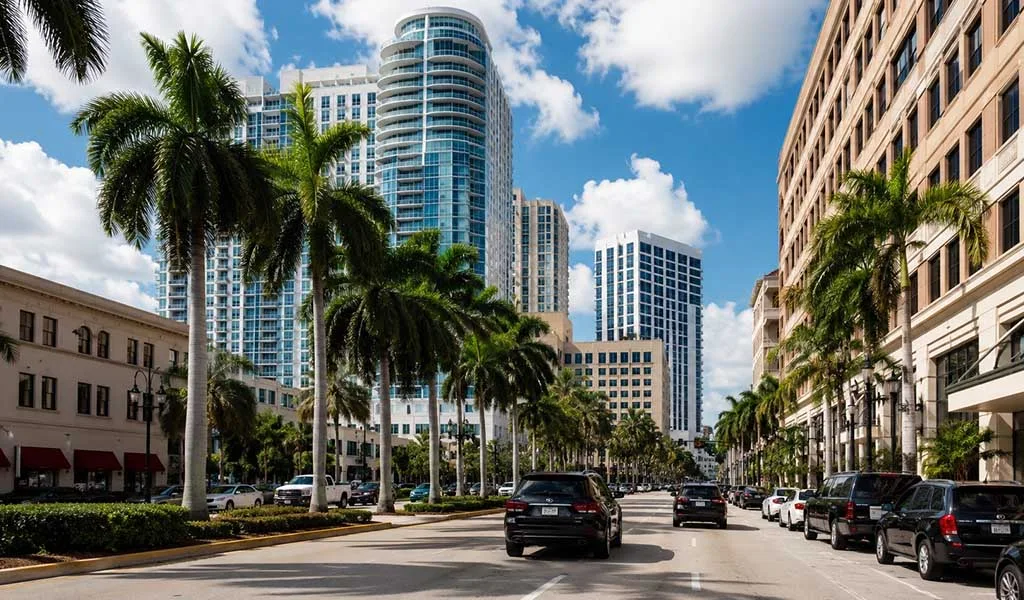
The West Palm Beach operational profile
The typical West Palm Beach UHNW principal profile includes some combination of the following. Urban or suburban residence in El Cid, Northwood, or the greater downtown corridor. Corporate or family office operations that may or may not headquarter in the area. Regular movement between residence, office, PBI Airport, Palm Beach Island for social calendar, and other markets. Public exposure through business or philanthropic activity.
That profile produces exposure categories that residential-only security architecture doesn’t address. Transition security. Corporate coordination. Event security. Cross-market operational continuity.
The Palm Beach Post’s ongoing coverage of the corridor’s operational density provides context on how the commercial and residential ecosystems interact.
Pattern 1 — Urban-density vehicle and transit exploitation
West Palm Beach principals move through an urban and suburban environment. Downtown corridors around The Square. El Cid Historic District. Northwood Village. Commercial corridors serving PBI Airport and the Palm Beach County corporate presence.
The vehicle and transit environment differs meaningfully from Palm Beach Island’s controlled residential geography. Traffic density is higher. Route choices are more varied. Parking exposure is more urban. Transit through commercial and mixed-use areas is common.
The specific threat pattern operates through vehicle-based approach exploitation. Reconnaissance conducted from adjacent vehicles in traffic and parking environments. Approach coordination timed to specific transition points. Extraction routes planned around urban traffic patterns. All operating at speed and volume that residential-focused security isn’t architected to detect.
Sustained observation from adjacent vehicles is difficult to detect in normal traffic. Approach coordination is difficult to distinguish from normal urban activity until the moment of engagement.
For principals whose daily pattern includes movement through urban and suburban environments, transit security is often the highest-risk category and the one least addressed by residential-focused architecture.

Pattern 2 — Corporate-adjacent exposure translation
West Palm Beach’s corporate and commercial concentration produces exposure translation patterns similar to Boca Raton but with distinct operational characteristics.
The Financial District and corporate corridor produce concentrated executive presence during business hours. The Square and downtown commercial areas produce public exposure through business and social activity. The Palm Beach County business ecosystem produces documented professional relationships that adversaries can study.
The specific translation mechanism operates through the same documented public exposure patterns discussed elsewhere. SEC filings. Board positions. Business event schedules. Corporate role visibility. All applies in West Palm Beach with the additional characteristic that corporate operations frequently occur in commercial environments with mixed public access.
The Thompson pattern applies specifically. Executive arrivals at corporate offices, conference venues, and business events produce documented movement patterns. Predictable schedules create exploitable transition windows.
Our coverage on corporate security in West Palm Beach addresses the specific corporate security architecture the environment requires.
Pattern 3 — PBI Airport corridor exposure
Palm Beach International Airport serves as the primary aviation hub for the Palm Beach County UHNW corridor. For West Palm Beach principals whose travel patterns include private aviation, the PBI corridor produces specific exposure categories.
Private aviation arrivals and departures produce documented movement patterns. FBO facilities aggregate high-value principals at predictable times. Transit routes between residence and airport concentrate exposure at transition points. Ground transportation coordination produces vulnerability windows during vehicle transitions.
The specific threat pattern operates through the FBO corridor’s characteristic operational visibility. Aircraft arrivals are documented publicly through FAA data and aviation tracking services. Passenger identification is often observable to attentive observers. Ground transportation transitions occur at predictable locations at predictable times.
Our coverage on armed transport for UHNW principals in Florida and New York addresses the specific corridor and airport operational architecture.

Pattern 4 — Event and hospitality environment exposure
West Palm Beach hosts substantial hospitality, event, and cultural activity throughout the year. The Kravis Center for the Performing Arts. Waterfront event venues. Downtown hospitality properties. The Square commercial and hospitality district.
For UHNW principals attending, hosting, or organizing events, the event environment produces specific exposure categories. Documented attendance at named events. Public arrival and departure patterns at venues. Concentrated presence during event windows. Coordination requirements with venue operations that create access points.
The specific threat pattern operates through event calendar exploitation. Publicly documented event schedules provide advance intelligence on principal presence at specific venues at specific times.
The corridor operational overlay
All four patterns operate within the specific corridor environment where West Palm Beach sits at the geographic center. Principals commonly maintain properties or business relationships in Palm Beach Island, Manalapan, Jupiter, or Boca Raton simultaneously. Regular movement between markets produces additional exposure at the transition points.
The specific implication is that West Palm Beach security architecture operating only within the city limits produces fragmentation at every corridor transition. Effective architecture spans the corridor with continuous coverage across the geographic environment that principals actually operate in.
Our coverage on the Manhattan-Palm Beach travel corridor addresses the specific cross-market architecture the seasonal migration requires.
What the data shows
I’ve been running operations in this corridor long enough to see the aggregate pattern clearly. The estates and executives whose security architecture matches the specific West Palm Beach profile — transit security, corporate coordination, event security, cross-market continuity — manage the current environment effectively.
The ones running residential-only architecture in a mixed urban environment face gaps at transition points that current threats specifically exploit. Not opportunistic threats. Coordinated engagement operations designed for exactly the fragmentation pattern that fragmented providers produce.
What to do now
For West Palm Beach principals, three practical priorities.
Assess whether your architecture matches the specific West Palm Beach profile rather than a generic residential UHNW profile.
Address your transition security specifically. If your daily pattern moves between residence, office, airport, and other environments, the transitions are where vulnerability concentrates.
Integrate your West Palm Beach security with your broader corridor exposure. If you also maintain residences or business interests elsewhere in the county, integrated architecture is more effective than isolated coverage.
Rachelle Blair-Frasier’s ongoing coverage at Security Magazine has documented how enterprise security departments have adapted to the current environment. The frameworks apply directly to family office and UHNW residential contexts.
Where to Go From Here
Start with the Residential Threat Integration Checklist — the 15-point framework covering the four patterns identified.
If you’re ready for a direct conversation, request an audit here. We assess for the corridor operational profile.
For the specific EP architecture in West Palm Beach, read our executive protection coverage.
I’m John Hamilton, HKDS founder. We’re headquartered at 1500 N Florida Mango Road in West Palm Beach, positioned 8 minutes from the Royal Park Bridge. Contact us.