
The Threat Has Changed and the Defenses Have Not
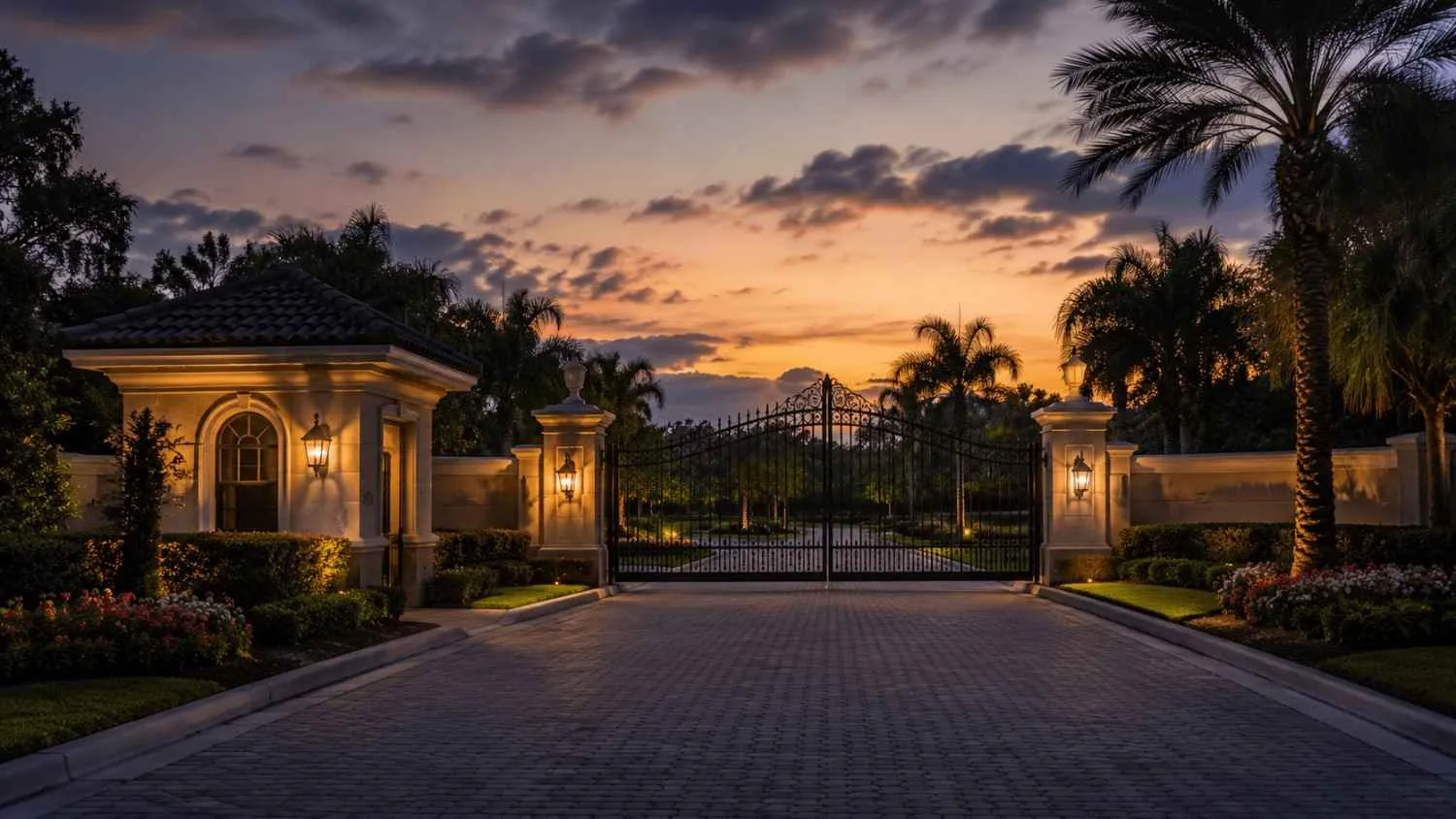
For years, the security model for a Naples gated community was simple and largely adequate. A gate, a guard, a list of authorized vehicles, and the natural friction of a controlled-access neighborhood kept casual crime out. The model worked because the threat was casual. Opportunistic burglars went where access was easy, and a gated community made access hard enough to send them elsewhere.
That threat model is now obsolete, and the families relying on it do not yet know it.
The crews working affluent communities across Florida and the country in 2026 are not casual. Law enforcement agencies from California to Florida to Minnesota describe them as organized, transnational burglary groups, frequently referred to as South American Theft Groups, made up of foreign nationals who travel to the United States specifically to commit high-end residential burglaries and then move quickly between jurisdictions to avoid detection. These are not neighborhood criminals. They are professional crews running a professional operation, and the gated community that stopped the casual burglar does almost nothing to stop them.
Southwest Florida sits squarely in their operating area. Crews tied to these groups have been arrested and indicted in cases that explicitly involve travel between Florida and other states, and the affluent, seasonal, waterfront-heavy communities of Naples and Collier County are exactly the kind of target environment these groups are built to exploit.
How the Crews Actually Operate
Understanding how these crews work is the first step in understanding why conventional gated-community security fails against them. The pattern is remarkably consistent across documented cases nationwide, and it bears almost no resemblance to the smash-and-grab burglary that most security postures are designed to deter.
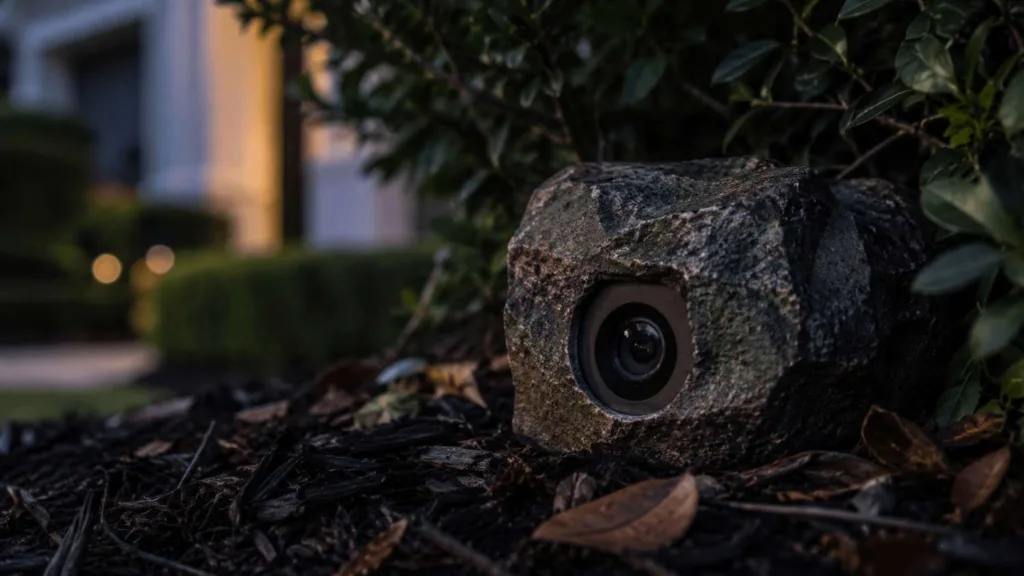
The operation begins with target selection and surveillance, not with the break-in. Crews identify high-value homes and then study them, sometimes for weeks. Law enforcement has documented crews using hidden cameras concealed in ordinary objects, placed near target homes to monitor the family’s comings and goings. In one widely reported case, a sheriff displayed a wooden box wrapped in artificial turf that concealed a phone and a camera with extra batteries, left near a target property to record the household’s patterns. The crews are not guessing when a family will be away. They are watching, and they are recording.
Social media is a primary intelligence tool. These crews check targets’ social media accounts to confirm when residents are traveling out of town. A family that posts vacation photos in real time is broadcasting that the estate is empty. A teenager tagging a location in Aspen or Europe is confirming the Naples house is a safe target. The reconnaissance that used to require physical surveillance is now partially handed to the crews for free by the families themselves.
The crews use technology to defeat the security that does exist. Documented tactics include Wi-Fi jammers that disrupt wireless cameras and alarm communications, allowing the crew to operate without triggering the systems the family is relying on. A camera system that depends on wireless connectivity can be rendered blind by a device the crew brings with them.
They use deception to scout and to test. In multiple documented cases, crew members posed as delivery drivers, placing a food-delivery bag on a porch and ringing the doorbell to confirm whether anyone is home, while other members walk dogs or pose as casual pedestrians to serve as lookouts. The crew blends into the normal activity of an affluent neighborhood, and the neighborhood never notices.
And critically, they defeat the gate. The gated perimeter that families trust as their primary defense is, to a professional crew, simply an obstacle to route around. In a documented 2026 case in Broward County, a crew targeting the gated Weston community used inflatable boats on the waterways surrounding the neighborhood to bypass the vehicle checkpoints entirely. The gate checked cars. The crew came by water. Over roughly six months, the crew was tied to at least six burglaries in a single gated community, with stolen cash and jewelry totaling an estimated two million dollars, striking each time when homeowners were away and going straight for the safes.
That stopped being an accurate picture sometime around 2018, and it has degraded every year since. The threats targeting UHNW residences in 2026 are sophisticated, intelligence-led, and increasingly hybrid (combining physical, digital, and insider elements). The traditional model addresses the physical layer adequately. It addresses almost nothing else.
Across the residences we’ve audited in Florida, the Northeast, and California in the past three years, the pattern is consistent. The physical security is usually fine. The exposures that actually create risk are everywhere else.
Why Naples Is Specifically Exposed
Every affluent community in Florida faces some version of this threat, but Naples carries a specific combination of characteristics that make it an especially attractive target environment.
The wealth is concentrated and verifiable. Naples and Port Royal hold one of the densest concentrations of high-value real estate on the Gulf Coast. The single most expensive home sale in the entire country in 2025 was a Port Royal compound that sold for one hundred thirty-three million dollars, part of a three-parcel assembly that traded for two hundred twenty-five million dollars, the second-highest residential transaction in U.S. history. A crew researching targets does not have to guess where the money is. Florida’s public property records make ownership, purchase price, and assessed value freely available, and a crew can build a target list from public data before ever setting foot in the state.
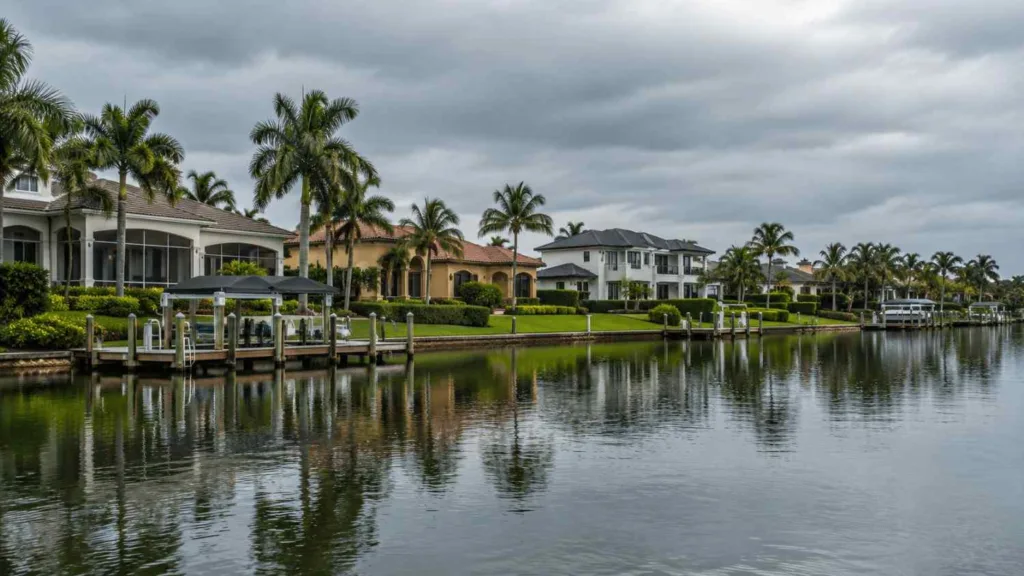
The estates are on the water. The Weston case is a preview of a problem Naples has in abundance. Port Royal and Aqualane Shores are built around navigable deep-water canals. Countless estates across Naples sit on canals, lakes, and direct Gulf frontage. Every one of those waterfront properties has an approach vector that the community gate does not cover, and the crews have already demonstrated, in Florida, that they will use boats to bypass land-based checkpoints. A gated community whose security faces the road is defending the wrong direction for a large share of its homes.
The vacancy is seasonal and predictable. Naples has one of the most pronounced seasonal populations of any wealthy market in the country. A large share of UHNW residents arrive for the winter season and depart in spring, leaving estates empty or lightly staffed for months. For a crew that depends on confirmed-empty homes, a community where a known portion of the residents predictably vacate for the off-season is a target-rich environment with a built-in operating calendar.
The social calendar is public and concentrated. During season, the Naples social calendar fills with galas, charity functions, and private dinners. The Naples Winter Wine Festival alone draws roughly 650 guests to events including dinners in private homes. These events are wonderful for the community and they are also a published schedule of nights when specific wealthy families will be away from their estates for a known window. A crew that reads the social pages knows exactly which evenings the house will be empty.
Why Conventional Gated-Community Security Fails
The uncomfortable truth is that the security most Naples families rely on was designed for a threat that no longer dominates, and it has structural blind spots that a professional crew is built to exploit.
The community gate checks vehicles, not intentions, and it does nothing about the water. The crews come by boat, pose as delivery drivers, or simply tailgate a resident through the gate. The gate creates a feeling of security that is not matched by its actual protective value against a professional operation.
The cameras record rather than detect. The typical estate camera system captures footage that is reviewed after an incident, providing evidence for an investigation that begins only once the crew is gone. A camera that no one is watching in real time does not prevent a burglary. It documents one. And if the system depends on wireless connectivity, a jammer can blind it entirely.
The alarm response is too slow. The standard alarm protocol notifies a monitoring center, which calls the homeowner and then dispatches law enforcement. For a seasonal resident who is in Aspen or Europe, the homeowner call goes nowhere useful, and the law enforcement response, however professional, arrives in minutes. A trained crew is inside, into the safe, and gone in less time than the response takes.
Nobody is managing the digital exposure that feeds the targeting. The social media posts, the public property records, the data broker profiles, and the predictable seasonal patterns that the crews use to select and time their operations are nobody’s responsibility in a conventional security arrangement. The reconnaissance happens, unopposed, weeks before the physical operation, and the family’s security posture has no visibility into it at all.
What Actually Works Against Organized Crews
Defending against a professional, intelligence-led crew requires a professional, intelligence-led defense. The components are different in kind from conventional gated-community security, not just in degree.
Detection has to be monitored, not merely recorded. The difference between a camera system that records and a detection system that is actively monitored is the difference between investigating a burglary and preventing one. Monitored detection means that an approach to the property, by land or by water, produces a real-time alert to someone whose job is to respond, not a file that gets reviewed after the safe is empty.
The water has to be covered. For any canal-front, lake-front, or Gulf-front estate, waterborne approach monitoring is not optional. The crews have demonstrated in Florida that they will use the water to bypass land-based security. A defense that does not watch the water is defending half the property.
The digital exposure has to be actively reduced. Because the targeting begins with open-source reconnaissance, real defense includes reducing the family’s discoverable footprint: removing data from broker sites, managing the family’s and the staff’s social media exposure, and breaking the link between public information and the family’s physical patterns. Every piece of reconnaissance the crew cannot gather is a piece of the operation that does not happen.
The seasonal vacancy has to be managed as its own problem. The off-season is when confirmed-empty estates are most exposed, and it requires a distinct posture: maintaining the appearance of occupancy, monitoring continuously, conducting physical verification, and maintaining a response capability for the long window when the family is away.
And all of it has to be integrated. The crews succeed by exploiting the seams between the gate, the cameras, the alarm, and the unmanaged digital exposure. A defense that closes those seams, putting detection, waterborne coverage, digital exposure management, and response under one coordinated picture, removes the gaps the crews are built to find.
The HKDS Approach
HK Defense Solutions was built to defend against exactly this kind of professional, intelligence-led threat. The firm was founded by John Hamilton after twelve years in U.S. Air Force special operations, and it operates on a converged model in which physical protection, protective intelligence, and digital exposure management function as one command structure rather than as separate vendors.
For Naples families in gated communities, that means a defense designed around how the crews actually operate. Detection is monitored in real time rather than recorded for later. Waterborne approaches are covered for canal, lake, and Gulf-front estates. The family’s digital exposure, the social media footprint, the public-records visibility, the data broker profiles, is assessed and reduced so that the reconnaissance the crews depend on is starved of material. The seasonal vacancy is managed as a distinct program. And the entire posture is integrated, so that the seams the crews exploit are closed.
The work begins with a Private Threat Mapping Session, a confidential assessment that shows a family the specific gaps in their current posture, including the digital exposure and the waterborne vulnerability that conventional gated-community security never addresses. The assessment stands on its own regardless of what a family decides to do next.
The gate was never the defense families thought it was. The crews working Southwest Florida already understand that. The families who understand it too are the ones who will not become the next case number.
“The gate stopped the casual burglar. It does almost nothing against a professional crew that comes by water, scouts for weeks, and strikes the night your travel is confirmed online. That gap is the whole game, and most families have never been shown it.”
Frequently Asked Questions
Are organized burglary crews actually targeting Naples and Southwest Florida?
Law enforcement agencies across Florida and the country have documented transnational burglary crews, often described as South American Theft Groups, targeting affluent communities, with cases explicitly involving travel between Florida and other states. The affluent, seasonal, waterfront-heavy communities of Naples and Collier County match the target profile these crews are built to exploit.
How do these crews get past a gated community's security?
Documented tactics include bypassing vehicle checkpoints by using boats on surrounding waterways, posing as delivery drivers to scout homes, tailgating residents through gates, using hidden cameras to monitor patterns, and using Wi-Fi jammers to disable wireless cameras and alarms. In a 2026 Broward County case, a crew used inflatable boats to bypass a gated community’s checkpoints entirely.
How do burglary crews know when a home is empty?
They run pre-operation surveillance, sometimes using concealed cameras placed near the target, and they check residents’ social media to confirm travel. Real-time vacation posts, location tags, and predictable seasonal departure patterns all confirm to a crew that an estate is empty and safe to enter.
Does a camera system protect my Naples estate from these crews?
A camera system that records footage for later review documents a burglary rather than preventing one, and wireless systems can be defeated with jammers. Effective defense requires monitored detection that produces a real-time response to an approach, by land or by water, before the crew is inside.
Why is waterfront access such a problem in Naples?
A large share of Naples estates sit on navigable canals, lakes, or direct Gulf frontage, and crews have demonstrated in Florida that they will use boats to bypass land-based checkpoints. A security posture oriented toward the road leaves the water side of the property open, and for many Naples estates the water is the most attractive approach.
What can I actually do to protect my Naples home from organized theft crews?
Effective defense is intelligence-led and integrated: monitored real-time detection rather than recording cameras, waterborne approach coverage, active reduction of the family’s digital and public-records exposure, a distinct seasonal vacancy program, and a response capability that engages before entry. HK Defense Solutions assesses all of these in a Private Threat Mapping Session.