
I’ve worked estates in Admirals Cove, Frenchman’s Creek, The Bear’s Club, Jupiter Hills, and Jupiter Country Club. Every one of those communities provides genuinely capable community-level security. Guard gate. Vehicle inspection. Perimeter fencing. 24/7 patrol. Visitor verification. Marina security where applicable.
For most residents, the community-level architecture is enough. If you’re a family with a straightforward profile, no documented public exposure, no specific threat concerns — the gate does what you need.
If you’re a trophy-tier principal — visible wealth, corporate governance visibility, family office operations — the community security is a starting point, not a complete program.
Here’s what I look at when a Jupiter principal calls.
Our coverage on estate security in Jupiter addresses the specific architecture. Related coverage on 24/7 security and mobile patrol in Jupiter covers the operational cadence.
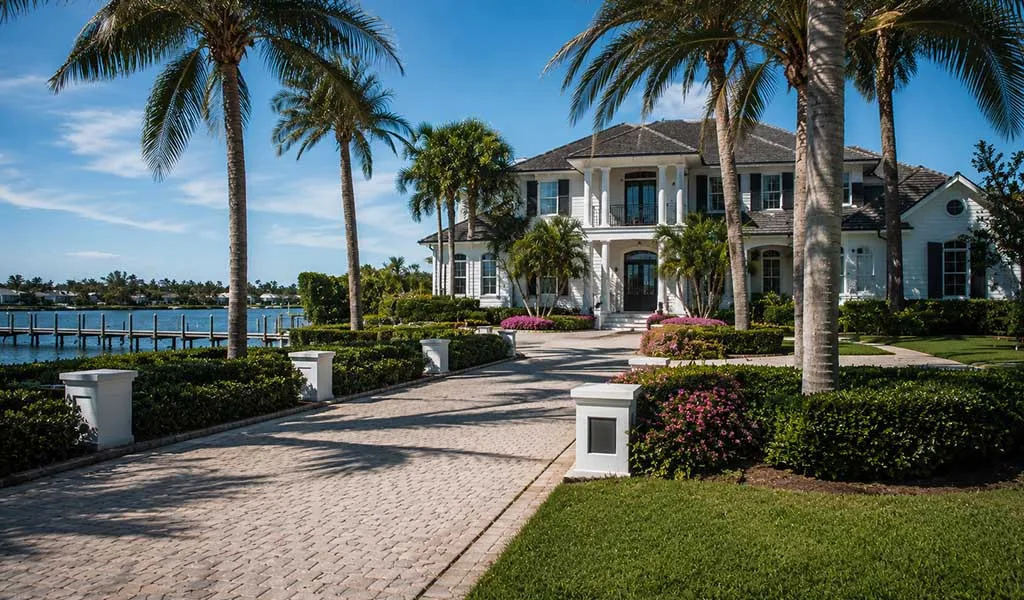
What the community handles
The community-level architecture at Admirals Cove, Frenchman’s Creek, and comparable environments handles several categories well.
Perimeter access is filtered before residents encounter it. Non-resident vehicles get screened at the gate. Vendors get identified. Deliveries get documented.
Random and opportunistic threats are largely excluded. The gate deters casual reconnaissance. Unauthorized access requires either sophisticated deception or forceful engagement, both of which community security is trained to identify.
Coordinated community awareness. Neighbors know each other. Regular vendors are recognized. Anomalies get noticed by community personnel who know what normal looks like.
For most residents, this is sufficient. Don’t over-engineer.
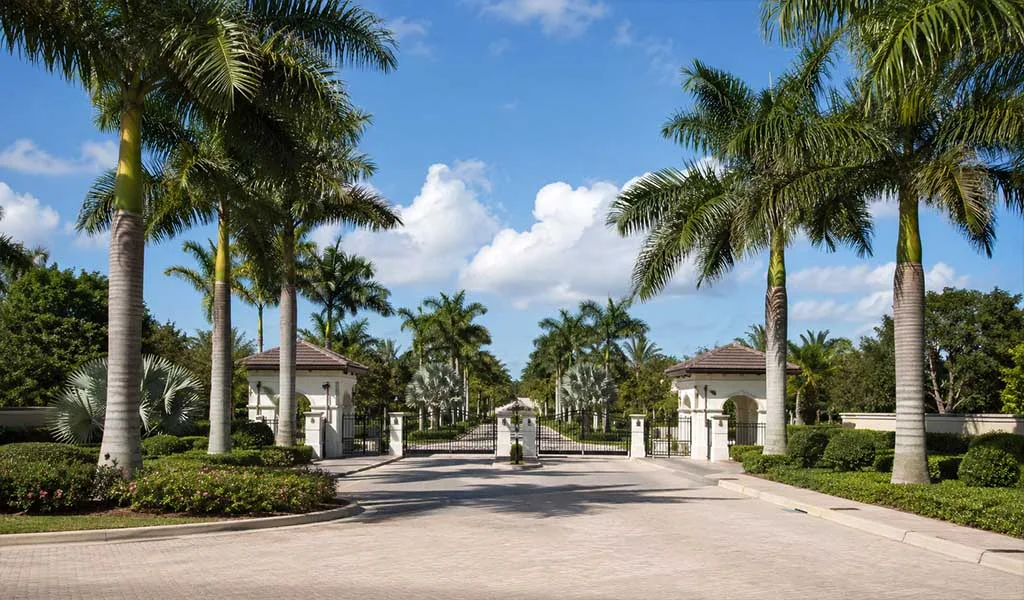
What the community doesn't do
Here’s where I see the gap.
Individual estate perimeter beyond the community perimeter. The community handles the community boundary. Your estate boundary is your responsibility.
Marine-side coverage. If your Jupiter residence includes waterfront on the Loxahatchee, Jupiter Inlet, or Intracoastal, the community security handles the community marina. Your dock and your seawall are yours.
Household staff and vendor vetting for your specific residence. Community security screens visitors at the gate. Vetting the staff you employ and the vendors you engage is your responsibility.
Counter-surveillance operations. Community security handles casual reconnaissance. Sustained observation of your specific patterns by resourced adversaries is operationally different and requires different architecture.
Cross-market operational continuity. If your profile includes travel patterns to other markets, community security stops at the gate.
Documentation and reporting frameworks that satisfy corporate governance or family office scrutiny. Community security produces community-level reporting, not board-level documentation.
What I look at first
When I walk a Jupiter estate assessment for the first time, two categories get my attention immediately.
Marine-side exposure. Jupiter’s estate market is disproportionately waterfront. Admirals Cove alone has a 74-slip marina with direct Intracoastal access. Individual estates on the Loxahatchee and Intracoastal typically have private docks. The marine side is where I’ve found the most exposure at Jupiter estates.
What I check specifically: what’s watching the dock at 3 AM? What’s monitoring watercraft approach patterns? What’s the deterrent for the boat that idles past three nights in a row? Community marina security handles the community facility. Your dock is yours.
Tornado exposure in the specific Jupiter geography. Recent hurricane seasons produced substantial tornado activity in Avenir, Jupiter Farms, and points north. This is a specific storm risk that damaged newly built high-value properties not designed for the tornado threat profile.
If your Jupiter estate has been built or significantly renovated in the past 10 years, the tornado exposure category may not have been part of the original design. The specific vulnerability window is the compound hurricane-plus-tornado scenario that recent seasons have produced.
The National Hurricane Center’s 2026 outlook projects above-average activity. Peak hurricane season starts in about six weeks. This is the time to address the tornado exposure category if it hasn’t been addressed.
The buyer profile has shifted
Jupiter’s resident profile has shifted meaningfully over the past several years. More than 75 PGA Tour players now reside in the area. The Bear’s Club specifically was designed around Jack Nicklaus’s vision. Multiple UHNW principals with corporate and family office operations elsewhere have relocated to Jupiter for the specific privacy characteristics.
That shift has produced a specific threat profile change. The reconnaissance environment on internationally documented residents is more sophisticated than on traditional Jupiter residents.
Our coverage on private bodyguard services in Palm Beach addresses the specific EP architecture the current resident profile requires.
What I'd recommend
If you’re a Jupiter principal in a gated community, three practical priorities.
Don’t dismiss the community security. It handles real categories. Build on top of it rather than replacing it.
Address the marine-side exposure specifically. If your waterfront isn’t covered with the same operational discipline as your street-side, that’s where reconnaissance concentrates.
Establish your hurricane season and tornado season protocols before peak activity begins. Not the generic checklist. The specific protocols for your specific estate and your specific storm exposure profile.
One more thing
I mentioned Palm Beach Daily News in an earlier piece. The Palm Beach Post’s business coverage is the source I’d read for the broader Palm Beach County operational context including Jupiter market dynamics.
If your profile involves both Jupiter residence and other Palm Beach County exposure, the corridor operational picture matters more than the local Jupiter picture in isolation.
Where to Go From Here
Start with the Residential Threat Integration Checklist — the 15-point framework covering community-level and individual estate architecture.
If you’re ready for a direct conversation, request an audit here. Confidential. If your current setup is doing what needs to be done, I’ll tell you.
For the specific EP architecture in Jupiter, read our executive protection coverage for Jupiter.
I’m John Hamilton, HKDS founder. We operate across Jupiter, Jupiter Island, Tequesta, Juno Beach, and North Palm Beach. Headquartered 20 minutes south in West Palm Beach. Licensed Florida Class B, D, and G. Contact us.