
Choosing a private security firm for an ultra-high-net-worth family or family office is one of the most critical decisions you can make. The stakes are high: your family’s safety, privacy, and assets all hang in the balance. Yet in wealth hubs like Florida and California, many estate managers and asset protection leads unknowingly fall into the same traps when selecting security providers. In this educational guide, we’ll explore the 10 most common mistakes decision-makers make when hiring a private security firm and explain the very real costs of choosing the wrong provider. By understanding these pitfalls, you can avoid security missteps that might leave your family exposed and instead adopt a converged security approach that protects every aspect of your life.
1. Over-Reliance on Ex-Military or Police Backgrounds

The Mistake:
Equating an impressive military or law enforcement résumé with private security excellence. Many ultra-wealthy families gravitate toward firms staffed by former special forces or police, assuming these backgrounds guarantee high-caliber protection. In reality, simply being ex-military is not enough to make someone suitable for executive protection in a civilian environment. Military and police veterans certainly bring valuable skills, but they may lack training in the very different world of private family security.
Why It’s a Problem:
The challenges of protecting a family in daily life, from navigating high-society events to handling paparazzi to discreetly securing a yacht, require specialized training and finesse that go beyond combat skills. As one expert notes, very few military units train for the kind of close protection billionaires need, and many critical skills “are not gained in the military. For example, advance planning, etiquette in high-society settings, and subtle surveillance detection are seldom part of a police academy or boot camp curriculum.
The Real Cost:
By over-relying on titles and past uniforms, families risk hiring personnel who might excel in a warzone but underperform at a celebrity gala or in a boardroom. The wrong hire could lead to glaring security gaps or embarrassing missteps. At best, you end up paying top dollar for a “name” protector who can’t meet your needs; at worst, you face avoidable incidents because your team wasn’t truly qualified for private estate security. In short, you get what you pay for, and if you buy protection based only on pedigree, you may pay twice, once for the hire and again for the failure.
What to Do Instead:
Look for firms that emphasize specialized executive protection training and certifications in addition to prior experience. Top private security companies ensure their agents are trained in advanced threat analysis, defensive driving, first aid, and even etiquette and discretion in high-society environments. In interviews, ask how the firm trains and vets even their ex-military staff for civilian protection roles. The goal is to hire a team with the right mindset and skills for your lifestyle, not just impressive titles.
2. Siloed Security – Separating Cyber, Physical, and Operational Protection
The Mistake
Treating cybersecurity, physical security, and day-to-day operational security as separate issues handled by separate providers. In an era of smart homes and digital wealth, threats no longer respect the line between digital and physical realms. Yet many family offices will hire an IT security consultant to address cyber threats, a guard firm for the estate, and perhaps rely on personal staff for travel logistics, without ensuring these pieces work together. This siloed approach leaves dangerous gaps.
Why It’s a Problem:
Modern attackers exploit the seams between cyber and physical security. For instance, a hacker might breach your home network to learn your schedule or disarm alarms, enabling a physical break-in. Or a high-profile kidnapper could use leaked personal data to plan an ambush. If your cybersecurity team isn’t talking to your physical security team, who monitors the smart cameras in your mansion’s entryway? If your bodyguards aren’t aware of spear-phishing attempts against your family, critical warning signs get missed. Without shared intelligence and unified protocols, blind spots multiply, and you may not discover them until after a costly incident.
The Real Cost:
Modern attackers exploit the seams between cyber and physical security. A fragmented security setup can result in devastating breaches that a converged approach would have prevented. Consider the financial and emotional toll of a data leak that leads to a home invasion, or a situation in which an alarm was disabled via Wi-Fi and no one realized it. These are not hypothetical scenarios; wealthy families have experienced kidnappings and extortion where a digital foothold enabled physical crimes. The cost isn’t just measured in money; it’s the trauma, the public exposure, and even life safety. Ultimately, having separate security silos is like locking your front door but leaving the side door wide open.
What to Do Instead:
Insist on a unified, converged security strategy. The best private security firms now offer or coordinate both cyber and physical protection as a package, ensuring no gap goes unaddressed. If you use multiple providers, designate one as the lead integrator responsible for cross-communicating threats. Demand that any security proposal show how cyber threats, physical vulnerabilities, and even operational issues (like travel plans or family routines) will be managed under one coherent plan. In practice, this could mean regular joint risk meetings between your IT security experts and your personal protection team, integrated alert systems, and shared contingency protocols. A converged security checklist can help audit whether all bases are covered (see our mid-post CTA below for a free checklist).
Mid-Post Free Resource: Converged Security Checklist for Asset Managers
Ultra-wealthy asset managers and estate directors: Are you confident your current security covers all angles? Download our Free Converged Security Checklist for Asset Managers to identify gaps between your cyber, physical, and operational security measures. This practical checklist is a step-by-step guide to ensure your security program is unified and bulletproof. Don’t leave any back doors open. Grab the checklist now to evaluate your own protection strategy.
3. Choosing a Firm Lacking Discretion and Cultural Intelligence
The Mistake:
Overlooking the “soft skills” of a security firm, namely, discretion, confidentiality, and cultural fit. Not all security providers understand the importance of being invisible guardians who blend into a client’s life. Some may flaunt their tactics, indulge in gossip, or simply not grasp the etiquette required in high-net-worth social circles. Especially for families who value privacy or have diverse cultural norms, hiring a firm without proven discretion and cultural intelligence is a serious misstep.
Why It’s a Problem:
For ultra-high-net-worth individuals (UHNWI), a loose-lipped or culturally insensitive security team is a liability. You need professionals who will “never be seen, never be heard, and always be ready,” operating with total trust and confidentiality (worldprotectiongroup.com). Firms that don’t train their staff in client privacy and high-society protocol can inadvertently expose you to reputational damage. Imagine a bodyguard who brags on social media about your family’s vacation home, or an estate security chief who doesn’t know how to appropriately address your VIP guests. Lack of cultural intelligence can also mean misreading situations – for example, handling a visiting dignitary’s security in a way that offends their customs, or failing to notice when something is amiss because they don’t understand your family’s language or cues.
The Real Cost:
The wrong provider could erode your family’s peace of mind and public image. A single breach of discretion (such as a leak about your whereabouts or an internal family matter) can hit the tabloids and cause immeasurable stress. In the worst cases, indiscretion can attract unwanted attention from criminals or extortionists. Culturally tone-deaf security can embarrass you in front of business associates or disrupt your lifestyle. Essentially, if your security team can’t operate with absolute discretion and adapt to your world, are they securing you or endangering you? The cost of choosing a tactless firm is often paid in lost privacy, trust, and dignity.
What to Do Instead:
Vet security firms for a track record of loyalty and long-term trust with similar clients. Ask about NDAs (non-disclosure agreements) and confidentiality policies upfront. Top executive protection companies emphasize training in etiquette, discretion, and blending into household staff. For example, agents should know how to dress appropriately (from black-tie events to casual family gatherings) and when to fade into the background. They should demonstrate cultural awareness, whether that’s speaking the client’s language, understanding religious customs, or simply respecting family norms. Choose a firm that “gets” your lifestyle and values: one that will protect you quietly and professionally, not one that treats you as just another job or a story to tell.
4. Failing to Demand a Tailored Risk Assessment
The Mistake:
Accepting a one-size-fits-all security plan or skipping a comprehensive risk assessment before security deployment. Some providers take a cookie-cutter approach: they might offer a standard package of one guard, one camera system, and occasional drive-bys, assuming that what works for one client will work for all. Not insisting on a customized, thorough risk assessment of your unique situation is a major mistake.
Why It’s a Problem:
Every ultra-wealthy family has a distinct risk profile. Factors such as your public exposure, the locations of your residences, your travel habits, the presence of children, high-value collectibles, business adversaries, etc., all influence the threats you face. Without a tailored threat and vulnerability assessment, security measures can miss critical exposures. For instance, perhaps you have a secluded estate that’s safe from street crime but highly vulnerable to drone surveillance or wildfires. Or your family office might diligently secure financial data but not realize an executive’s personal social media is leaking travel plans. Elite security firms conduct comprehensive risk assessments as a foundation, because they inform everything from how agents are deployed to which technologies to install. If your chosen firm isn’t doing this homework, they’re guessing, and guesses won’t protect against determined adversaries.
The Real Cost:
A lack of tailored planning often means vulnerabilities remain unaddressed until an incident occurs. The cost might be a preventable breach: maybe a home invasion through an entry point no one thought to reinforce, or a reputational crisis because no one monitored that disaffected former employee. It can also mean wasting money on measures you don’t need while neglecting those you do. Without customization, you could invest in flashy security cameras, for example, even though your real risk was an insider threat from unvetted staff. The financial losses from an oversight, not to mention the personal harm, will far exceed the time and cost of doing a proper risk assessment up front.
What to Do Instead:
Work with firms that offer strategic security consulting and personalized risk audits as part of their engagement. Before signing a contract, ask: Will you analyze all my residences, my routines, my assets? Will you assess both digital and physical threats? A worthy provider will map out a detailed risk profile and then design a multi-layered security program addressing those specific risks. They should consider everything from perimeter vulnerabilities and local crime patterns to your family’s public footprint and even insider threats. Tailored security means they adapt to you, not the other way around. If a firm tries to sell you a generic package without deep questions, that’s a red flag. Remember, the best protection is personalized protection. Insist on a customized plan that reflects your life, not some average client.
5. Overvaluing Visible Deterrents and Ignoring Invisible Protocols
The Mistake:
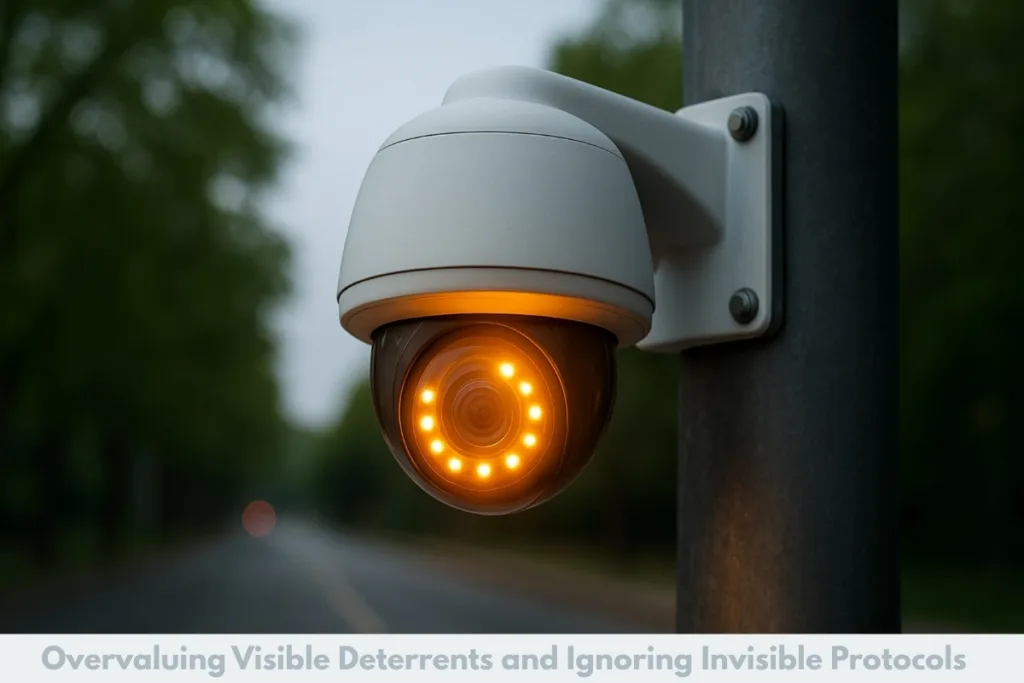
Equating “more visible security” with “better security.” This happens when decision-makers focus on showy deterrents such as armed guards in obvious places, prominent cameras, and imposing gates, and neglect the behind-the-scenes procedures and intelligence that actually prevent incidents. It’s an understandable mindset: seeing guards with earpieces or a fleet of patrol SUVs feels reassuring. However, security that’s all-visible might actually be security theater if not backed by robust invisible layers.
Why It’s a Problem:
Truly effective security is often unseen by outsiders, including the client. While visible measures can deter casual threats, sophisticated criminals are not so easily scared; in fact, they might study and work around your visible defenses. What stops them are the things they can’t see: the advanced research, the emergency protocols, the covert surveillance, and the quick communication systems ready to react.
Billionaires expect more than just burly guards at the gate – they want covert security measures anticipating problems before they materialize. If a security firm leans too heavily on maintaining a high-profile presence (many uniforms, obvious weaponry) without developing quiet protocols, it may miss early warning signs. For example, who is monitoring social media chatter for threats against the family?
Are there plainclothes agents mingling unnoticed at events to spot trouble? Are there silent alarms and codewords for family members to discreetly call for help? These “invisible” elements often neutralize dangers long before the visible muscle needs to show up.
The Real Cost:
Over-reliance on conspicuous security can give a false sense of safety. You might be paying for a small army and still be caught off guard by a well-planned intrusion or an insider threat. Also, overly visible security can impact lifestyle, creating a fortress atmosphere that is stressful for family members and off-putting to guests, without actually plugging the holes a clever adversary would exploit. The real cost of ignoring invisible protocols is that your security may fail when it counts. An incident could escalate because no preventive measures were in place behind the scenes, leaving you wondering how something happened “right under the guards’ noses.” In worst-case scenarios, the spectacle of security might even provoke or challenge certain threat actors, while the lack of covert readiness means your team scrambles in chaos when an emergency hits.
What to Do Instead:
Embrace a layered security philosophy: a mix of visible and invisible measures. Ensure any firm you hire values preparations and covert tactics as much as on-site presence. For instance, confirm that they plan to do advance route scouting, run background checks on potential household staff, use off-site monitoring centers, and set up covert counter-surveillance to detect anyone watching your family.
Ask about their procedural security: do they have an incident response plan, medical emergency plan, and evacuation routes? Quality providers will happily discuss their use of technology and intelligence, such as sensors, silent alarms, and encrypted communications that complement human guards. The goal is to have an iceberg of security: the small visible tip (guards, gates, cameras) is backed by a massive hidden base of planning and technology. When done right, you feel safe without feeling under siege, and threats are intercepted long before they reach your inner circle.
6. Neglecting Infrastructure Protection and Contingency Planning
The Mistake:
Focusing only on guarding people and obvious assets, while neglecting the critical infrastructure that supports your safety and lifestyle. This includes your estate’s physical and technical infrastructure as well as emergency contingencies. Too often, decision-makers assume the security firm will “handle things” but never specifically address questions like: Do we have a safe room and backup power? Has anyone secured our home’s network and smart devices? What if our chief guard is sick, or if there’s a natural disaster? If your security provider isn’t planning for these worst-case scenarios and hardening your infrastructure, that’s a mistake.
Why It’s a Problem:
Ultra-wealthy families often have complex properties (multiple homes, yachts, private jets) and rely on advanced systems (from smart home controls to private servers). If those underlying systems aren’t protected, they become entry points for attackers or points of failure during a crisis. For example, an estate without a designated safe room and reliable communication backup could leave family members vulnerable during a home invasion or a kidnapping attempt. A generator or secure power backup is crucial if intruders cut electricity or during natural disasters. On the cyber side, an inadequately secured home Wi-Fi or yacht navigation system can be hacked, undermining physical safety. Additionally, contingency planning is key: what if your lead protection officer can’t make it on a given day? Does the firm have trained backup staff on call at? If a wildfire or hurricane strikes (which are very relevant in California and Florida), is there a relocation and asset protection plan? Without planning for infrastructure and contingencies, even a well-intentioned security setup can crumble when something goes awry.
The Real Cost:
The absence of infrastructure security and contingency plans often becomes apparent in the middle of a crisis, when it’s too late. The cost could be catastrophic damage or avoidable harm. Think of a wealthy homeowner who never reinforced their estate’s gate system; an intruder uses a simple tool to force entry, leading to a confrontation inside. Or consider a scenario where an emergency arises (medical or security), but the family can’t call for help because the panic alarm or backup comms weren’t in place. Such oversights can literally cost lives. Financially, damage to property from an event like a fire or break-in might balloon if preventative measures (sprinkler systems, safes, off-site data backups) weren’t put in place. There’s also the cost of downtime and upheaval if your home becomes uninhabitable due to an incident; relocating a family and restoring operations could cost hundreds of thousands of dollars. All of this stems from failing to fortify the infrastructure that underpins safety.
What to Do Instead:
Integrate infrastructure hardening and crisis planning into your security program. When evaluating a security firm, ask how they approach estate security and emergency preparedness. They should talk about topics such as safe room design, backup communication systems, and secure IT networks on your properties at crisis24.com. A robust firm will offer to conduct structural security surveys (Are your windows blast-resistant? Do you have fire suppression? Are there biometric locks on sensitive areas?). They should also collaborate with your property managers, pilots, or yacht crew to ensure all systems have security controls and fail-safes. On the contingency side, make sure the provider has a 24/7 operations center and redundant staffing plans, so you’re never left unprotected due to scheduling issues. Also discuss scenario planning: do they run drills for home invasions, medical emergencies, or evacuations? Have a documented crisis response plan for various situations (natural disasters, kidnappings, cyber breach with physical threat, etc.). By shoring up infrastructure and “worst-case” planning, you dramatically increase your resilience. The idea is that even if one layer fails, others hold strong, keeping your family safe under any circumstances.
7. Prioritizing Cost Over Quality in Security Decisions
The Mistake:
Shopping for security services with a bargain-hunter mindset, choosing the firm with the lowest bid, or selecting options based on price rather than capability. We all love a good deal, but cutting corners in security is an extremely risky choice. Unfortunately, some decision-makers treat security like a commodity, assuming any guard company or device will do. This often leads to hiring less experienced firms or scaling down protection to save money. The mindset of “let’s go with the cheaper option” in protecting ultra-valuable assets is a serious mistake.
Why It’s a Problem:
In security, as in most things, you get what you pay for. The lowest-cost providers typically are cheaper for a reason: perhaps they pay for lower-quality guards, skimp on training, use outdated technology, or don’t carry proper insurance. They might not offer comprehensive services, such as 24/7 monitoring or emergency response teams, leaving you exposed. One savvy businessman put it plainly: “Those who buy based on price, buy twice.” In other words, if you go cheap, you may end up paying much more to fix failures later. High-net-worth security is complex and dynamic; a firm that underbids may not have the resources to scale or adapt to your needs (imagine they under-price and then can’t afford to keep their best people on your detail). Moreover, obsessing over cost can blind you to qualitative differences. A provider that costs 20% more might reduce your risk by 80% more – a tradeoff anyone would take if they understood it.
The Real Cost:
The irony is that choosing a security firm based solely on price can lead to far greater expenses down the road. This could be direct costs, like losses from a theft that a better system would have prevented, or legal costs from an incident mishandled by an underqualified guard. Indirectly, if a security breach occurs, you might face higher insurance premiums, lawsuit settlements, or the need to overhaul your entire security setup (essentially paying for it twice). And of course, the potential human cost dwarfs any “savings” – there’s no price tag on the safety of your family. In short, going cheap on security can be the most expensive mistake you ever make.
What to Do Instead:
Budget appropriately for security as a vital investment, not a discretionary cost. This doesn’t mean blindly choosing the priciest firm; it means evaluating the value you get from each firm. Do a cost-benefit analysis: what exactly are you getting for the fee? A reputable firm might quote higher, but include advanced intelligence support, superior personnel, and insurance coverage that a bargain outfit would never provide. Look for quality markers: years of experience with high-net-worth clients, professional accreditation, robust training programs, and client testimonials of crises averted. When reviewing proposals, be wary of any that significantly undercut the others. Ask what’s missing. Remember, true peace of mind is worth the price. It’s better to invest a bit more upfront in a comprehensive and reliable solution than to suffer the fallout of inadequate protection. Allocate your resources to cover the full spectrum of risk (physical, cyber, personal) within reason, and recognize that security is a long-term investment in your family’s well-being and legacy.
8. Skipping Due Diligence on Security Providers
The Mistake:
Failing to thoroughly vet the private security firm before signing on. In the rush to get protection in place, some family offices take sales claims at face value, neglecting to check credentials, reputation, and compliance. This can include failing to verify licenses and insurance, failing to check references or reviews, and failing to probe the company’s track record. Essentially, it’s hiring in haste, a mistake that can lead to repenting at leisure.
Why It’s a Problem:
Unlike buying a gadget, hiring a security firm is entrusting human lives and multi-million-dollar assets to someone’s care. If you don’t perform due diligence, you might end up with an unqualified or even fraudulent provider. There are cases of “security” companies that weren’t properly licensed or that hired guards with dubious backgrounds. Without a license, a firm may be operating illegally, and without adequate insurance, you could be on the hook if a guard injures someone or fails in their duties. Not reading the fine print can mean discovering too late that the firm has glaring service gaps (for example, they don’t provide armed response, or they outsource critical functions to unknown subcontractors). Skipping reference checks means you miss out on learning how the firm actually performs: Do they show up on time? Have they handled incidents professionally? A slick website is no guarantee of excellence. And in the realm of high-net-worth security, reputation matters immensely. If a company has any history of indiscretion or negligence, you need to know before you hire them.
The Real Cost:
Poor vetting can range from mild frustrations to catastrophic failures. On the milder side, you might end up stuck in a long-term contract with an unresponsive or subpar firm, wasting money and time while your security needs go unmet. On the severe side, lack of insurance or licensing can lead to legal nightmares, for instance, if an incident occurs and it turns out the firm wasn’t licensed, any insurance claims could be denied, and liability falls on you. Even worse, a provider with insufficient vetting of its own employees could place an untrustworthy person in your inner circle (imagine hiring a guard who hasn’t undergone a proper background check and ends up leaking information or facilitating a crime). Essentially, skipping due diligence is like blindfolding yourself and hoping for the best, a gamble no prudent ultra-wealthy individual should take.
What to Do Instead:
Conduct a thorough background check on any security firm under consideration. This means verifying that the company and all its personnel are properly licensed, bonded, and insured. Don’t hesitate to ask for proof of insurance coverage – reputable firms should carry substantial liability coverage (in the millions) to protect clients in worst-case scenarios. Check whether they have industry certifications or memberships (e.g., ASIS International or local security associations). Dig into their reputation: request references from existing or past high-net-worth clients and actually call them. Search for online reviews or news articles; a firm with a pattern of complaints or any scandal in its past is probably not worth the. Also, evaluate the company’s leadership. What is their background? A strong team will be proud to share its experience. Finally, review the contract terms carefully (possibly with legal counsel): ensure there are clear performance expectations, confidentiality clauses, and reasonable exit options if things don’t work out. Taking the time to vet your provider is non-negotiable – think of it as performing security on your security. It’s an upfront effort that can save you from huge regrets.
9. Not Insisting on Crisis Response and Scenario Training
The Mistake:
Assuming that having guards and alarms in place is sufficient, without pushing your security provider to prepare for specific crisis scenarios in advance. Many families hire a firm and think, “Okay, we have people watching, we’re safe now,” but they never ask: Has the team trained for a kidnapping attempt? What if there’s an active shooter or a coordinated cyber-physical attack? If the answer is no, or if these discussions never happen, that’s a mistake. Lack of proactive crisis planning and regular drills means that when something unusual occurs, the response may be chaotic and improvised.
Why It’s a Problem:
In high-stakes incidents, seconds count, and everyone needs to know their role. If a firm hasn’t worked through possible scenarios with you, they might not perform when it matters most. For example, does your family know what to do if an alarm goes off at 3 AM? Have your bodyguards practiced evacuating you to a safe location in the event of a threat? Is there a protocol for a medical emergency or a fire? Without training and rehearsal, even well-intentioned protectors can make mistakes under pressure. Consider a scenario: a sophisticated attacker uses a combo of hacking and a physical breach (a “cyber–physical” attack). If your team hasn’t anticipated that possibility, your IT folks and guards could trip over each other or leave a gap in response. Experts warn that siloed or unpracticed responses increase the risk of security failure. Moreover, families themselves can be a weak link if they aren’t briefed, and panic and confusion can set in if no one has walked them through an emergency plan.
The Real Cost:
The cost of poor crisis preparation is often measured in lives, injuries, or, at the very least, missed opportunities to mitigate damage. Time and again, post-incident analyses (whether of a break-in, a kidnapping, etc.) reveal that a lack of preparation or drill worsened the outcome. The financial cost can be enormous, too: imagine a ransom situation where no kidnapping protocol is in place; delays and missteps could inflate the ransom or reduce the chance of a safe recovery. Or a PR crisis stemming from a security incident could have been contained if the team had a communications plan in place. Essentially, failing to plan is planning to fail. Without scenario training, you’re relying on luck and raw instinct during an event when what you need is practiced execution. That gap can cost fortunes in damage or things far more precious.
What to Do Instead:
Treat your security much like a fire department: you hope never to need them in a crisis, but you drill as if you will. Insist on scenario-based planning and training as part of the security contract. Ask the firm how they handle “what if” situations and whether they conduct regular exercises. This could include drills for home invasion (with family participation in a safe manner), table-top exercises for estate managers on crisis decision-making, or joint simulations like “cyber breach + physical intrusion” to test multi-domain readiness and simple.co. Ensure there’s a written emergency response plan covering various contingencies, such as medical emergencies, natural disasters, kidnappings, active shooters, etc., and review it with the team. High-end security providers often have detailed protocols and can even bring in specialists (such as kidnapping response consultants or disaster evacuation experts) to strengthen these plans. Also, consider integrating local law enforcement and first responders in your planning; your security team should know how to interface with them smoothly under duress. By doing all this, you transform your security from a passive guard service into a proactive safety net. When everyone knows their role and the family knows the drill, response to an incident becomes swift and effective, dramatically reducing potential harm.
10. Becoming Complacent – Set-and-Forget Security Programs
The Mistake:
Treating security as a one-time setup instead of an ongoing process. Many family offices breathe a sigh of relief once the security firm is hired, the cameras are installed, and the guards are on duty. They then fall into a “set it and forget it” mentality, assuming that what worked last year will work next year. This complacency leads to infrequent reviews of the security strategy, no updates for new threats, and a general false sense of security. In essence, the mistake is failing to continually adapt and improve your security posture.
Why It’s a Problem:
Threats to ultra-wealthy families are not static; they evolve with technology, public exposure, and changes in family circumstances. A security program that isn’t regularly evaluated and updated will become obsolete or full of holes over time. Complacency can creep in on both sides: the client may stop paying attention (“our security is taken care of”), and the provider might fall into routine (“nothing bad happened this year, so our plan is fine”). This is dangerous. For example, maybe you installed strong perimeter defenses, but since then, drones have become a new spying threat to your estate. Has anyone added counter-drone measures? Or perhaps your family office expanded into new business markets, attracting new adversaries; has your personal security been adjusted accordingly? There’s also the human factor: guards can get too comfortable, missing signs of trouble, or key personnel might leave the firm, and no one reassesses the vulnerability that creates. As one security article put it, “security is not a one-time fix. It’s an ongoing commitment that requires continual attention and refinement. Complacency is your worst enemy.
The Real Cost:
The cost of complacency is typically paid in surprise incidents that “never should have happened.” These are breaches that, in hindsight, clearly show a dated security approach. A recent example at many family offices is cyber breaches via new channels (like social media or supply chain hacks) that their security team hadn’t kept up with. Or it could be a physical incident during a routine event that hadn’t been drilled in years because everyone assumed “it won’t happen here.” When security stagnates, it only favors the adversaries. Financially, not keeping up can mean expensive retrofits later under duress, like scrambling to upgrade all your systems after a breach instead of incrementally staying ahead. Worse, a lapse could lead to a high-profile failure that money can’t easily fix (loss of life or loss of confidence and mental peace). Complacency can also erode the skills of your protective detail; over time, an untested team might not be ready when called into action, nullifying the very purpose of having them.
What to Do Instead:
Embed a culture of continuous improvement in your security operations. Treat your security measures as a “living system” that needs regular health checks. Schedule formal security reviews at least annually (if not quarterly) with your provider to go over what’s changed: new properties, new family members or routines, emerging threat trends, etc. Have them present updates or improvements if they don’t bring fresh ideas; that’s a red flag. Use tools like periodic penetration tests or red-team exercises (where you hire specialists to test your defenses) for both cyber and physical aspects. Make sure the firm conducts continuous training for its staff assigned to you, and consider rotating personnel or roles periodically so no one gets too comfortable in a post. Encourage a mindset that security is everyone’s responsibility – household members and staff should be periodically briefed on protocols and new precautions. By staying proactive, you’ll catch small issues before they become big ones. Remember, in security, standing still means falling behind. The investment in ongoing vigilance is minor compared to the cost of being caught off-guard by a threat that “wasn’t on your radar.”
Conclusion:
Every mistake outlined above carries one common theme: choosing the wrong security partner or approach doesn’t just cost money; it can cost peace of mind, reputation, and even lives. Ultra-high-net-worth families and their advisors must recognize that private security is not a checkbox purchase; it’s a strategic, dynamic service that underpins all aspects of a protected lifestyle.
Over-relying on flashy resumes, ignoring the cyber-physical convergence, accepting cookie-cutter plans, or skimping on due diligence are missteps that collectively open the door to tragedy or loss. And unlike other purchasing errors, the “product” of a poor security decision might only reveal its flaws in the face of a crisis, when it’s too late to reverse course.
The real cost of choosing the wrong provider comes due in that moment of need: the guard who isn’t prepared, the alarm that wasn’t integrated, the plan that never existed. It’s far greater than the upfront savings or convenience that might have tempted you. Conversely, the value of converged, high-caliber security is almost immeasurable. When done right, a converged security program shields your family seamlessly – you’ll hardly notice it’s there, and nothing bad happens. And that’s the point: great security often results in “nothing happening”, which is the best return on investment you could ask for.
As you evaluate your private security needs, keep these 10 pitfalls in mind. Use them as a checklist of what not to do, and as a guide to what to demand from top-tier security firms. The difference will be evident in the confidence you feel each day, knowing that all angles are covered by professionals who truly understand your world.
Ultimately, the goal is to eliminate those costly mistakes before they happen and to implement a security strategy that is converged, adaptive, and discreet. Your family’s safety and legacy deserve nothing less. Don’t settle for a false sense of security; invest in the real thing.
Ready to Fortify Your Security? Take the Next Step
If you’re unsure whether your current security setup measures up or if you want an expert second opinion, we’re here to help. Schedule a Complimentary Self-Assessment Call with Our Security Strategy Team. In this no-obligation call, our converged security experts will walk through your existing approach, identify any hidden gaps, and help you chart a path to a truly unified security program. Empower yourself with knowledge and professional insight. Book your self-assessment call now and take a confident step toward closing the gaps before they become costly mistakes. Your peace of mind is worth it.