
On April 12, 2026, two guests at The Breakers Palm Beach were arrested after walking into another guest’s hotel room and leaving with a $32,500 Hermès Mini Kelly purse, a $1,500 Chanel bag, $385 in cash, and several other items. The victims caught the suspects in the hallway. Palm Beach Police responded and arrested both on burglary and grand theft charges.
The incident made national news. CBS, ABC, and local affiliates all covered it. Social media ran with the story — one of the suspects had an Instagram following of over 360,000 people built around luxury handbag content.
But for anyone working in private security in Palm Beach, the incident wasn’t surprising. It was predictable. And it highlights a pattern that most high-profile travelers still don’t think about until it happens to them.
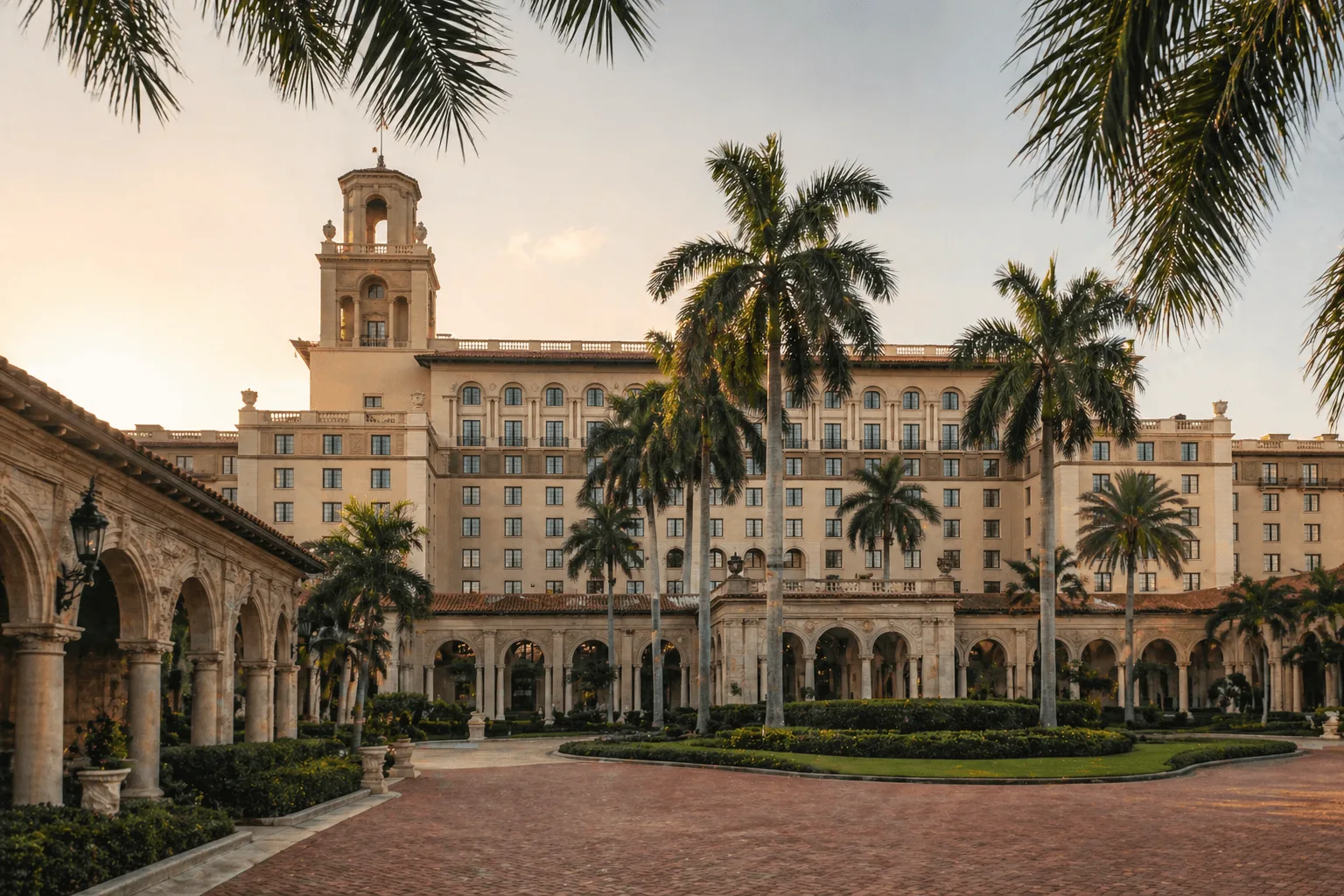
The vulnerability nobody talks about at luxury hotels
The Breakers is one of the most prestigious hotels in the United States. It has existed since 1896. Its security is more robust than the vast majority of hotels in Florida. And yet a guest’s room was entered and $34,000 in personal property was taken while the occupants were briefly away.
The entry point was reportedly a hotel room door that was accidentally left open. That’s all it takes. One door. One moment. One opportunist who happens to be staying in the same building.
This is the vulnerability pattern we see across every luxury hospitality environment we assess. The security architecture of a hotel is designed to protect the property — the building, the common areas, the grounds. It is not designed to protect the individual guest’s personal space from other guests who have legitimate access to the same hallways, elevators, and floors.
A guest at The Breakers has a room key that grants access to their floor. But other guests on the same floor have identical access. Housekeeping staff move freely. Room service personnel enter rooms throughout the day. And during peak season in Palm Beach — when the social calendar means guests are attending galas, dinners, and events throughout the evening — rooms are unoccupied for predictable windows of time.
Why this matters beyond the Breakers
Palm Beach’s social season runs from roughly October through April. During these months, the island’s population swells with exactly the kind of guests who travel with significant valuables. A single evening at a charity gala at Mar-a-Lago, The Colony, or the Kravis Center means leaving jewelry, designer goods, cash, electronics, and in some cases documents containing sensitive financial or personal information unattended in a hotel room for 4-6 hours.
The Breakers incident involved two opportunistic guests from Illinois. But the same vulnerability applies to sophisticated actors who target luxury hotels during known high-traffic periods. Pre-operation intelligence is trivially easy: charity event schedules are published. Gala attendee lists circulate. Social media posts confirm who’s in town and where they’re staying. A hotel lobby during season is a surveillance goldmine.
What high-profile travelers should be doing differently
Most VIP travelers treat hotel security as the hotel’s problem. It isn’t. Hotel security protects the hotel. Personal security protects the person.
For principals traveling to Palm Beach during season — or any luxury market during peak social periods — there are specific measures that reduce exposure dramatically.
In-room safes are a starting point, not a solution. Most hotel safes are low-security boxes designed to deter housekeeping theft, not determined intruders. Principals traveling with significant valuables should be using the hotel’s main vault or, better, should not be traveling with items they can’t afford to lose in a hotel room.
Room access controls matter. Request rooms that require separate elevator access or that are located on restricted floors. When leaving the room, verify the door has fully closed and locked. The Breakers incident reportedly involved a door that was accidentally left ajar — a lapse that would have been caught by a protective detail conducting a standard departure check.
Travel security for high-profile principals should include an advance assessment of the hotel’s security architecture, identification of room-level vulnerabilities, and a protocol for securing the room during events and outings. This isn’t paranoia. It’s what the threat environment in Palm Beach during season actually requires.
For principals attending events at The Breakers, Mar-a-Lago, the Four Arts, the Norton, or any of the venues on the Palm Beach social calendar, the exposure window isn’t the event itself — it’s the hours when you’re at the event and your room is empty.
The broader pattern
This incident is part of a documented pattern of property crime targeting luxury hospitality environments in South Florida. In 2024 and 2025, multiple operations targeting hotel guests in Miami Beach, Fort Lauderdale, and Palm Beach were linked to organized crews who timed their activity to coincide with high-profile events.
The response isn’t to avoid travel or avoid events. The response is to travel with a security posture that accounts for the reality that luxury hotels provide luxury, not personal security. The gap between those two things is where incidents happen.
About HKDS
HK Defense Solutions provides travel security and executive protection for principals traveling to Palm Beach, Miami, Manhattan, and other high-exposure markets. Our travel security includes advance hotel assessment, room-level security protocols, and protective coverage during events and outings. Founded by a 12-year U.S. Air Force special operations veteran. Headquartered in West Palm Beach.
Contact us at +1 561 510 8221 or hkdef.com/contact-us/ .