
Estate managers for ultra-high-net-worth families have a secret: many are dissatisfied with their current security setups, but they won’t voice it publicly. In exclusive circles, admitting that your costly security vendor isn’t truly protecting you can feel like an embarrassment. So the frustration simmers quietly. These managers see subtle warning signs – a false alarm no one really responded to, a guard detail that looks imposing but misses obvious things, and they feel the quiet drag of mediocrity. They stay polite and composed outwardly, yet behind closed doors, they’re actively exploring better options. The truth is, “good enough” security isn’t good enough anymore, and savvy estate managers know it.
Why the silence? In the world of the ultra-wealthy, image and discretion matter. You don’t publicly blast your security provider at a dinner party. Instead, you quietly seek out something superior. And lately, that’s exactly what’s happening: estate managers are quietly replacing traditional security vendors who no longer measure up. Here’s why.
Static Guards and Scattered Systems: Where Traditional Vendors Fall Short
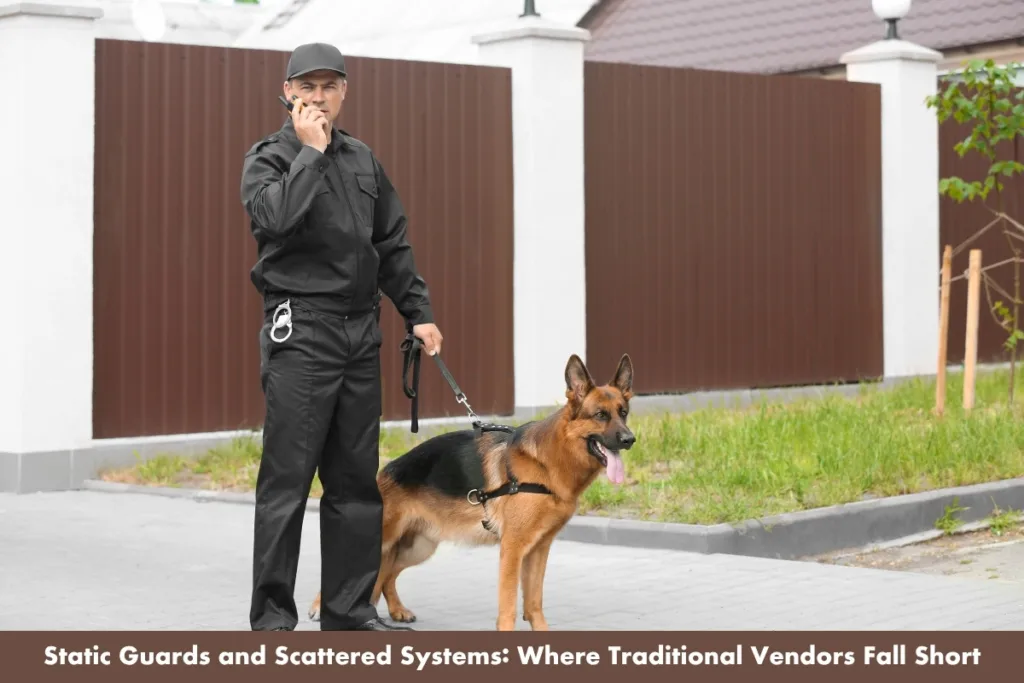
What’s driving this silent exodus from long-time vendors? In a word, frustration. Over and over, high-end estate security has been hampered by three major shortcomings:
Security Theater vs. Real Security:
Too many firms sell optics instead of protection. They station visible guards in suits and earpieces as a façade of safety, but behind the scenes, there’s not enough substance. As one security expert put it, teams often “looked sharp but operated blind – reacting to problems instead of preventing them. To me, that wasn’t protection. That was theater.” Estate managers have grown weary of visible but useless measures. A guard at the gate is reassuring, but if that guard isn’t backed by intelligence and real coordination, it’s just for show.
Vendor Sprawl and Blind Spots:
Traditionally, an ultra-wealthy family might have one company for physical security, another for alarms and cameras, and perhaps an IT consultant for cybersecurity, among other services. The result? Piecemeal vendors with no unified command. These siloed systems don’t talk to each other. Critical gaps open between scattered guards, gadgets, and procedures, gaps that sophisticated adversaries can exploit. Estate managers are essentially juggling multiple providers who each handle a slice of security, while no one sees the whole picture. If an alarm goes off at 2 AM, who coordinates the response – the guard service or the alarm company? If a cyber breach occurs, will the physical security team even know? This fragmentation leaves estates vulnerable.
Outdated Reactive Methods:
Traditional vendors often operate in reactive mode – waiting for an alarm to trip or an incident to occur, then responding. However, by 2025, threats move too quickly for that. Today’s attackers employ new tactics, such as drones, GPS trackers, and cyber exploits, to circumvent traditional defenses. Criminal crews targeting affluent homes have grown sophisticated; in one wealthy enclave, residential burglaries spiked 55% in just one month. They weren’t deterred by “signs and sensors” alone. Simply put, waiting for something to happen is no longer an acceptable option. Estate managers are frustrated as they watch their vendors play catch-up while emerging threats fly under the radar.
Trust and Professionalism Issues:
Adding to the strain, some estate managers quietly complain about lapses in professionalism or discretion from their vendors. Whether it’s high turnover of guard staff, loose lips gossiping about the principal’s family, or “conflicting advice” from different contractors, these issues erode trust. For families that value privacy and loyalty, any hint of unprofessional behavior – or even the feeling that their team isn’t 100% dialed in – is a serious red flag. They need to trust that their security detail is rock-solid and utterly discreet. If they sense mediocrity or misalignment, they’ll start looking for a change.
The bottom line:
The traditional patchwork approach – a guard at the driveway, a few cameras on the wall, and an IT guy on call – is leaving estate managers with quiet anxiety. They might not blast their vendor on social media, but they’re seeing the cracks: the flashy “security theater” that doesn’t stop real threats, the blind spots between siloed services, and the reactive posture that feels outdated in a world of fast, unpredictable dangers. They know they’re one step behind the threats – and that realization is keeping them up at night.
Converged, Invisible, Predictive: A New Security Model
If the old model is broken, what are estate managers seeking instead? In a word, change – but not just a new vendor, a new philosophy of protection. The emerging solution that has these ultra-wealthy family offices quietly excited can be summed up as converged, invisible, and predictive security.
Let’s break down what that means:
Converged Protection:
Instead of a half-dozen vendors each guarding their own turf, converged security means one unified team and system covering all angles. Think of it as a single command center for your safety. Physical security specialists, cybersecurity experts, intelligence analysts, and even secure drivers or medical responders are all part of the same team, sharing information and working in sync. No more gaps. No more “that’s not our department” issues. One elite firm now handles what used to be fragmented across many. A founder of one such firm observed that traditional siloed approaches “create vulnerabilities instead of closing them,” whereas a converged model ensures “every layer of security works in sync.” For the estate manager, this convergence is a relief – finally, someone sees the whole picture.
Invisible Security:
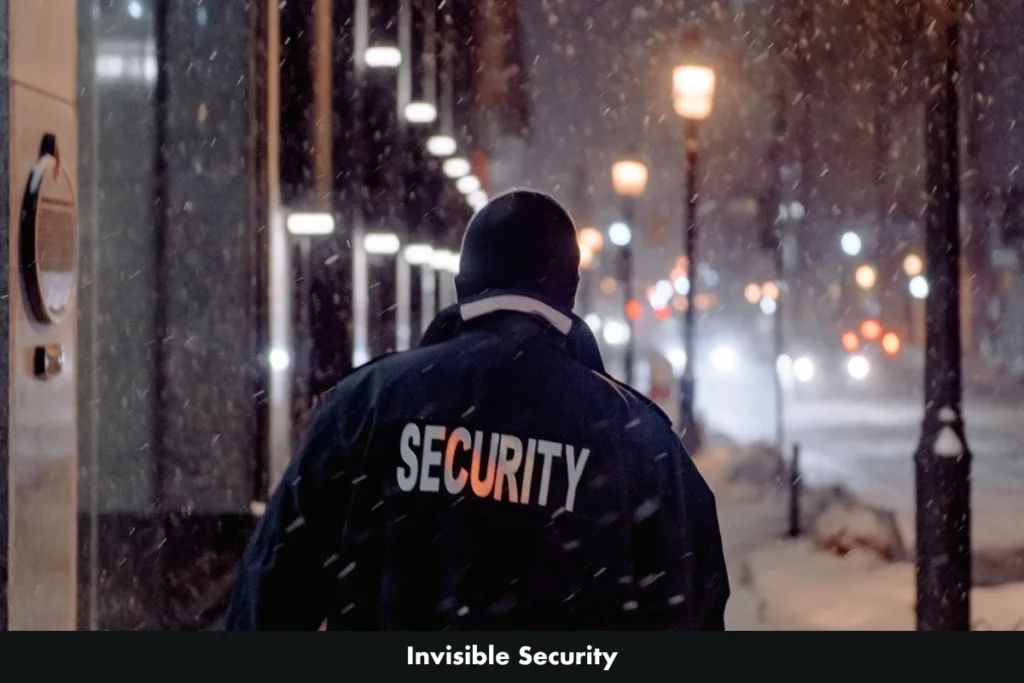
High-net-worth families want to feel safe without turning their homes into armed camps. The new model emphasizes discreet, behind-the-scenes protection. The goal is a secure environment that doesn’t feel like a fortress with guards hovering over family dinner. As one industry article put it: “An effective security strategy isn’t about creating a fortress, it’s about quietly protecting the people and property that matter most.”
The best security today is often unseen: hidden sensors, low-profile agents, and intelligence gathering that neutralize threats long before they reach close proximity. Estate managers love this because their principals can go about their lives hosting friends, traveling, and living normally, without a visible security circus. The protection is essentially invisible until the moment it needs to be revealed. One might call it an invisible fortress around the family: impenetrable, but virtually undetectable in day-to-day life.
Predictive Defense:
Perhaps the biggest shift is moving from reactive to proactive security. Converged teams leverage intelligence and technology to predict and prevent trouble. This involves monitoring chatter and risk indicators (both online and offline), analyzing patterns, and hardening defenses based on forecasts of potential outcomes – not just past events. For example, rather than waiting for an intruder to trip an alarm, a predictive approach might detect casing activity or a drone snooping over the estate and dispatch guards before a break-in occurs.
In cybersecurity, it means catching a hacker’s probing attempt in its early stages, not after your files are ransomed. As one protection specialist noted, “today’s threats aren’t just physical. They’re digital, persistent, and often invisible until it’s too late”. A predictive stance finds those invisible threats before it’s “too late.” Estate managers are drawn to this model because it transforms security from a passive cost into an active shield. It’s the difference between living in fear of the next incident and quietly knowing that someone is always one step ahead on your behalf.
This converged, invisible, predictive model is precisely what firms like HK Defense Solutions (HKDS) deliver through their elite “converged protection” programs. HKDS’s core philosophy is that “security is broken when it’s fragmented” and that true protection requires unifying physical security, cybersecurity, and intelligence into one ecosystem. The company built a team of specialists from each discipline and aligned them under one mission, creating “a single protective ecosystem” that covers every angle at the highest level. The result? Clients receive presidential-level security without the headache of managing multiple vendors – and without the heavy-handed tactics of the past. HKDS describes it as moving clients “from vulnerable and exposed to secure and in control.”
In simpler terms, converged security replaces the old patchwork with a seamless blanket of protection. It’s as if all the disjointed pieces – the guard at the gate, the alarm on the door, the IT monitor, the travel protocols – are finally woven together into one fabric. Estate managers who have adopted this approach report that they finally feel a sense of control and confidence.
No longer must we cross our fingers that the guard might catch something the cameras missed, or that the IT team might notice a breach attempt; instead, a unified team actively coordinates 24/7 to ensure nothing falls through the cracks. It’s security without the gaps – and to someone responsible for an ultra-wealthy household, that is priceless peace of mind.
From “Safe Enough” to Truly Safe: A Wake-Up Story
Sometimes the difference between the old model and the new becomes crystal clear in a single moment. Consider this true scenario (names withheld for privacy):
An estate manager was overseeing protection for a prominent family who, on paper, had all the usual security vendors. They had a respected guard firm patrolling the property, a top-brand alarm system, and even a cybersecurity consultant on retainer. By traditional measures, it seemed “safe enough.” But the family still felt on edge; the estate manager sensed that each vendor only saw their piece of the puzzle, and critical things were falling through the cracks.
One night, that fear was validated. The family started receiving coordinated threats from multiple directions – a disturbing anonymous message online (likely from a hacker probing their info), and days later, an incident of strangers surveilling their street. Then one afternoon, a drone was spotted hovering near the grounds, apparently scouting the property line.
Each threat vector – digital, physical, and aerial – was just subtle enough that the individual vendors brushed them off: the IT consultant advised them to update their passwords, the guard service logged the suspicious vehicle and drone, but took no further action. No one connected the dots. The estate manager realized these weren’t isolated nuisances; they were signs of a potential targeted campaign.
Frustrated, the estate manager quietly reached out to a converged security firm (HKDS) for help. The difference was night and day. HKDS’s team immediately treated the situation as a linked, evolving threat. Within 24 hours, they stood up a layered security solution: their intelligence unit dug into the online threat and even fed actionable info to law enforcement; simultaneously, a residential protection detail was deployed to tighten physical security on-site, and a cyber team hardened the family’s digital footprint. They also put a travel security plan in place, as the family was scheduled to fly out for vacation, ensuring they would be safe in public and during travel as well.
The transformation was swift and dramatic. What had been a constant state of worry and disjointed responses turned into stability, safety, and control. Over the following weeks, the family experienced life as normal – kids going to school, dinners out, a holiday abroad – all under a new umbrella of security. The estate manager noted that the principal actually commented on how “normal” everything felt again, not like living under high alert, yet they all knew an integrated shield was actively protecting them.
They regained peace of mind without sacrificing privacy or freedom. In fact, visitors to the estate would not have noticed anything different; the security upgrade was largely invisible. But behind the scenes, the estate manager now had an elite team on speed dial and a dashboard of intel, instead of a pile of vendor business cards and lingering doubts.
This story isn’t a one-off. It’s a glimpse into what real readiness looks like – and how it reframes trust. The family went from hoping their patchwork of vendors was “probably fine” to knowing their converged team was proactively on guard. That is the quiet confidence estate managers crave. It’s the kind of outcome that makes it obvious why peers are starting to abandon the old model and invest in something more robust. Once you see the contrast – once you experience proactive, unified protection versus reactive, fragmented service – you don’t want to go back.
Get the Ultra-Wealthy Security Checklist
Wondering how your current security measures up to this new standard? Download our free 20-Point Ultra-Wealthy Security Checklist to identify gaps in your estate’s protection. It’s the same checklist used in “presidential-level” security audits, and it will show you where a converged approach would make all the difference.
What “Converged Protection” Replaces (and Why It Matters)
It’s worth spelling out exactly what changes when you shift to a converged, predictive security model. Estate managers who have made the switch often cite these game-changing differences:
One Team vs. Many Vendors:
The unified model replaces multiple siloed vendors with one integrated team. No more phone tag between the alarm company, the guard company, and the IT guy during a crisis. With a converged provider, you have a single point of contact responsible for everything – from your perimeter cameras to your network firewall to your executive travel safety. This means faster decisions and seamless execution. (As HKDS’s founder noted, bringing experts from all disciplines “under one roof was the turning point that enabled proactive plans covering every angle.) The estate manager is no longer the go-between; instead, you get one coordinated unit that already knows how to work together.
Continuous Intelligence vs. Check-the-Box Patrols:
Traditional security typically conducts periodic patrols and responds to alarms. Converged security, on the other hand, is intelligence-driven and continuous. It replaces the old routine of “drive by the gates every hour” with 24/7 monitoring of risk indicators. For example, protective intelligence analysts might be tracking chatter about wealthy targets on the dark web or identifying crime trends in your ZIP code in real-time. Security isn’t just guarding a static post anymore – it’s a dynamic process of detecting, analyzing, and acting on threats before they materialize. In effect, you gain a private intel agency working on your behalf alongside the physical security detail. (This was illustrated when HKDS was able to “see the threat before it becomes reality” by using intelligence professionals and sharing data with the FBI.)
Integrated Technology vs. Gadgets in Silos:
Think about all the hardware and systems in a modern estate – surveillance cameras, motion sensors, smart locks, cybersecurity software, GPS trackers on vehicles, medical emergency devices, etc. In a piecemeal setup, each might be installed by a different vendor with a different app or dashboard. Converged security replaces that jumble of systems with an integrated platform. All the sensors and alarms are fed into a single command center, where they’re correlated and managed together.
The benefit is huge: an alert from one system automatically cues responses in others. If a perimeter sensor trips, the cameras automatically pan to that sector, and the nearest patrol is instantly alerted, along with an email to the cybersecurity team to watch for diversion hacks – all coordinated through one interface. This kind of interoperability (HKDS calls it Estate Stitching) means no more critical alerts slipping through unnoticed because “the right person didn’t see it.” Everything is connected, and nothing is left unowned.
Discretion and Ease vs. Disruption:
Importantly, converged protection also replaces the lifestyle disruption that can come with heavy-handed security. Rather than flooding an estate with obvious manpower or making the family jump through hoops (such as multiple logins and separate briefings for different threats), a good converged team operates with quiet professionalism. Schedules and protocols are streamlined. Drills (for emergency scenarios) are conducted periodically, with minimal intrusion. The family and staff get one cohesive set of guidelines instead of conflicting rules from various contractors.
The result is less friction day-to-day. The estate manager isn’t constantly coordinating between vendors or relaying messages to the principal – freeing them to focus on other aspects of the principal’s life. As the Beverly Hills Chamber of Commerce advises, “proactive estate protection is about more than technology, it’s about systems, people, and situational awareness”. In a converged approach, those elements are harmonized in a way that feels natural, not overbearing, to the people being protected.
In essence, converged security replaces fragmentation with fusion. It trades the old false sense of security (lots of moving parts that give an appearance of safety) for actual security (unified efforts that produce real outcomes). No wonder estate managers who learn about this approach often have an “aha” moment: They suddenly see why their current vendor setup feels lacking, and how a converged model would solve the problems that have nagged them.
The Cost of Delay: What’s at Stake if You Stick with “Mediocrity”
Switching security approaches isn’t just a nice idea – it’s becoming an urgent necessity. The threats facing ultra-wealthy families are escalating, and the cost of sticking with a mediocre, fragmented vendor can be catastrophic. Here’s what’s at stake if estate managers delay upgrading their security:
Financial and Reputational Fallout:
It only takes one serious incident to upend a family’s wealth and peace. A single home invasion, high-profile kidnapping, or cyber-extortion could result in millions of dollars lost through stolen valuables, ransom payments, legal liabilities, or just a hit to a family’s business interests. (One security breach involving an executive can cost a company “millions in a day – not just in money, but in reputation, trust, and stability.”) Even beyond direct costs, imagine the ripple effects: a patriarch or matriarch harmed could shake investor confidence in their companies; private family matters leaked could damage their public image. We’ve seen real-world examples: when a Fortune-500 CEO was assassinated in a supposedly “secure” setting, his company’s stock plunged nearly 10% within days.
The markets responded not just to the tragedy but to the exposed vulnerability. In the private realm, consider the 2021 incident of Jacqueline Avant, a philanthropist in Beverly Hills, who was killed during a home invasion despite having a security guard on site. The presence of a guard wasn’t enough; the failure made headlines precisely because everyone assumed someone of her stature was well-protected. These events send a clear message: high-net-worth families cannot afford a false sense of security. The real cost of “security mediocrity” is paid in lives, money, and legacy.
Evolving Threats, Increasing Odds:
Threats are not static. They’re evolving with technology and social trends. Five years ago, you might have worried about an armed intruder; today, you must also worry about a hacker opening your gates remotely or a drone mapping your estate’s blind spots. Organized crime rings have noticed that ultra-wealthy estates can be soft targets, and they’re arming themselves with advanced tools. Police bulletins have noted that criminals are using drones, signal jammers, and cyber surveillance to target high-end targets. If your security setup is stuck in the past (focusing only on gates and guards), each day that passes, the gap between your defenses and the attackers’ methods widens.
Essentially, by delaying, you are gambling with your principal’s safety, hoping that “nothing has happened yet, so we’re probably fine.” However, as any seasoned security professional will tell you, the absence of an incident does not equate to readiness. It can just mean you’ve been lucky. Luck is a terrible strategy for protecting a family’s welfare.
Liability and Accountability:
Ultra-wealthy individuals and their estate managers are also facing greater accountability from external parties, such as insurers and even boards (for those who are CEOs/founders). Insurance carriers, for instance, have become much more stringent about private security. Many now require proof of robust risk management before issuing or renewing policies – and in some cases, claims are denied if negligence is found (i.e., if an incident could have been prevented with proper measures).
If you continue with a patchwork vendor who leaves gaps, you may not only suffer an incident but also find insurance won’t bail you out. Furthermore, for principals who run companies, major security failures can spark shareholder lawsuits or regulatory scrutiny. In other words, an estate security lapse doesn’t always remain a private family matter; it can quickly spill into professional and financial realms.
Estate managers understand that their role is not just about hiring a guard – it’s about protecting an entire legacy. Every week that goes by with known security weaknesses unaddressed is another week of liability they should be shouldering.
Personal Stakes – Peace of Mind and Family Well-Being:
Finally, there’s the human element. The stress that comes with quietly knowing your current security setup is shaky can erode a family’s sense of peace. Principals might not sleep well. Families might curtail their lifestyle – avoiding travel and not hosting gatherings – out of an unspoken fear that something could go wrong. Living in a gilded cage of anxiety is no way to enjoy one’s success. Conversely, estate managers who’ve made the switch to converged, predictive security often report a dramatic improvement in household morale.
When you know you truly have all bases covered, you can live normally again. There’s less paranoia, less second-guessing (“Did we lock that gate? Who’s watching the cameras tonight?”), and more freedom. If you delay this shift, you’re essentially prolonging an uneasy status quo. And should a crisis hit, the personal trauma and regret of “we could have prevented this” will be immense.
In short, sticking with a mediocre vendor or a fragmented approach is a high-stakes wager – one where the odds worsen over time. The question estate managers must ask is: What’s the downside of acting now versus the downside of not acting? Acting now may involve some cost and effort to transition to a new system. Not acting could cost infinitely more. As security professionals often warn, hope is not a strategy. Neither is complacency. Every week of delay is another week an adversary could be mapping your weaknesses.
Embracing the Inevitable: The Quiet Revolution in Estate Security
There is a growing sense of inevitability around this shift in high-end security. Just as the ultra-wealthy long ago transitioned from flip phones to smartphones, they are now shifting from static, siloed security to integrated, intelligent protection. True protection is no longer a luxury or an experiment – it’s quickly becoming the gold standard for those who have serious assets, families, and legacies to safeguard. The only question is whether you’ll get ahead of that curve or fall behind it.
Estate managers and family office directors are pragmatists at heart. They see the writing on the wall. They know that in a world where threats don’t respect boundaries – where a stalker might attack digitally as well as physically – “converged security isn’t just an upgrade; it’s the only viable path forward.” The old model of obvious guards and loud alarms is fading, and a quieter, smarter model is taking its place. In fact, many UHNW operators now quietly admit that if your security is loud and overt, it’s probably because it’s compensating for a weakness. The best security of tomorrow blends in – until the moment it needs to spring into action.
So what does this mean for you, the estate manager or family office executive reading this? It means that if you’ve felt that “quiet drag of mediocrity” with your current vendor, you’re not alone – and you’re not stuck. You can lead the change, quietly and confidently. There are elite teams (like HKDS and others) ready to step in and perform a Private Security Assessment to pinpoint exactly where your current protection stands and how it can be improved.
In fact, that’s a smart next step if you’re curious. It’s discreet and involves no obligation – just an expert review that will either reassure you that you’re solid, or (more likely) open your eyes to unseen gaps. As one estate principal told us after undergoing such an assessment, “I was stunned – grateful, but stunned – at the things we’d overlooked. Fixing them was a no-brainer after that.” Sometimes, it takes a fresh set of eyes to truly evaluate a long-standing vendor’s work.
Invitation (Private and Confidential):
If any of this resonates – if you’re nodding along thinking “this is exactly how I feel” – consider taking that next step. We invite you to a Private Security Assessment Call.
This is a one-on-one, completely confidential consultation (preceded by a brief intake survey so we understand your situation). In about 15 minutes, our top security strategist will walk you through an initial assessment of your estate’s security posture. We’ll identify the top 2–3 gaps or vulnerabilities quietly undermining your protection, and we’ll outline how a converged, predictive model can close those gaps. There’s no hard sell – our approach, much like our philosophy, is intelligent and direct. The goal is to give you clarity. Whether you decide to make a change or not, you’ll come away with a clearer picture of where you stand. Ultimately, the shift happening in estate security today is about transforming quiet frustration into quiet confidence. It’s about knowing – not hoping – that your security is handled, that your principal and their family are safe, and that nothing important is being left to chance. This transformation is happening quietly, yes, but make no mistake: it’s happening quickly.
Forward-thinking estate managers are already on board. They’ve seen that the converged model works “quietly, consistently, and ruthlessly” to keep threats at bay (to borrow a phrase from a recent success story). They’ve decided that true protection is not optional; it’s an integral part of preserving wealth, well-being, and peace of mind.
The inevitable future of high-net-worth security is here – it’s converged, invisible, and predictive. Embracing it means you’ll never have to quietly worry if you’ve done enough, because you’ll know you have. So while the decision to replace a long-time security vendor can feel like a big leap, in hindsight, many say it was the best decision they ever made for their principal’s safety. Don’t wait for the next incident or close call to prompt action. You can now quietly take charge of the situation. Upgrade to the standard of security that meets the moment. And sleep a little easier at night, knowing that the protection of your principal’s family is truly comprehensive – the kind of protection that nobody brags about publicly, but everyone is grateful for when it counts.
Take the Next Step – On Your Terms:
Feel free to reach out for a private security assessment call at your convenience. It’s private, it’s prudent, and it might just be the start of your estate’s most important upgrade. True security may be quiet, but its benefits will speak volumes.
Your family’s safety, freedom, and legacy deserve nothing less.