
A Note on This Report
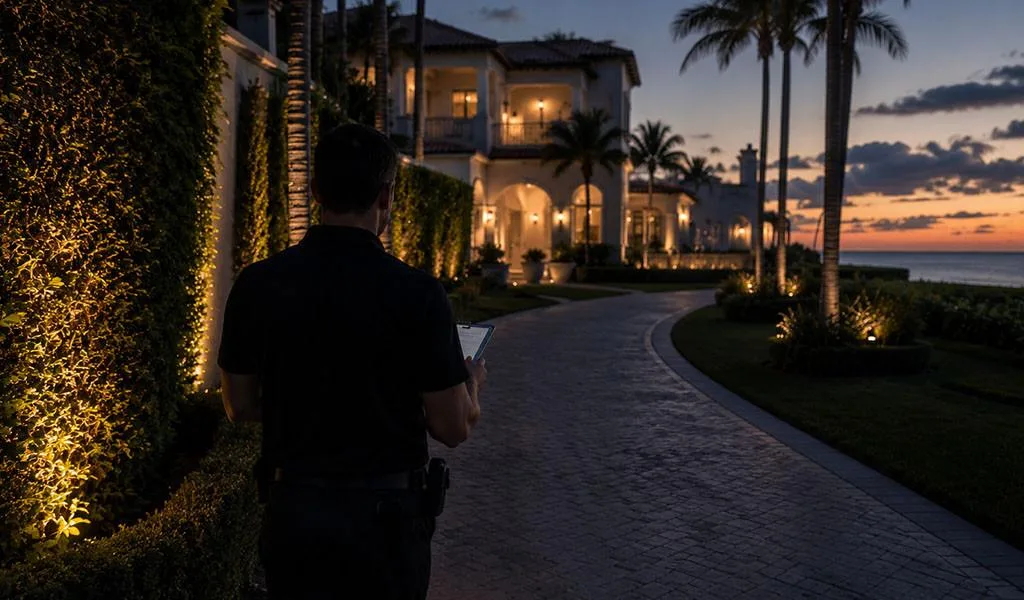
This is a field report, drawn from the recurring patterns HK Defense Solutions encounters when assessing ultra-high-net-worth estates on the Gulf Coast. The specifics below are representative composites, not accounts of identifiable clients or properties. The purpose is to show families and estate managers what an honest assessment of a Naples estate tends to reveal, because the patterns are remarkably consistent, and because most families have never had anyone show them.
The single most common reaction at the end of an assessment is some version of the same sentence. I had no idea. The security looked comprehensive. The investment had been significant. And the gaps, once shown, were obvious in retrospect and elementary in nature. That gap, between the appearance of security and its actual performance, is the subject of this report.
Pattern One: The Water Side Is Open
The most consistent finding in Naples estate assessments is also the most serious. On waterfront estates, the water side is almost always unwatched.
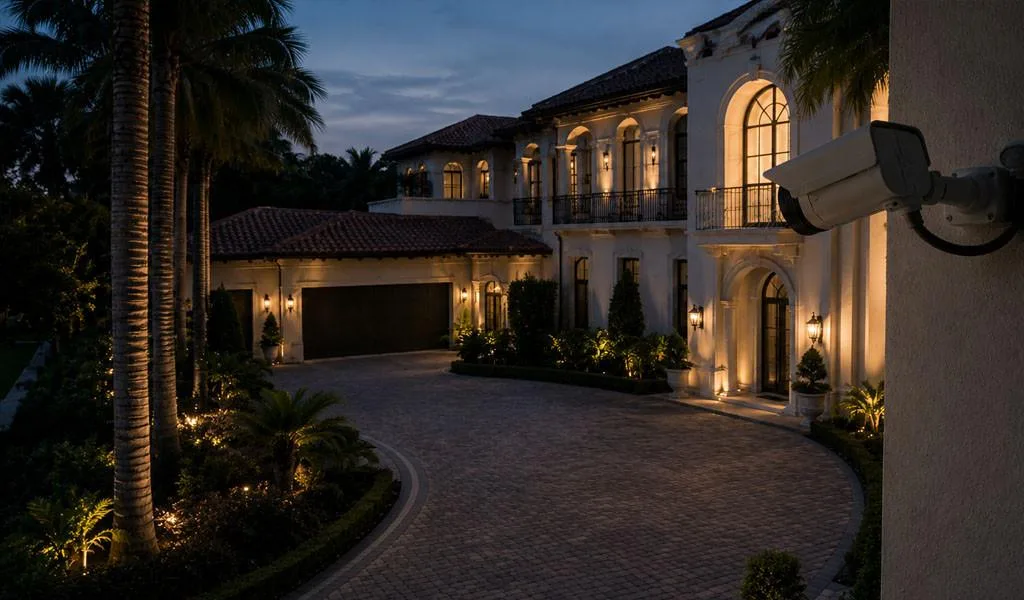
The pattern is nearly universal. The camera system is comprehensive and high-resolution, and it faces the street, the motor court, the front entrance, the driveway approach. The guard, where there is one, watches the gate and the front of the property. The alarm protects the doors and windows. And the dock, the seawall, the canal, the beach, the entire water-side approach to an extraordinarily valuable estate, sits completely outside the coverage.
On a Port Royal or Aqualane Shores canal-front estate, this means a vessel could come up the canal and tie off at the seawall without crossing a single security measure. On a Gulf-front estate, it means the beach approach is open to anyone willing to walk up the sand. The estate that appears thoroughly secured from the street is, from the water, effectively undefended.
This gap matters more now than it ever has, because the organized crews working affluent Florida communities have demonstrated, in documented cases, that they will use the water to bypass land-based security. The unwatched dock is no longer a theoretical vulnerability. It is the specific approach that a professional crew has already shown it will use. And it is the gap we find, over and over, on the most valuable waterfront estates in Naples.
Pattern Two: The Technology Documents Rather Than Protects
The second recurring finding concerns the substantial technology investment that most Naples estates have made, and the consistent gap between what that technology cost and what it actually does.
The cameras record but no one watches. The typical estate has a comprehensive camera system producing high-quality footage, and that footage is reviewed only after something has happened. No one is watching the feeds in real time. The system does not detect and respond to an approach. It documents an incident for an investigation that begins after the crew is already gone. A camera that no one is watching is a forensic tool, not a protective one, and most families do not realize their cameras are providing evidence rather than prevention.
The alarm response goes nowhere useful. The standard protocol notifies a monitoring center, which calls the homeowner and then dispatches law enforcement. For a seasonal Naples resident who is at their Northeast home for the off-season, the homeowner call reaches someone a thousand miles away who can do nothing, and the law enforcement response, however professional, arrives in minutes, while a trained crew completes its work in less time than that.
The smart-home systems are poorly configured and poorly integrated. Naples estates frequently have extensive smart-home infrastructure, dozens or even a hundred connected devices, and we routinely find these systems poorly secured: running on the same network as guest Wi-Fi, configured with default or trivially weak credentials, never updated since installation. We have seen systems still running the installer’s default passwords. The technology that was supposed to add security has, in these cases, added attack surface.
And the systems do not talk to each other. The camera system, the alarm, the access control, and the smart-home platform were installed by different vendors at different times and function as separate, disconnected components. There is no single operational picture. An alert from one system does not inform the others. The family has spent heavily on technology that does not work as an integrated whole.
Pattern Three: The Staff and Vendor Ecosystem Is Unmanaged
The third recurring finding is the one families find most uncomfortable, because it involves the people they trust and work with every day. The highest-probability threat vector on nearly every estate we assess is someone with authorized access, and the management of that access is almost always inadequate.
The gate codes are never changed. We routinely find that access credentials, gate codes, alarm codes, are unchanged after staff departures, after contractor engagements end, after relationships change. The former housekeeper who left in spring still knows the code. The contractor who worked on the renovation last year still has access information. Nobody closed the access when the relationship ended, and the access persists indefinitely.
There is no structured vetting. Staff and vendors are often engaged on the basis of references and trust, without the structured background investigation, periodic re-screening, and ongoing oversight that the access they hold warrants. In a market like Naples, where the same vendor crews service multiple estates in the same neighborhood, carrying knowledge across the community, the absence of structured vetting is a significant exposure.
There is no device or social media discipline. Staff personal devices back up photos of the estate interior to personal cloud accounts. Staff post about their work, sometimes identifying the family or the property. There is no policy, no awareness, and no oversight of the digital exposure that staff create simply by living their normal digital lives while holding access to a high-value estate.
The off-boarding is incomplete. When a staff relationship ends, the process of actually closing all access, physical and digital, is frequently incomplete or nonexistent. The departed employee retains codes, knowledge, and sometimes credentials long after the relationship is over.
None of this implies that staff are untrustworthy. The overwhelming majority are entirely trustworthy professionals. The problem is structural: the access is significant, the management of it is inadequate, and the aggregate exposure across an unmanaged ecosystem is substantial even when every individual is acting in good faith.
Pattern Four: The Digital Exposure Is Nobody's Job
The fourth recurring finding is that the family’s digital exposure, which feeds the physical targeting, is no one’s responsibility in the existing security arrangement.
The family is discoverable. We routinely find that a family’s home address, ownership, and value are available through public records and data broker sites, often that a complete profile can be assembled for under one hundred dollars, and that the family has no idea this exposure exists. The reconnaissance that a crew or a fraudster would begin with is sitting in plain sight, unopposed.
The family broadcasts its own patterns. Family members, often younger ones, share location, travel, and lifestyle in real time, confirming vacancy and revealing routines to anyone watching. The seasonal departure is documented online. The social calendar is public. The information that a hostile party needs to target the family is being voluntarily published, and no one in the security arrangement is watching or addressing it.
No one connects the digital to the physical. Even where some digital concern exists, it is typically handled, if at all, as a separate IT matter disconnected from the physical security. The digital exposure does not inform the physical posture, and the physical security operates blind to the online reconnaissance that precedes physical threats.
This gap is invisible to families because digital exposure is not something the conventional security model was ever designed to address. The guard at the gate cannot see the data broker profile. The camera cannot see the teenager’s location post. And so the exposure accumulates, unopposed and unmanaged, until it enables an incident that the physical security then fails to prevent because it never knew the reconnaissance was happening.
The Common Thread: Appearance Versus Performance
Across all four patterns, the same underlying issue recurs. The security looks comprehensive and performs poorly. The investment is significant and the gaps are elementary. And the family does not know, because no one has ever shown them the difference between what they have and what they think they have.
This is not a criticism of the families. It is a description of an industry. Much of the security serving the Naples market was built for an earlier threat environment and sold on appearance, presence that looks reassuring without the integration, the intelligence, and the coverage that actual protection requires. The families bought what they were offered, reasonably believing it was comprehensive, and the gaps are not visible until someone with an operator’s eye walks the property and points them out, or until an incident points them out instead.
The recurring patterns in this report, the open water side, the technology that documents rather than protects, the unmanaged staff ecosystem, the unaddressed digital exposure, are not exotic or rare. They are the standard findings, the things we expect to find before we arrive, because we find them almost every time.
The Assessment Itself
The value of an honest assessment is that it converts invisible gaps into a clear, prioritized picture before an incident does. HK Defense Solutions delivers this as a Private Threat Mapping Session, a confidential assessment conducted by people with the operator background to see what conventional security misses.
The session walks the estate, examines the technology, reviews the staff and access situation, assesses the digital exposure, and identifies the specific gaps between what the family believes is covered and what actually is. It accounts for the waterborne exposure that street-facing security ignores, the integration failures in the technology, the access and vetting gaps in the staff ecosystem, and the digital exposure that feeds physical targeting. And it produces a documented, prioritized set of findings that stands on its own, regardless of what the family decides to do next.
The firm was founded by John Hamilton after twelve years in U.S. Air Force special operations, and the assessment reflects that standard: intelligence first, presence second, zero assumptions. The point is not to alarm families. It is to show them the truth of their situation clearly enough that they can make informed decisions, before the gap between appearance and performance is demonstrated by someone who came to exploit it.
We have walked the most valuable estates on the Gulf Coast. The security looks expensive. The gaps are elementary. And none of those estates had been breached, yet, which is precisely why the time to find the gaps is now, in an assessment, rather than later, in an incident.
“The single most common sentence at the end of an assessment is some version of ‘I had no idea.’ The security looked comprehensive. The investment was real. And the gaps, once shown, were elementary. That gap is the whole reason we exist.”
Frequently Asked Questions
What is an estate security assessment?
It is a structured evaluation of an estate’s actual security posture, walking the property, examining the technology, reviewing staff and access, and assessing digital exposure, to identify the specific gaps between what the family believes is covered and what actually is. HK Defense Solutions delivers this as a Private Threat Mapping Session.
What is the most common gap you find on Naples estates?
The unwatched water side. On waterfront estates, the cameras and guards are almost always oriented toward the street while the dock, seawall, canal, or beach approach sits completely uncovered, which is exactly the vector organized crews have demonstrated they will use.
Isn't expensive security equipment enough to protect my estate?
Often not. We routinely find substantial technology investments that document incidents rather than prevent them: cameras no one watches in real time, alarms that call an out-of-state owner, and smart-home systems that are poorly configured and not integrated. Appearance and performance are not the same thing.
Why is household staff a security concern?
The highest-probability threat vector on most estates is someone with authorized access, and the management of that access is usually inadequate: gate codes unchanged after departures, no structured vetting, no device or social media discipline, and incomplete off-boarding. This is structural exposure, not a judgment about staff trustworthiness.
What does the assessment actually produce?
A documented, prioritized set of findings covering physical, technological, staff-related, and digital exposure, showing the family exactly where the gaps are and what closing them requires. The assessment stands on its own regardless of what the family decides to do next.
How do I arrange an assessment of my Naples estate?
Request a Private Threat Mapping Session with HK Defense Solutions. It is confidential, conducted with a mutual NDA, and available at the firm’s West Palm Beach headquarters or at your property in Naples.